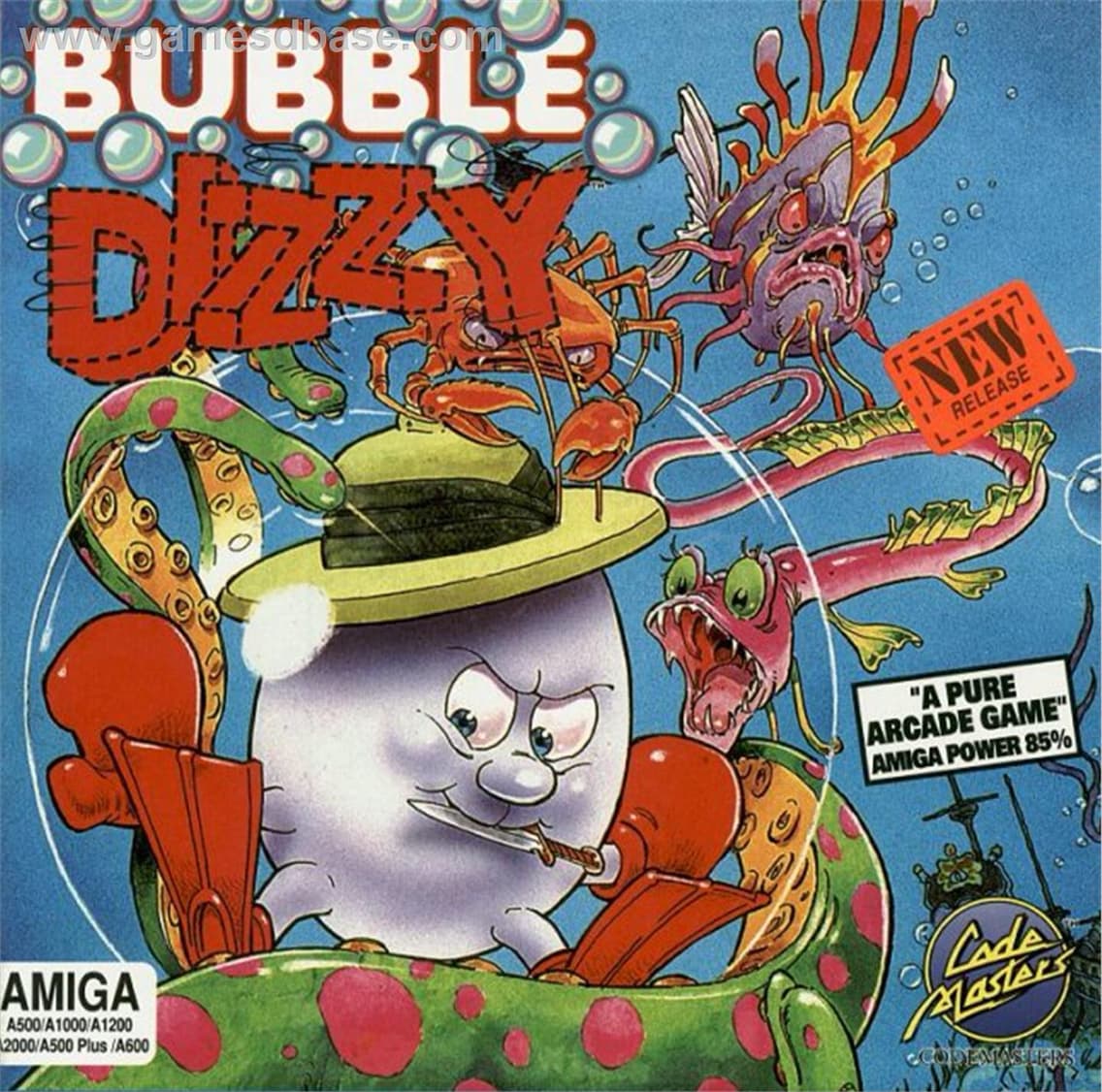
In Bubble Dizzy, Codemasters took their famous boxing-glove-wearing egg out of his usual item-collecting adventures and dropped him at the very bottom of the ocean floor.
Stripping down the Oliver Twins' formula to pure arcade survival
By the early nineties, Oliver Twins designs were synonymous with vast inventory-based adventure maps. Players expected to carry keys to locked doors, trade items with eccentric villagers, and slowly piece together an escape route. Bubble Dizzy abandoned every bit of that structure in favour of a single, brutal concept originally drafted as a mini-game concept inside The Fantastic Adventures of Dizzy.
The premise is wrapped in a quick setup: pirate Captain Blackheart forces Dizzy to walk the plank, sending him sinking straight to the seabed. Instead of exploring sprawling treehouses, your entire focus is reaching the surface before your oxygen tank hits empty. It converted the series into a vertical action game where progress is measured purely in vertical distance and score high-water marks.
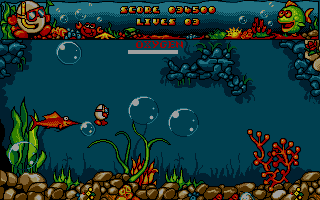
Relying on random air pockets makes ascending a gamble
Reaching the top requires hopping between air bubbles as they float upwards from the depths. The mechanics sound manageable on paper, but the underwater physics introduce a heavy lag to your jump inputs. When Dizzy steps onto a bubble, it begins to disintegrate immediately, giving you less than a second to time your next launch. Jumping right before the sphere bursts yields extra height, but the act of jumping destroys the bubble beneath you instantly, leaving zero room for hesitation.
What makes this vertical climb so treacherous is the random nature of where the bubbles spawn. You can plan a route across three steady air streams, only for the middle one to stop producing bubbles entirely, leaving you stranded on a solitary rock while marine life closes in. The obstacle list on the way up includes:
- Jellyfish that float horizontally across key jump corridors.
- Crabs and eels guarding the solid rock ledges you need for temporary rest.
- Sharks and octopuses that wipe out large chunks of your oxygen supply on contact.
- Pearls and diamonds scattered along danger paths that offer high points at the cost of risky detours.
- Refillable O2 canisters required to stay alive during long vertical droughts.
Taking refuge on a harmless whale or an isolated rock ledge lets you pause for a second, but staying still too long burns through precious air. If you misjudge a single landing, Dizzy plummets all the way back down to the sea floor, resetting minutes of stressful climbing in a matter of seconds.
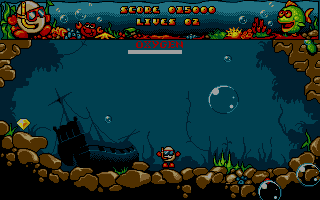
Why Bubble Dizzy tested the patience of action platformer fans
Contemporary reviewers were not particularly gentle with this spin-off when it expanded from 8-bit microcomputers into a standalone release. While French magazine Obligement pointed out the cute visual design, it correctly called out the reliance on blind luck that left players stranded without spawning bubbles. British gaming magazine Crash went even further, labeling it the worst entry in the series and famously writing that it "makes eating soup with a fork look easy."
The frustration stems entirely from the luck factor rather than player execution. You can execute perfect leaps for ninety percent of a stage, only to face an impossible wall of jellyfish paired with zero usable bubbles. The Spectrum version was notorious for a bizarre bug reported by Your Sinclair, where leaving Dizzy unattended at the bottom-middle of the screen for an hour caused the computer to play itself, stacking up massive counts of extra lives in the process.
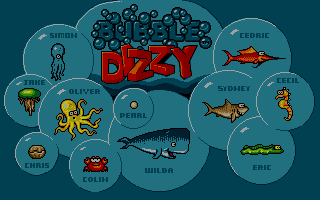
Porting an 8-bit spin-off to the MS-DOS platform
When Codemasters brought this 1993 release to the PC, the game retained its simple side-view presentation and strict scrolling mechanics. The primary upgrade for the MS-DOS version was sound card compatibility. Playing with an AdLib card enabled background tunes composed by Matthew Simmonds, replacing the harsh beepings of early PC speakers with decent FM synthesis chip synth tracks.
Despite the slightly smoother performance on standard PC hardware, the core movement retains the heavy, floaty weight designed to simulate water resistance. Compared to dedicated platform titles on PC from the same era, it feels less like a full-featured release and more like the quick-fire budget software classic it was built to be, often bundled inside compilations like Dizzy's Excellent Adventures.
Where this vertical ascent fits today and how to play it
If you judge this title alongside narrative-focused adventure games, it falls short of the egg's best outings. Judged as a quick-burst arcade score-chaser, however, it serves up an uncompromising challenge for anyone who wants to test their reaction speeds against unpredictable physics. The game rewards sharp instincts, quick pathfinding, and the patience to survive bad RNG.
You can play Bubble Dizzy online free in your browser right here. The web port runs natively inside your window with no extra files to extract or setups to tweak. The delayed underwater momentum and sudden panic of a pop-second jump are things you only get a feel for once the bubbles start floating up your screen, so launch the game above, dodge the jellyfish, and see if you can make it back to Captain Blackheart's plank.
Players' controls
Touch and gamepad controls
The on-screen keyboard and gamepad mapping the browser player uses on a phone, a tablet or a controller, as opposed to the real keys above. $PRO members make their own in the player and share them here; anyone can pick one to play with.
Make your own touch controlsPRO
- 1Open the editorSign in below, then pick what to make. The game starts with the editor open over it.
- 2Place your keysAdd keys and drag them where your thumbs rest, or map a controller's buttons. Test plays the game with them; Save keeps them, and you play with them from then on.
- 3Share themShare them right after saving in the game, or name and share them here. Players vote, and the best become this game's controls for everyone.
Go PROSee how it worksSign in+20 XP for sharing · +50 XP if yours become the game's own
- The game's own controlsNone yet: played with a real keyboard only.In use
3 screenshots
From the archive
No gameplay video yet
No gameplay video for Bubble Dizzy yet. Sign in to add one.
No reviews yet
Tell the community what you think of Bubble Dizzy. Reviews are public and tied to your username.
No archived manuals for Bubble Dizzy yet
No manuals archived for this title yet. Sign in to upload the first scan.
Cheat codes, console commands and memory pokes for Bubble Dizzy — each one verified and attributed.
Sign in to submitNo cheats yet for this title
Know a working cheat, poke or trainer? Add it with the button above. Moderators check every entry before it goes live.
No archived soundtrack for Bubble Dizzy yet
No soundtrack archived for this title yet. Sign in to upload the first rip.
No save states for Bubble Dizzy yet
No save states for this title yet. Sign in to share one.
Discussions
Sign in to post- Threads0
- Total posts0
- Online now6
Community · Bubble Dizzy
Who's contributing, and what's new
- Reviews0
- Threads0
- Uploadsapproved0
- Contributors0
Recent activity
Nothing here yet
Reviews, discussion threads and approved uploads appear here as members add them.