
In Captain Blood, you navigate alien star systems to hunt down five rogue clones, deciphering non-human languages through an icon interface while your character's body steadily disintegrates.
A galactic hunt where your own controls fight against you
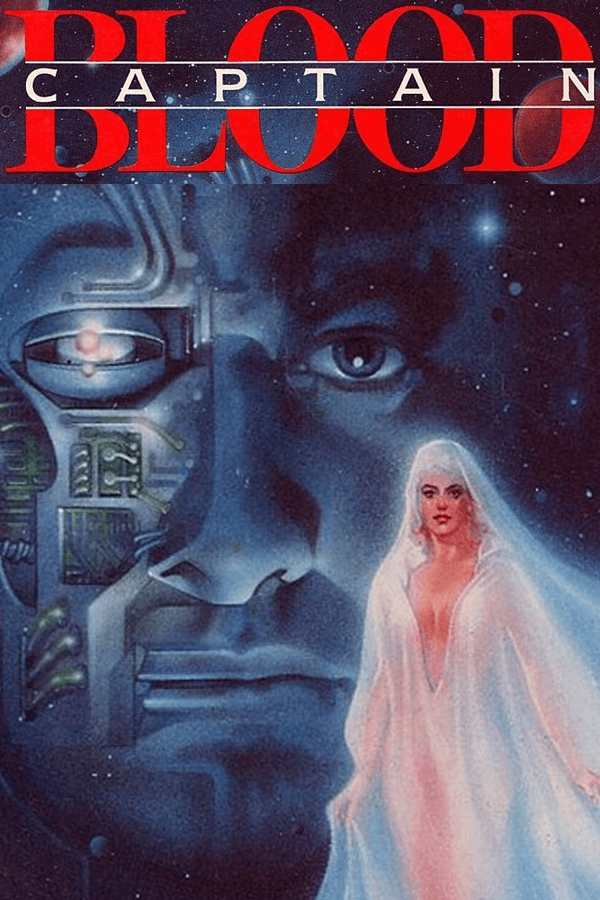
Playing Captain Blood on PC in 1988 felt like stumbling across alien software that somehow booted on IBM hardware. French developer ERE Informatique bypassed every standard storytelling template, throwing you into the cockpit of the bio-organic ship Ark as Bob Morlock, a programmer trapped inside his own game who has taken on the mantle of Captain Blood. A hyperspace mishap duplicated him into thirty clones, and five "Numbers" remain scattered across the Hydra galaxy. Each clone holds a portion of his vital fluid, and without it, his health decays in real time.
That physical decay hits you directly through the controls instead of sitting in a meter at the top of the monitor. As time slips away, your hand on screen begins to shake, turning mouse navigation and cursor selection into a stressful chore. Aiming at icons or steering your ship through landing runs grows erratic as the tremors worsen, forcing you to hunt down the next clone before the interface becomes impossible to control. Replacing a typical health bar with actual control degradation was a cruel, clever mechanical choice that few contemporary titles dared to try.
Deciphering alien tongues in Captain Blood through UPCOM
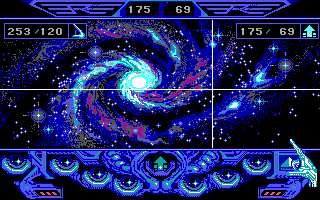
Finding a clone requires talking to the local wildlife, which is where this adventure game separates itself from simple space shooters. You interact with distinct alien species like the peace-loving Izwal, the militaristic Croolis Vareux, the tricky Buggol, and the shapeshifting Ondoyante. Communication runs entirely through UPCOM, a Universal Protocol of Communication driven by a bank of 150 logographic icons representing abstract concepts like "Friend", "Search", "Information", and "Destroy".
The dialogue is an unpredictable puzzle of trial and error. Aliens do not speak English; they reply in sequences of icons according to their cultural quirks and current trust level toward you. To extract planet coordinates, you must assemble sensible icon phrases to earn their respect or manipulate their fears:
- Scanning planetary orbits to detect biological life signatures.
- Launching the OORXX probe down fractal-generated terrain canyons while dodging defensive missiles.
- Initiating UPCOM contact to decipher alien motives and trade information for sector coordinates.
- Teleporting target individuals aboard the Ark or disintegrating located clones to regain physical control.
It plays fair once you learn each race's personality, but early attempts feel like stabbing in the dark. Misinterpreting an alien's mood can lead to dead ends or false coordinates, forcing you to burn precious time backtracking through empty star systems.
Navigating fractal valleys on 1988 PC hardware
When you locate a populated planet, you launch the OORXX probe to make landfall. This segment drops the perspective into a first-person flyby through narrow, winding valleys generated with real-time fractal graphics. Flying down the canyon while dodging surface missiles was a technical marvel for a 1988 release, but it quickly turns into one of the game's most tedious hurdles. Missing a landing site forces you to pull back into orbit and repeat the entire canyon sequence from scratch.
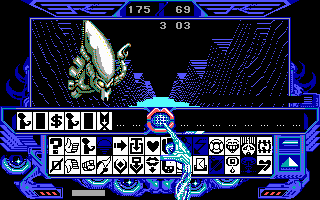
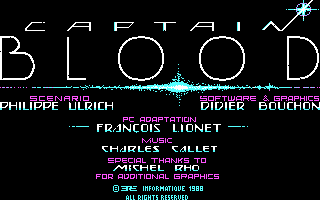
The PC version carries specific compromises depending on how you experience it. Visually, the title shines in EGA mode with striking alien artwork designed by Philippe Ulrich and Didier Bouchon. Sound design on IBM PCs relied on the standard PC speaker, squeaking out basic effects without the richer synthesized voices found on the Atari ST edition. US publisher Mindscape, Inc. also made minor cosmetic adjustments for its American release, famously adding a bikini top to the alien character Ondoyante. Despite these platform quirks, the title score by electronic composer Jean-Michel Jarre, featuring an authorized arrangement of his track "Ethnicolor", sets an unsettling atmospheric tone from the moment the main menu loads.
Why this weird cosmic experiment is worth your time today
Period magazine reviews gave high marks to the title's visual design and surreal atmosphere, with the UK publication ACE awarding it an 812 rating out of 1000. Critics rightfully praised its bizarre premise and logographic language engine, though many noted that endless canyon runs and cryptic alien responses could test anyone's patience. Decades later, those criticisms still hold weight, but the strange atmosphere and uncompromising interface logic give it an identity that modern space games rarely replicate.
If you want to experience an era when game designers took wild, uncalculated risks with graphic interfaces and narrative structure, this cosmic hunt is essential. You can play Captain Blood online free in your browser right now, with no extra hardware or setup required. Jump into the cockpit of the Ark, try your hand at translating alien icon dialects, and see if you can track down all five clones before your cursor shaking gets the better of your aim.