
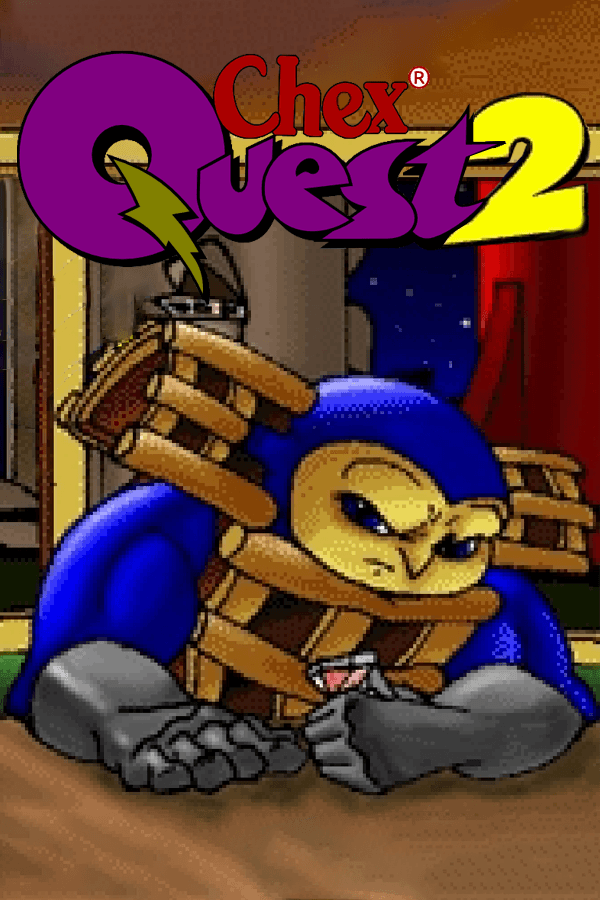

Chex Quest 2
Playing Chex Quest 2 today reveals a weird, rushed mid-nineties promotional experiment that turns the gory rhythm of classic Doom into a frantic scramble against bright green slime creatures.
From cereal boxes to web downloads: How Chex Quest 2 was built
When cereal giant Ralston-Purina saw the massive success of their 1996 cereal-box pack-in game, they did not press millions more CD-ROMs. Instead, they asked developers Digital Café to create a quick promotional sequel that fans could fetch directly from the official website. The core team, including studio founders Dean Hyers and Mike Koenigs alongside lead artist Charles Jacobi, turned around a five-level expansion WAD file in late 1996. The game ran on id Software's original engine, literally reusing the first game's executable file while dropping in a brand-new set of maps called CHEX2.WAD.
Because it arrived solely as an online download during the early days of dial-up internet, no physical box or manual ever reached store shelves. The distribution method made the file easy to lose once the web promotion ran its course, turning the game into a rare piece of internet history until dedicated fans preserved it online. Under the hood, the engine relied on standard MIDI soundtracks composed by Andrew Benon and sound effects that ran smoothly whether your rig sported a Sound Blaster AWE32, a Gravis UltraSound, or just a squeaky PC speaker.
Slogging through Chextropolis against the Flemoid horde
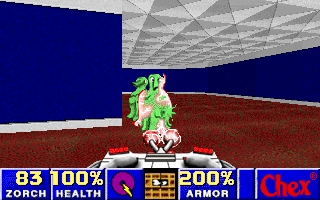
You put on the cereal-shaped armor of the Chex Warrior once again, returning home only to find that giant green slime monsters called Flemoids have overrun the city. Instead of blowing demon guts across brown corridors, your goal is to locate captured citizens and zorp the invading aliens back to their home dimension using non-violent energy weapons called zorchers. Health pickups stay entirely on brand: you restore your energy meter by grabbing bowls of cereal, fresh fruit, glasses of milk, and bottles of water scattered across the floor.
Your armory scales up through modified sci-fi tools that mirror traditional first-person shooter equipment:
- Bootspoon and Super Bootspoon: Melee spoons for close quarters when energy runs completely dry.
- Mini-Zorcher and Large Zorcher: Standard single-shot sidearms that replace pistol and shotgun roles.
- Rapid Zorcher: High-rate energy shooter that chews through ammo to clear crowded corridors.
- Zorch Pass-Propulsion and Phasing Zorcher: Heavy ordnance meant for clearing major alien ambushes.
The campaign walks you through five distinct locations across the city, starting at E2M1: Spaceport before pushing into E2M2: Cinema, E2M3: Chex Museum, E2M4: City Streets, and finally E2M5: Sewer System. That second level includes a neat detail: the movie theater features actual interactive screen displays playing endless looping video clips inside the map architecture. Once you reach the dark channels of the sewers, you confront "The Maximus" (a massive Flemoid boss) to clear the city for good.
Why the level design stings worse than the original game
If you remember the original game as a gentle walkthrough meant for kids, this sequel delivers a sharp shock. The tight production schedule shows in the map design, which abandons open rooms in favor of cramped corridors, awkward progression switches, and harsh resource limits. You will frequently find yourself low on zorch recharge charges while cornered by heavy-hitting Flemoids, forcing you to retreat through doors you barely opened.
Level four, the city street stage, is notorious for dropping players into sudden explosive trip hazards with zero warning. Because doors and hallways are so tight, the enemy hitboxes frequently clog doorways, leaving you taking unavoidable damage while trying to slip past. It creates a much stiffer challenge than its predecessor, though typing cheat codes named after the developers like DAVIDBRUS for invincibility or CHARLESJACOBI to walk through walls offers an easy way out if a room gets completely unfair.
The final verdict on this 1996 promotional shooter
As a piece of technical execution built within tight constraints, this quick sequel is a curious chapter in 1996 PC gaming. The level layouts are noticeably unpolished compared to professional commercial releases like Duke Nukem 3D, and the difficulty spikes can turn off modern players expecting a smooth casual run. Yet the bright artwork, silly food-themed pickups, and non-violent zappers give it a flavor unlike any other retro action game.
Anyone who enjoys classic id Tech engine mods should give it an hour, if only to see how creative developers got when re-skinning shareware tech for brand promotions. The core shooting mechanics still have that snappy, responsive movement speed that made nineties computer games feel so immediate.
You can play Chex Quest 2 free in your browser right now with no setup required. Launch the MS-DOS game directly in your window, keep an eye out for hidden walls inside the museum, and keep your spoon ready for when the slime starts pouring out of the cinema projection room.