
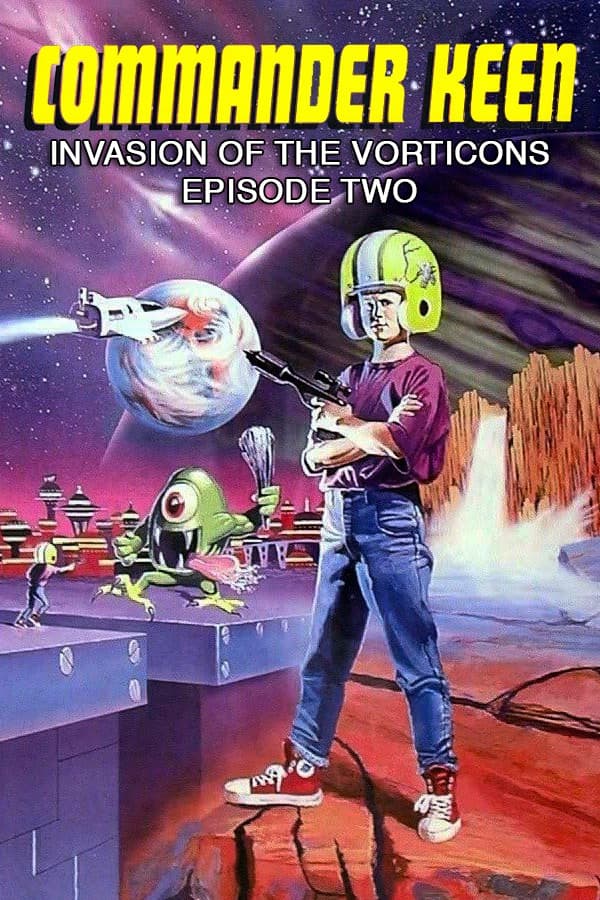

If you played Commander Keen 2: The Earth Explodes on an IBM-compatible PC back in 1990, you remember the anxiety of stepping off a platform, praying a Butler Robot wasn't waiting to shove you into an electrified floor.
A platformer built on rejected Nintendo tech
Before Billy Blaze saved the planet, his creators were trying to bring console magic to standard DOS hardware. While working at Softdisk under the name "Ideas from the Deep", John Carmack created an algorithm called Adaptive Tile Refresh. It allowed smooth side-scrolling on standard PC graphics cards without dedicated hardware.
The team built a PC demo of Super Mario Bros. 3 to pitch the tech, but Nintendo turned them down. Scott Miller of Apogee Software, Ltd. recognized what they had built. He convinced Carmack, John Romero, Tom Hall, and Adrian Carmack to found id Software, Inc. and release an original platforming trilogy using the shareware model.
The gambit paid off immediately. Episode 1 was distributed for free, driving players to order the commercial software trilogy. The series generated over $30,000 in its first two weeks and brought in $60,000 a month shortly after.
In Commander Keen 2: The Earth Explodes, the mothership wants you dead
The story picks up right as eight-year-old child genius Billy Blaze heads home, only to discover a Vorticon Mothership hovering over Earth. The alien ship points eight X-14 Tantalus Rays directly at major Earth cities, including London and Rome. Your job is to infiltrate the ship and wreck every last ray before they fire.
Instead of an open world map, the level selection screen is a top-down blueprint of the mothership. You start at the Bottom Galley and choose corridors or weapon rooms from there. To destroy a Tantalus Ray, you have to break its power source, which happens to be a glowing cell taken from a giant purple Space Amoeba.
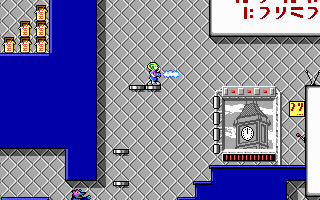
Compared to the first episode, the environment in this ship is far more hostile. Almost everything on board wants Keen dead. Light switches let you toggle room illumination, moving platforms carry you over hazard pits, and deadly shock floors wait for a single missed jump.
The enemy roster is equally mean. Butler Robots do not attack directly, but they keep shoving Keen right into nearby hazards. Floating machine gun robots pepper hallways with fire, while aggressive Baby Vorticons and heavily armored Elite guards block key exits.
Two buttons, tight bounces, and the Impossible Pogo Trick
Movement feels lightweight and slippery, requiring real precise control. You carry a Vorticon HyperPistol, but ammo is strictly limited. Every raygun shot counts, so you cannot rely on clearing rooms from a distance.
Because early PC keyboards lacked gamepad options, the controls rely on a classic two-button setup. Bouncing on the pogo stick gives you high vertical reach, but shooting requires pressing the jump and pogo buttons at the same time. Accidentally popping into a high bounce when trying to blast a guard is the classic way most runs end.
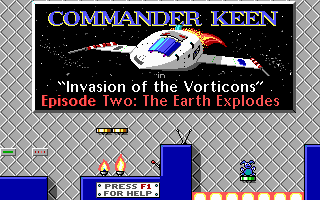
Dedicated players quickly discovered advanced tricks hidden inside Carmack's physics engine. The game features a handful of useful inputs and shortcuts:
- The Impossible Pogo Trick: Start running, mount the pogo stick, and immediately jump to launch Keen forward at a horizontal angle.
- Full Inventory Cheat: Pressing C, T, and Space simultaneously grants all keycards, maximum ammo, and the pogo stick instantly.
- God Mode: Pressing G, O, and D turns off hit detection entirely.
- Overworld Pass: Pressing Shift and Tab on the mothership blueprint lets Keen walk straight through uncompleted levels.
A harsh environment that still tests your jump timing
Reviewers at the time were quick to note that this second entry did not reinvent the wheel. It used the exact same core engine as the first chapter, leading some critics to dismiss it as more of the same. Yet the addition of interactive light switches, moving platforms, and strict hazard puzzles gave it a distinct personality.
What plainly fails today is the sudden spike in difficulty. The game relies heavily on instant-death traps and sudden enemy placements. Getting nudged into an electrified beam by a harmless-looking Butler Robot after clearing a tough jump feels cruel rather than challenging.
Still, for a PC action title from 1990, the responsive momentum and clever stage layouts remain impressive. Learning the exact timing to cross a room packed with moving hazards while managing your limited pistol ammo is genuinely satisfying.
How to stop the Tantalus Rays right now
If you want to experience early PC platforming at its most punishing, you do not need to hunt down floppy disks or set up vintage hardware. You can jump straight into the action today.
You can play Commander Keen 2: The Earth Explodes online right here in your web browser. The standard Commander Keen 2: The Earth Explodes MS-DOS game runs directly inside your current tab with zero installation required, letting you hop onto the Vorticon Mothership and save Earth in seconds.