
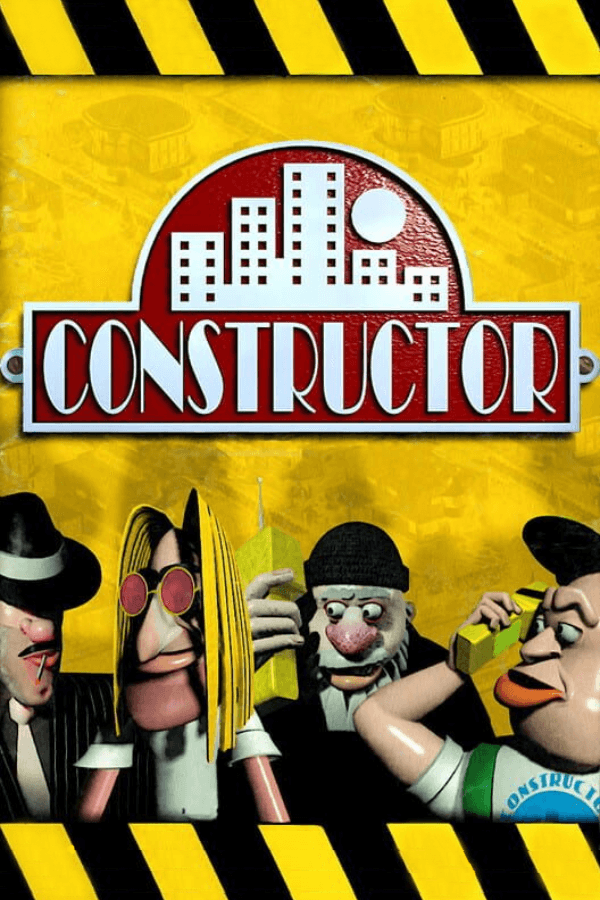

In Constructor, building a real estate empire is only half the job, while the other half involves siccing gangsters, bums, and rogue plumbers on your competitors.
A real estate manager with an axe to grind
Most builder games from the late nineties asked you to be a benevolent mayor or a patient city planner. System 3 Software Ltd. took a look at that tidy genre and decided real estate felt far more like street warfare. In this simulation game, you start on a patch of grass with a headquarters, a foreman, a small squad of workers, and a repairman. Your immediate goal is building a timber mill and throwing up basic wooden huts for slobs, the lowest social class in town.
Slobs are noisy and demanding, but they reproduce fast. That birth rate is your actual lifeblood, because you convert those offspring into fresh construction workers or upgrade their living standards to breed higher-tier tenants. Build three wooden huts and the town council permits a concrete works, opening the door to sturdier housing. Once you erect a gadget factory, you can outfit homes with computers and security alarms, raising a generation of educated citizens who pay higher rent and demand better living conditions.
The core proposition sounds straightforward on paper, but the actual rhythm of play feels entirely chaotic. You are never just managing balance sheets; you are spinning plates while your neighbor tries to throw rocks at them.
Why suburban sabotage defined Constructor
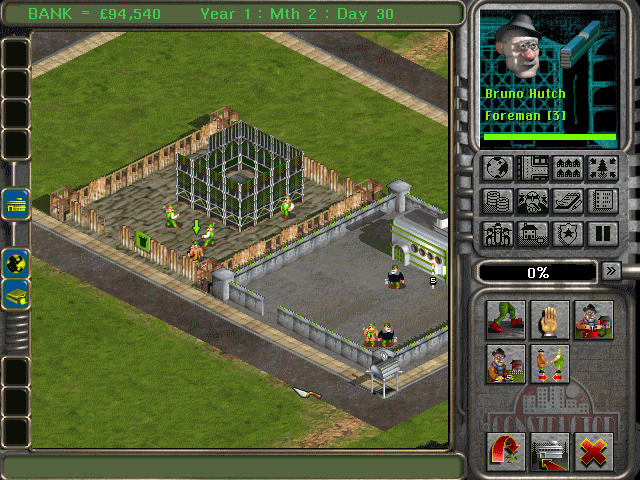
Violence and harassment are fundamental business strategies here. While your workers can pack a punch when grouped together, serious disruption requires specialized backup. Building a pizza parlor unlocks gangsters, who can execute targeted hits on rival foremen or demolish key structures. If you prefer stealthier ruin, you can build special facilities to hire an entire rogue's gallery of undesirables.
Each undesirable class serves a specific, malicious purpose:
- Hippies squat in rival properties, preventing income and infuriating nearby residents with street parties.
- Thugs host wild gatherings inside competitor houses to drive tenant stress through the roof.
- Thieves slip into enemy supply yards to siphon off cash and vital building materials like timber or cement.
- Psychos and Ghosts inflict heavy damage on properties, terrifying occupants and forcing swift repairs.
- Bums hang around outside storefronts, tanking land value and annoying local foot traffic.
While you dispatch these nuisances across the fence, your rival is doing the exact same thing to you. Countering these strikes means placing police patrols in vulnerable neighborhoods and keeping repairmen on constant call. If a house sits neglected for too long, its structural integrity collapses, leaving behind a ruined pile of debris infested with giant cockroaches.
Brutal council demands meet constant micro-management
PC Zone highlighted the offbeat humor back in issue 50 before release, and those jokes are genuinely sharp. Yet beneath the dry British satire lies an uncompromising difficulty curve that punished players back in 1997 and still bites hard today. Published by Acclaim Entertainment, Inc., the game topped UK sales charts upon release, but plenty of buyers hit a hard wall within two hours.
The biggest hurdle is the constant, overlapping pressure from your tenants and the town council. Residents constantly file demands for street upgrades, parks, subways, or home appliances. Ignore a complaint for too long, and they complain directly to the council. Accumulate too many council warnings, and you get evicted, triggering an immediate game over screen.
Pathfinding issues make high-stakes combat fiddly. Trying to organize a gang brawl while simultaneously queueing up concrete production and repairing a burst pipe creates immense stress. The lateral thinking required to outmaneuver rival developers is rewarding, but the sheer volume of clicking required turns later stages into a frantic exercise in damage control.
How Constructor holds up decades later
Originally revealed in The One magazine in 1991, the title endured a lengthy development under director Roger Booth and designer Phil Thornton before reaching store shelves. That lengthy gestation yielded a detailed 2D isometric engine with distinct character animations and memorable audio design. Hearing your workers grunt under heavy loads or listening to the racket of a hippie street party gives the world immense personality.
Among 1997 games, few management titles mixed criminal mischief with urban planning quite like this. Games like SimCity 2000 offered grand scope, but this title focused on the ground-level friction of turf battles. The steep learning curve and fiddly pathfinding are genuine flaws, but the core loop of strategic sabotage is wonderfully wicked.
If you enjoy management games that fight back, this classic is well worth your time. You can play Constructor online free in your browser right now, with no installation needed. Try starting on an easier scenario first, keep a tight grip on your repairmen, and never let your rivals build a pizza parlor unmonitored.