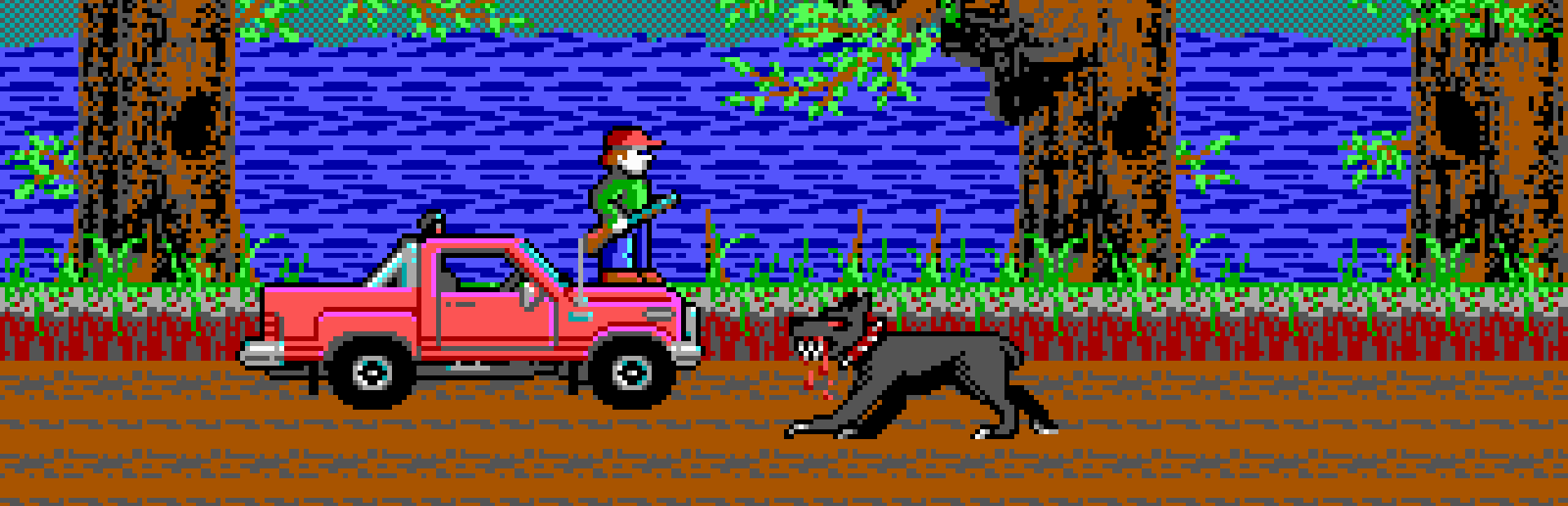
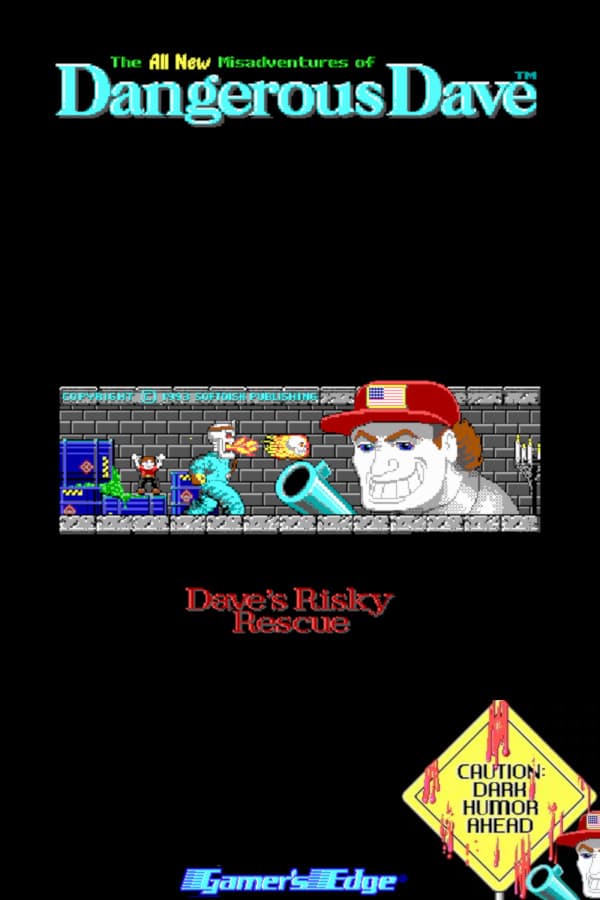

If you played Dangerous Dave's Risky Rescue, you almost certainly remember the sickening crunch of falling two inches too far and the frantic panic of standing completely still while Dave shoved six shotgun shells back into his gun.
Softdisk without id Software: The origins of Dangerous Dave's Risky Rescue
When John Romero and John Carmack left Softdisk Publishing alongside Adrian Carmack and Tom Hall to found id Software, they left behind the engine tech and character rights that built the early Dave titles. Softdisk still needed commercial disk-magazine hits, so designer Greg Paul Malone II stepped up to steer the next entry. Programmer Nolan Martin took Carmack and Romero's underlying engine code and adapted it, while artists Jerry K. Jones and Carol Ludden gave the game a darker, far more splatter-heavy look than its predecessors.
The core premise abandons the simple trophy-collecting roots of the original floppy release for pure side-scrolling survival. Dr. Nemesis has kidnapped Dave's little brother Delbert, holding him inside a dark fortress surrounded by dangerous wilderness. Dave packs a heavy shotgun and heads out into the night, trading bouncy jump-and-run action for violent shootouts against monsters and lethal environmental traps.
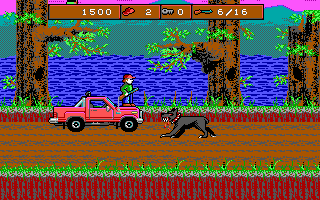
The result was a 1993 release that felt noticeably smoother and looked sharper than early DOS action games, but it brought a whole new set of technical quirks with it. Leaving the id team behind meant Softdisk had to rely on existing engine routines while stretching them to cover fresh visuals, heavy gore, and multi-stage boss fights. You can feel that tension in almost every screen, where impressive smooth scrolling sits right alongside bizarre physics glitches.
Reloading on the spot and dodging instant-death drops
The moment-to-moment action in this action platformer demands extreme caution because Dave is surprisingly fragile. Falling from a ledge that looks barely taller than Dave himself instantly snaps his neck with a violent sound effect, forcing you to memorise drop heights across every stage. Enemy movements are equally punishing, featuring unpredictable wolf leaps and ghosts that float through solid walls directly into your path.
Gunplay relies on a deliberate risk-reward system centered on Dave's shotgun mechanics. The weapon holds six shells, and while the blast wipes out standard foes instantly, reloading requires Dave to stand completely frozen on the spot while filling the chamber. If you empty your tube right as an enemy charges, you are forced to watch helplessly until the reload animation finishes or you take a fatal hit.
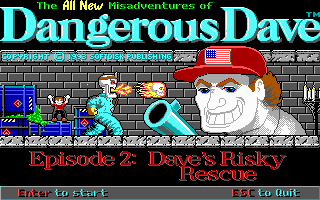
Progress through the eleven stages requires a mix of tight movement, key collecting, and secret hunting across varied environments:
- Early outdoor areas: Scene 1: Forest Approach, Scene 2: Old Confederate Hideout, and Scene 3: The Gate force you to dodge lethal drop deaths and timing-based trap doors.
- The castle perimeter: Scene 4: Castle Gorge, Scene 5: The Moats Gauntlet, and Scene 6: The Red Guardian ramp up the danger with aquatic hazards and tough boss encounters like the Minotaur.
- Inside the fortress: Scene 7: Castle of Dr. Nemesis, Scene 8: Inside the Castle, and Scene 9: Toxic Warehouse introduce complex keycard puzzles and spike corridors.
- The final stretch: Scene 10: The Catacombs and Scene 11: Laboratory of Nemesis test your shotgun management against infinite enemy spawns and Dr. Nemesis himself.
Scattered throughout these stages are hidden walls hiding score items like Elvis portraits and Confederate flags. Finding these bonus pickups offers extra lives, which you will desperately need given the game's brutal difficulty curve. Key cards unlock color-coded doors blocking stage exits, turning several mid-game levels into quick maze sprints under heavy fire.
Bugs, broken triggers, and four-minute speedruns in Dangerous Dave's Risky Rescue
For all its polished graphical upgrades, this entry earned a reputation among retro players for being wildly unpolished under the hood. Collision detection frequently fails on steep slopes, allowing Dave to clip through floor geometry or skip trigger points entirely. Level boundaries often lack proper walls, meaning a single well-timed jump can bypass whole sections of tricky platforming.
The boss encounters suffer from the exact same structural oversights. You can walk right past major bosses like the Minotaur or the Red Guardian by exploiting high platform jumps or hopping over enemy sprites when their hitboxes fail to register. Even the final showdown against Dr. Nemesis in his laboratory can be bypassed completely, allowing players who know the geometry tricks to reach the victory screen in under four minutes without firing a single shell at the final boss.
Death mechanics also introduce easily exploitable item farming loops. When Dave dies and respawns at a checkpoint, collectible items, extra lives, and essential door key cards reload onto the map without resetting your current inventory count. Players stuck on brutal later levels routinely kill Dave intentionally next to a keycard or extra life icon, collecting it repeatedly to stockpile safety nets before attempting a hard jump.
Where it lands and how to play this MS-DOS game today
Designer Greg Paul Malone II delivered an entertaining, atmospheric DOS side-scroller that remains deeply weird. The gunplay carries real weight, and the sound design gives every shotgun blast and blood splat a satisfying punch. However, the erratic difficulty curve, instant fall deaths, and broken level triggers mean it functions as much as a broken software sandbox as it does a tight platformer.
If you want to experience this chaotic piece of 1993 PC gaming history for yourself, you can play Dangerous Dave's Risky Rescue free in your browser right now. You can jump straight into the Dangerous Dave's Risky Rescue MS-DOS game online with zero setup or file downloading required. Fire up the game, keep an eye on your shotgun shell count, and try to survive that brutal reload delay while a pack of pixelated wolves comes running straight for your knees.
How Dangerous Dave's Risky Rescue is played — the keys the game listens to, grouped by what they do.
- Movement
- Action
- Interface
Highlighted keys are mapped — hover or tap one to see what it does.
Press F3 during play to calibrate a joystick. Run 'START /COMP' at the DOS prompt for SVGA compatibility mode if display issues occur.
Players' controls
Touch and gamepad controls
The on-screen keyboard and gamepad mapping the browser player uses on a phone, a tablet or a controller, as opposed to the real keys above. $PRO members make their own in the player and share them here; anyone can pick one to play with.
Make your own touch controlsPRO
- 1Open the editorSign in below, then pick what to make. The game starts with the editor open over it.
- 2Place your keysAdd keys and drag them where your thumbs rest, or map a controller's buttons. Test plays the game with them; Save keeps them, and you play with them from then on.
- 3Share themShare them right after saving in the game, or name and share them here. Players vote, and the best become this game's controls for everyone.
Go PROSee how it worksSign in+20 XP for sharing · +50 XP if yours become the game's own
- The game's own controlsKeyboardGamepadWhat every player starts with.In use
2 screenshots
From the archive
No gameplay video yet
No gameplay video for Dangerous Dave's Risky Rescue yet. Sign in to add one.
No reviews yet
Tell the community what you think of Dangerous Dave's Risky Rescue. Reviews are public and tied to your username.
No archived manuals for Dangerous Dave's Risky Rescue yet
No manuals archived for this title yet. Sign in to upload the first scan.
Cheat codes, console commands and memory pokes for Dangerous Dave's Risky Rescue — each one verified and attributed.
Sign in to submitNo cheats yet for this title
Know a working cheat, poke or trainer? Add it with the button above. Moderators check every entry before it goes live.
No archived soundtrack for Dangerous Dave's Risky Rescue yet
No soundtrack archived for this title yet. Sign in to upload the first rip.
No save states for Dangerous Dave's Risky Rescue yet
No save states for this title yet. Sign in to share one.
Discussions
Sign in to post- Threads0
- Total posts0
- Online now6
Community · Dangerous Dave's Risky Rescue
Who's contributing, and what's new
- Reviews0
- Threads0
- Uploadsapproved0
- Contributors0
Recent activity