


Dark Seed
aka Dark Seed 1 · Dark Seed (Special Limited Edition)
Checking…
Dark Seed drops you into a quiet mansion in Woodland Hills with a split headache, three real-time days on the clock, and an alien embryo growing inside your head. Swiss artist H. R. Giger provided the biomechanical artwork for this quiet, brutally unforgiving point-and-click thriller.
When H. R. Giger demanded pixels instead of blocky shapes
Back in 1990, point-and-click graphics usually ran in low-resolution 320x200 pixels. Cyberdreams wanted something far more ambitious for their debut adventure game. Senior producer Harald Seeley and team concept leads Mike Dawson, John Krause, and Patrick Ketchum landed a licensing deal with surrealist master H. R. Giger. Giger looked at typical PC screen resolution and refused to let his work appear square or jagged.
To satisfy Giger, programmer Lennard Pedderson implemented a custom 640x350 EGA graphics mode. Limiting the palette to 16 colors was the trade-off for doubling the horizontal detail. The result was striking for a 1992 release. Paintings like Li II became cover art and key backgrounds. Giger's alien structures looked crisp, cold, and uncomfortable on standard PC monitors.
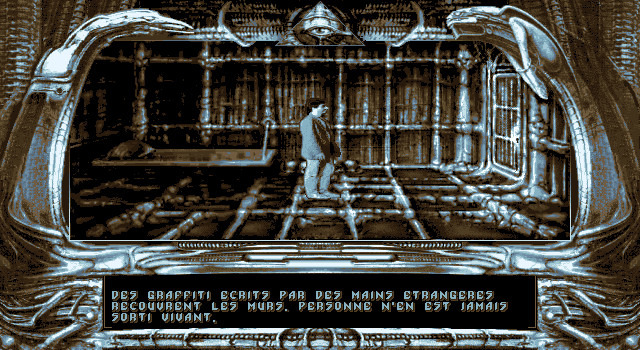
Lead designer Mike Dawson went even further by acting as the visual model for the protagonist. You play an advertising executive, also named Mike Dawson, who buys an old house to write his novel. The real world looks mundane, full of wooden furniture and quiet streets. Beneath that world lies the Dark World, a parallel dimension populated by bio-mechanical aliens called the Ancients.
Three days to save your skull in Dark Seed
The core setup in Dark Seed feels personal from the minute you wake up on day one. Mike wakes up from a nightmare with a pounding head. An alien embryo has been implanted in his brain, and you have exactly three days to stop it from hatching.
Progress relies on navigating both dimensions and understanding how actions in the real world alter the alien side. Key mechanics dictate how you spend those three short days:
- Every action consumes real-time minutes on an unforgiving internal clock.
- Items found in the town of Woodland Hills must be transported across dimensions to solve alien machinery puzzles.
- Mike must return home to sleep in his own bed each night before collapsing.
The mirror mechanics created clever scenarios for players who figured out the link between worlds. Dropping an object or unlocking a door in the normal world often opens a pathway in the biomechanical realm. It rewarded careful observation of both maps side by side.
One missed item breaks your entire save file
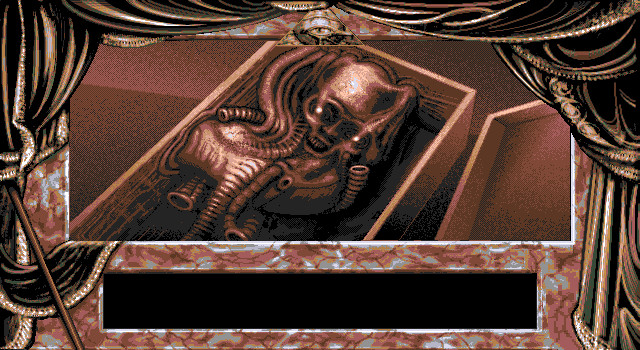
Living with the game clock is where most players ran straight into a wall. If you fail to pick up a specific object on day one, the game never stops you. It lets you keep playing until day three, where you hit an impossible puzzle and die instantly. Computer Gaming World noted that the story delivered great horror atmosphere, but blasted the poorly implemented interactive elements for nearly ruining the experience.
Pixel hunting made that strict timer even harder to deal with. Important items merged directly into the detailed 16-color background art. Missing a tiny key in a dark corner early on meant your entire save file was quietly ruined two hours later. Readers of PC magazines swapped warnings about mandatory routines: pick up your mail immediately, search every room twice, and never lose track of time.
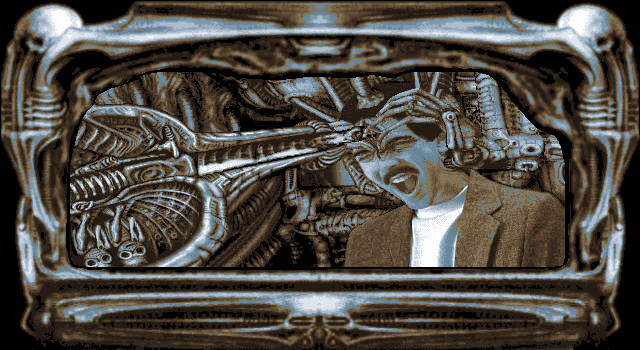
Save management became your actual primary weapon. Players learned to keep multiple save slots for every single morning and afternoon. Without a guide, beating the game required constant trial and error.
The voice acting and puzzle logic of Dark Seed
When talkie CD-ROM versions arrived, Cyberdreams had Mike Dawson perform his own voice lines. His flat, deadpan delivery became famous among fans for all the wrong reasons. Hearing a man react to a hideous alien nightmare in his brain with the tone of a tired accountant added unintended comedy to a tense story.
Sound design on standard Sound Blaster hardware did a much better job. Quiet ambient hums and sudden sharp audio cues built real tension when stepping through portals. Combined with Giger's unsettling art, the atmosphere carried you through the clunky inventory system.
Cyberdreams pushed hard on high-concept horror, and they succeeded in making a setting that felt hostile. Even with its harsh puzzle design, the game proved popular enough to spawn a sequel, Dark Seed II, three years later. You can learn more about the title on its Wikipedia page.
Fire up your browser and test your timing
The original Cyberdreams, Inc. release sits in a strange corner of design from Cyberdreams, Inc.. The artwork still carries a genuine chill, and the real-time clock forces you to think three moves ahead. Early nineties PC developers were simply willing to risk extreme player frustration for the sake of strict narrative tension.
Static screenshots cannot show you the sheer anxiety of watching that clock tick down while you hunt for missing clues. You can play Dark Seed online today, running this original Dark Seed MS-DOS game directly in your web browser. You can experience Dark Seed free in your browser with no setup required, giving you immediate access to Mike Dawson's nightmare right away.
How Dark Seed is played — the keys the game listens to, grouped by what they do.
- Movement
- Action
- Left click — Move or execute action
- Right click — Cycle cursor shape
Highlighted keys are mapped — hover or tap one to see what it does.
An input device setup screen appears on first launch (or by running DS /M). Keyboard and joystick can be chosen as alternatives to the mouse.
Players' controls
Touch and gamepad controls
The on-screen keyboard and gamepad mapping the browser player uses on a phone, a tablet or a controller, as opposed to the real keys above. $PRO members make their own in the player and share them here; anyone can pick one to play with.
Make your own touch controlsPRO
- 1Open the editorSign in below, then pick what to make. The game starts with the editor open over it.
- 2Place your keysAdd keys and drag them where your thumbs rest, or map a controller's buttons. Test plays the game with them; Save keeps them, and you play with them from then on.
- 3Share themShare them right after saving in the game, or name and share them here. Players vote, and the best become this game's controls for everyone.
Go PROSee how it worksSign in+20 XP for sharing · +50 XP if yours become the game's own
- The game's own controlsKeyboardGamepadWhat every player starts with.In use
9 screenshots
From the archive
No reviews yet
Tell the community what you think of Dark Seed. Reviews are public and tied to your username.
No archived manuals for Dark Seed yet
No manuals archived for this title yet. Sign in to upload the first scan.
Cheat codes, console commands and memory pokes for Dark Seed — each one verified and attributed.
Sign in to submitNo cheats yet for this title
Know a working cheat, poke or trainer? Add it with the button above. Moderators check every entry before it goes live.
No archived soundtrack for Dark Seed yet
No soundtrack archived for this title yet. Sign in to upload the first rip.
No save states for Dark Seed yet
No save states for this title yet. Sign in to share one.
Discussions
Sign in to post- Threads0
- Total posts0
- Online now6
Community · Dark Seed
Who's contributing, and what's new
- Reviews0
- Threads0
- Uploadsapproved0
- Contributors0
Recent activity
Nothing here yet
Reviews, discussion threads and approved uploads appear here as members add them.