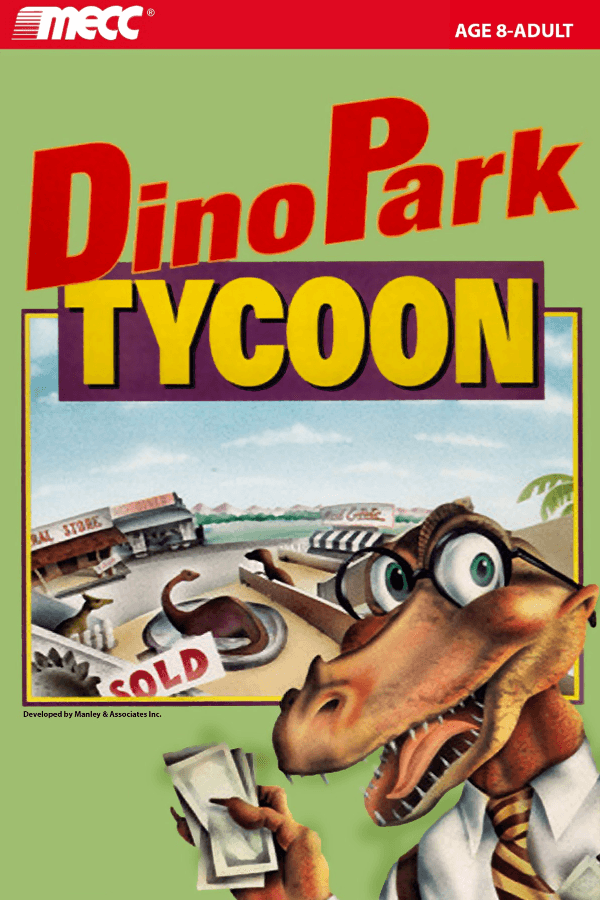

DinoPark Tycoon puts you in charge of a modest plot of land and a high-interest bank loan to construct a dinosaur sanctuary that can end in bankruptcy just as quickly as a security breakdown.
Opening a park in DinoPark Tycoon is an exercise in brutal accounting
Most players who picked up the 1993 MS-DOS game expected a lighthearted dinosaur builder. Instead, they were greeted by high-interest loan repayments, payroll overhead, and quarterly food logistics. Published by MECC, the studio famous for putting computer labs across America to work on budget management, this business sim takes pleasure in letting your park fall apart if you fail to calculate your operating margins.
Before you ever unlock a giant carnivore, you are forced to stare down the reality of a starting loan. In the retail edition, you begin with $5,000, while the school version sent to elementary classrooms gave kids a $20,000 cushion to lessen the initial shock. The banker will not hesitate to foreclose on your land the moment you miss payments. MECC executive Dean Kephardt pointed out back then that development on the project was already well underway before the blockbuster movie Jurassic Park reached theatres, meaning the team was building a genuine economic model rather than a quick movie tie-in.
The financial traps that ruin your first season
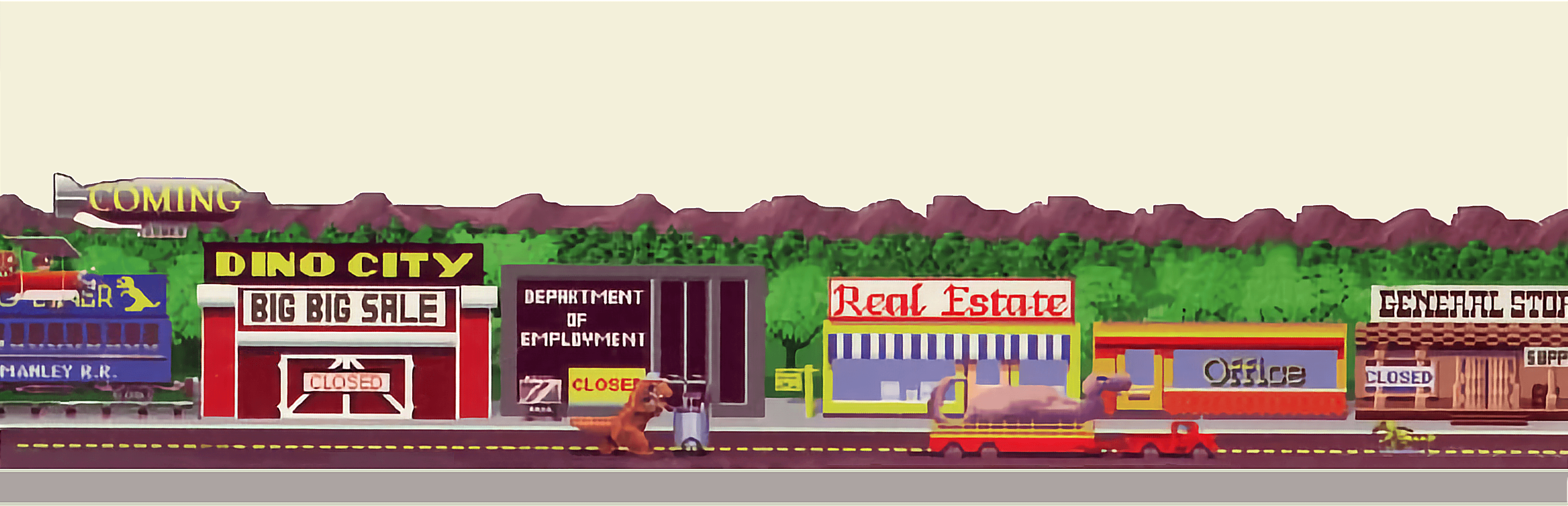
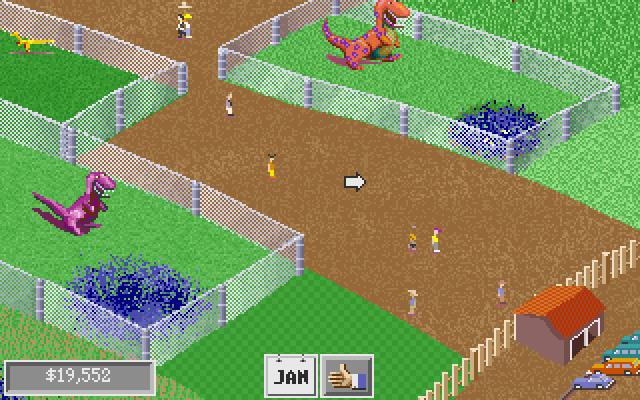
The early game tests your patience. You start with an empty plot in your choice of terrain, ranging from dry desert to lush swamp. You buy dinosaurs from Dino City, starting small with a modest Coelophysis or plant-eaters before trying to support a giant Diplodocus or a Tyrannosaurus rex. If you buy a top-tier carnivore right away, the daily food bills for meat will drain your cash reserve in weeks. Stronger concrete or electric high-voltage fences are mandatory to keep carnivores inside, but spending your capital on electric wire leaves you with no cash to pay staff.
You have to manage a full roster of park expenses to keep the doors open and visitors happy:
- Terrain and plots: Buying plains, swamp, or desert land to suit specific dinosaur habitats.
- Security fencing: Choosing between cheap wooden barriers, steel, concrete, or expensive high-voltage electric fences.
- Staffing: Hiring maintenance workers, cooks, tour guides, and veterinarians on recurring salaries.
- Park infrastructure: Placing concession stands, bathrooms, gift shops, and parking lots to generate extra revenue.
- Supply chain: Purchasing meat, plants, or seeds to grow crops for your herbivores.
An animated guide dinosaur pops up on screen when you look lost, but even his friendly presence cannot protect you from basic accounting mistakes. If a carnivore breaks through a cheap wooden fence, it eats park guests, driving attendance off a cliff and inviting financial destruction. Setting gate prices too high scares away families, while forgetting to buy advertising for the upcoming season leaves your newly built gift shops completely empty.
When an educational game turns into a cutthroat simulator
Developer Manley & Associates crafted an experience that period magazines praised for stealthy educational value. COMPUTE! highlighted how young players sharpened their math and problem-solving skills without even realizing they were doing homework. Yet early reviewers and fans on fan sites like Home of the Underdogs rightly noted that the difficulty wall could feel daunting for younger audiences. The game demands that you think like a spreadsheet manager who occasionally buys a T. rex, treating seasonal supply costs as seriously as a full-fledged economic simulator.
The DOS version of the game also harbors one of the most famous exploits in 1990s educational games. Known among long-time fans as the auction exploit, it allows you to generate virtually unlimited funds. By putting one of your dinosaurs up for auction, waiting until the next quarter, bidding on your own animal, and then clicking cancel on the dinosaur details screen, the software glitches and dumps thousands of dollars straight into your park bank account. It was the only way many kids in 1993 ever managed to get their park featured on the cover of the fictional Dino Times magazine instead of going bankrupt.
Try running DinoPark Tycoon in your browser today
DinoPark Tycoon makes financial failure a constant threat that keeps every decision tense. While the visuals and interface look like early 1990s desktop software, the underlying simulation forces you to weigh real trade-offs between safety upgrades, concession revenue, and long-term expansion goals.
You can play DinoPark Tycoon online free in your browser right now with no setup needed. Pick your initial loan, set up your first wooden paddock, and see if you can run a profitable dinosaur exhibit without letting the banker close your doors.