
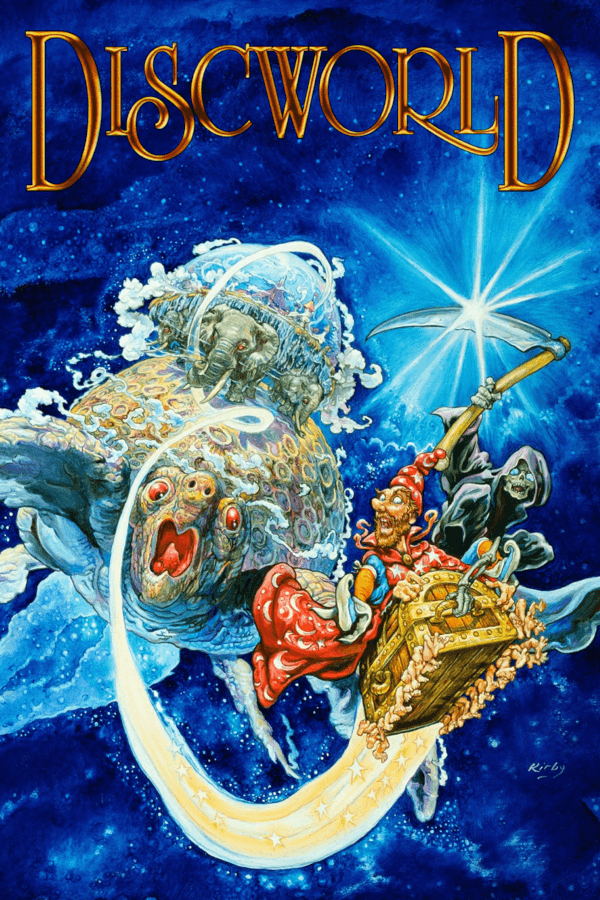

Playing Discworld on MS-DOS meant falling in love with Eric Idle's voice work right before hitting a wall of nonsensical puzzle design. You spent hours trying every item in your living trunk on every pixel in Ankh-Morpork just to make a dragon detector work.
Designer Gregg Barnett accomplished something rare in 1995 by convincing Terry Pratchett to grant him the license for a graphic adventure. Pratchett had been burned by the 1986 text game based on The Colour of Magic. Barnett promised a title that looked and sounded like a living cartoon set on the flat world riding four giant elephants.
The result was a stunning third-person adventure that captured the visual spirit of Josh Kirby's famous book covers. Developed by Teeny Weeny Games alongside Perfect 10 Productions, it cast you as Rincewind, a deeply inept wizard who wants only to avoid dying. When a secret brotherhood summons a dragon that terrorizes the city state of Ankh-Morpork, the Archchancellor hands you the job of getting rid of it.
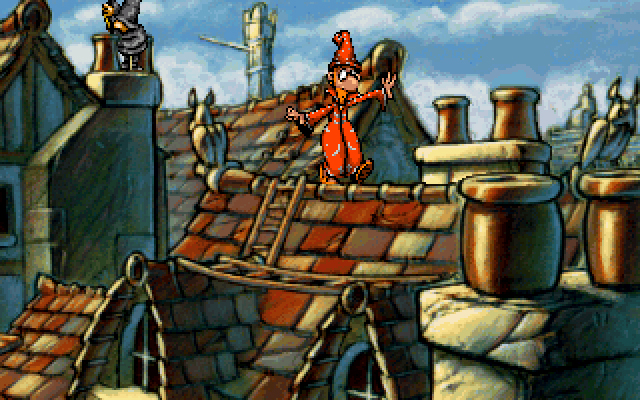
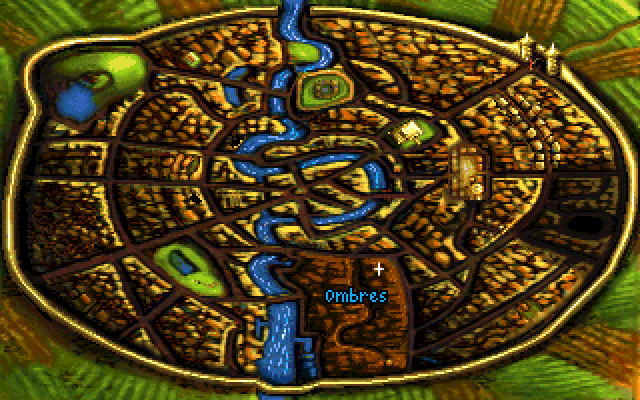
The story borrows heavily from Pratchett's novel Guards! Guards!, though Rincewind replaces the city watch as the central hero. You explore locations across four acts, wandering from the Unseen University to the shady streets of the Shades, the Broken Drum pub, and the mysterious L-Space. Later in the game, you even travel back in time to alter events before they happen.
The interface uses a simple point-and-select system, but it adds a sharp twist to inventory management. Rincewind can only carry two items in his own pockets. Everything else you pick up gets handed to the Luggage, a wooden chest walking behind you on dozens of tiny legs.
Having a sentient chest follow you through Ankh-Morpork provides plenty of visual comedy. It also acts as an unlimited pocket. Whenever you need an object, you click on the Luggage to open its mouth and pull out whatever absurd item you stashed away three scenes earlier.
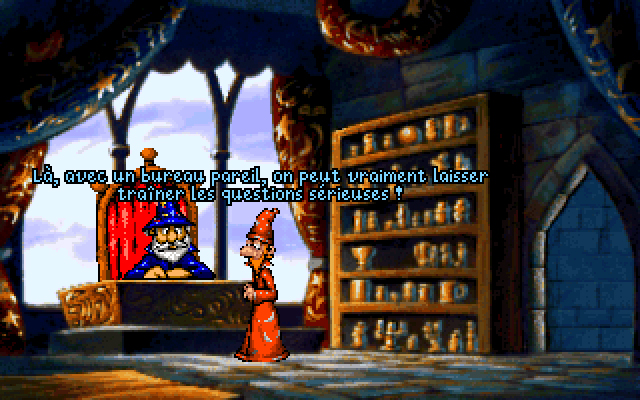
The entire first act centers on gathering components to build a dragon detector. You walk from scene to scene asking characters for help through branching dialogue trees. Psygnosis Limited published the game on CD-ROM, which allowed for complete audio dialogue for every single character.
That voice cast is among the best ever assembled for a PC title. Eric Idle leads as Rincewind, flanked by British comedy actors like Tony Robinson, Jon Pertwee, Rob Brydon, Nigel Planer, and Kate Robbins. PC Gamer praised the cast as a worthy rival to LucasArts classics, even if they noted that Act I suffered from an overuse of dialogue.
The real trouble starts when you try to solve the puzzles cleanly. Period reviews in outlets like Computer Gaming World handed out 3.5 out of 5 scores, admiring the presentation while wincing at the bizarre puzzle logic. You do not solve problems here with simple common sense.
Instead, the game demands extreme leaps of creative faith. You spend hours hunting for microscopic objects hidden on screen. Players famously got stuck hunting for a tiny worm in the cobblestones of the square, pinching an item out of a pocket, or finding a golden banana hidden behind a character's ear.
When logical thinking fails, you end up dragging every item in your Luggage onto every hotspot in the scene. To make matters worse, early CD-ROM copies shipped with a progression bug near the end of the game that completely blocked your progress until a patch arrived. There were no cheat codes to save you either, though Idle left an easter egg in the audio files where he deliberately tried to become the first person in a game to drop a specific swear word.
If you love Pratchett's world, the writing and full CD audio make this game worth playing today. The proprietary Tinsel engine handled the cartoon animation smoothly, and the Sound Blaster audio track carried the atmosphere well. It sits comfortably alongside the top point-and-click adventure games of 1995, provided you know what you are getting into.
What plainly does not hold up is the puzzle design. Playing without a walkthrough in the nineties meant weeks of desperate trial and error. If you decide to sit down with it today, keep a guide handy so you can enjoy the comedy without losing your mind over invisible inventory triggers.
You can run this full Discworld MS-DOS game straight from your browser window right now. There is nothing to install, so you can jump into Ankh-Morpork within seconds.
When you start to play Discworld free in your browser, head straight into the Unseen University library to get your first look at L-Space. Talk to the Archchancellor, watch the Luggage stomp around behind Rincewind, and enjoy Eric Idle's delivery. Just remember to keep a puzzle walkthrough nearby when the logic inevitably breaks down.
Playing Discworld on MS-DOS meant falling in love with Eric Idle's voice work right before hitting a wall of nonsensical puzzle design. You spent hours trying every item in your living trunk on every pixel in Ankh-Morpork just to make a dragon detector work.
Designer Gregg Barnett accomplished something rare in 1995 by convincing Terry Pratchett to grant him the license for a graphic adventure. Pratchett had been burned by the 1986 text game based on The Colour of Magic. Barnett promised a title that looked and sounded like a living cartoon set on the flat world riding four giant elephants.
The result was a stunning third-person adventure that captured the visual spirit of Josh Kirby's famous book covers. Developed by Teeny Weeny Games alongside Perfect 10 Productions, it cast you as Rincewind, a deeply inept wizard who wants only to avoid dying. When a secret brotherhood summons a dragon that terrorizes the city state of Ankh-Morpork, the Archchancellor hands you the job of getting rid of it.
The story borrows heavily from Pratchett's novel Guards! Guards!, though Rincewind replaces the city watch as the central hero. You explore locations across four acts, wandering from the Unseen University to the shady streets of the Shades, the Broken Drum pub, and the mysterious L-Space. Later in the game, you even travel back in time to alter events before they happen.
The interface uses a simple point-and-select system, but it adds a sharp twist to inventory management. Rincewind can only carry two items in his own pockets. Everything else you pick up gets handed to the Luggage, a wooden chest walking behind you on dozens of tiny legs.
Having a sentient chest follow you through Ankh-Morpork provides plenty of visual comedy. It also acts as an unlimited pocket. Whenever you need an object, you click on the Luggage to open its mouth and pull out whatever absurd item you stashed away three scenes earlier.
The entire first act centers on gathering components to build a dragon detector. You walk from scene to scene asking characters for help through branching dialogue trees. Psygnosis Limited published the game on CD-ROM, which allowed for complete audio dialogue for every single character.
That voice cast is among the best ever assembled for a PC title. Eric Idle leads as Rincewind, flanked by British comedy actors like Tony Robinson, Jon Pertwee, Rob Brydon, Nigel Planer, and Kate Robbins. PC Gamer praised the cast as a worthy rival to LucasArts classics, even if they noted that Act I suffered from an overuse of dialogue.
The real trouble starts when you try to solve the puzzles cleanly. Period reviews in outlets like Computer Gaming World handed out 3.5 out of 5 scores, admiring the presentation while wincing at the bizarre puzzle logic. You do not solve problems here with simple common sense.
Instead, the game demands extreme leaps of creative faith. You spend hours hunting for microscopic objects hidden on screen. Players famously got stuck hunting for a tiny worm in the cobblestones of the square, pinching an item out of a pocket, or finding a golden banana hidden behind a character's ear.
When logical thinking fails, you end up dragging every item in your Luggage onto every hotspot in the scene. To make matters worse, early CD-ROM copies shipped with a progression bug near the end of the game that completely blocked your progress until a patch arrived. There were no cheat codes to save you either, though Idle left an easter egg in the audio files where he deliberately tried to become the first person in a game to drop a specific swear word.
If you love Pratchett's world, the writing and full CD audio make this game worth playing today. The proprietary Tinsel engine handled the cartoon animation smoothly, and the Sound Blaster audio track carried the atmosphere well. It sits comfortably alongside the top point-and-click adventure games of 1995, provided you know what you are getting into.
What plainly does not hold up is the puzzle design. Playing without a walkthrough in the nineties meant weeks of desperate trial and error. If you decide to sit down with it today, keep a guide handy so you can enjoy the comedy without losing your mind over invisible inventory triggers.
You can run this full Discworld MS-DOS game straight from your browser window right now. There is nothing to install, so you can jump into Ankh-Morpork within seconds.
When you start to play Discworld free in your browser, head straight into the Unseen University library to get your first look at L-Space. Talk to the Archchancellor, watch the Luggage stomp around behind Rincewind, and enjoy Eric Idle's delivery. Just remember to keep a puzzle walkthrough nearby when the logic inevitably breaks down.
How Discworld is played — the keys the game listens to, grouped by what they do.
Highlighted keys are mapped — hover or tap one to see what it does.
Full DOS keyboard reference chart was unavailable in documentation; mouse is the primary interface.
The on-screen keyboard and gamepad mapping the browser player uses on a phone, a tablet or a controller, as opposed to the real keys above. $PRO members make their own in the player and share them here; anyone can pick one to play with.
Cheat codes, console commands and memory pokes for Discworld — each one verified and attributed.
Sign in to submitHow Discworld is played — the keys the game listens to, grouped by what they do.
Highlighted keys are mapped — hover or tap one to see what it does.
Full DOS keyboard reference chart was unavailable in documentation; mouse is the primary interface.
The on-screen keyboard and gamepad mapping the browser player uses on a phone, a tablet or a controller, as opposed to the real keys above. $PRO members make their own in the player and share them here; anyone can pick one to play with.
Cheat codes, console commands and memory pokes for Discworld — each one verified and attributed.
Sign in to submit