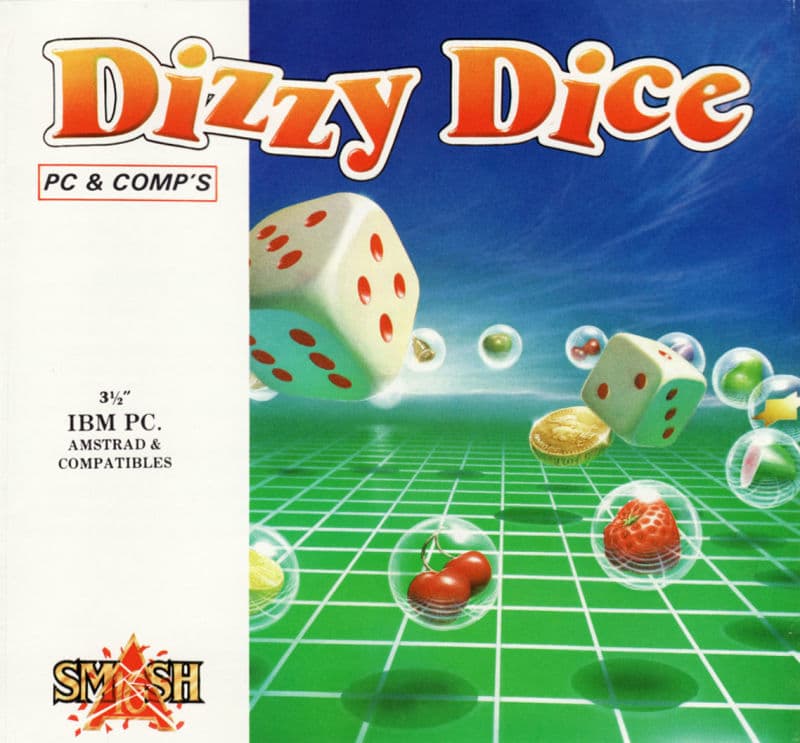
Dizzy Dice brings the loud tension of a British pub fruit machine straight to your monitor, combining classic spinning reels with risky dice gambles that can empty your pocket in seconds.
Pure digital gambling without the sticky carpets
Most budget PC titles in 1990 tried to mimic sprawling arcade adventures or fast shooter games, often collapsing under the weight of slow processors and limited system memory. Designer Paul Van Der Meer took a much smarter path by converting his 1986 home computer release into a straightforward gambling simulation for MS-DOS. Published through Smash 16, a budget imprint of Players Software, the game skips elaborate storylines to focus entirely on the cold mathematics of the casino floor.
When you fire up this 1990 release, there are no elaborate tutorials or deep controls to memorize. You sit down in front of a flat, head-on view of an arcade cabinet layout, drop your virtual coins, and start spinning. The goal is simple, but the machine is constantly testing your patience, tempting you to push your luck on one more spin until your initial stake vanishes into the machine.
How the reels, holds, and gambles actually work
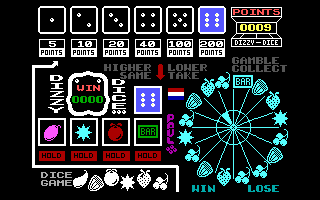
At its core, the standard mode operates like any fruit machine you would find parked in the corner of a local bowling alley. You press the spacebar to spin four individual reels, watching symbols align across the payline while listening to rhythmic chirps from the internal PC speaker. When the machine decides to be generous, it grants you holds, allowing you to lock key symbols in place while spinning the remaining reels to complete a winning line.
Managing your selections requires quick keyboard inputs during fast-paced play:
- Keys 1 through 4 lock the corresponding reels from left to right.
- Key 5 clears all active hold selections if you change your mind before spinning.
- The Spacebar initiates the spin or confirms your hold choices.
- Dedicated gamble keys trigger secondary mini-games whenever a winning payout lands.
A winning reel combination is rarely the end of a round. Instead of simply collecting a modest payout, the machine offers you a choice to gamble your earnings on a side game. You can test your luck on a higher-or-lower dice roll or take a spin on a simplified roulette wheel. Guessing correctly doubles your payout, but a single wrong call wipes out your entire balance from that turn, returning you straight to the base game with empty hands.
Breaking five banks in the main mode of Dizzy Dice
While standard play lets you endlessly spin and hoard cash, the primary challenge lives inside Bank Mode. Here, the game gives you a meager starting budget of $20 and sets a strict target: you must build your balance up to $100 to successfully break the bank. Once you reach that threshold, the machine resets your cash total and opens the second bank, raising the target higher and forcing you to repeat the entire process across five increasingly demanding stages.
This mode is where player frustration usually boils over. The probability curve can turn hostile without warning, swallowing ten consecutive spins without offering a single hold or bonus feature. Trying to build a $20 balance up to $100 requires taking heavy risks on the higher-or-lower dice gambles, and one bad roll on a 2 or a 5 sends your bankroll straight to zero. The moment your balance drops to nothing, a flat Game Over text box flashes on screen, terminating your entire run without a single checkpoint.
CGA green screens and designer Paul's personal mark
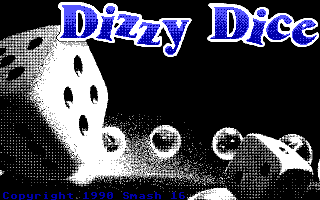
Before the main menu loads, the program presents a basic screen asking you to select your display hardware. Choosing CGA renders the cabinet in harsh magenta, cyan, and white tones, while EGA mode provides a cleaner palette with distinct colors for the reels, light bulbs, and payout tables. No matter which graphics mode you choose, you will notice the word "PAUL" explicitly drawn onto the cabinet border graphic, serving as a permanent signature from creator Paul Van Der Meer.
Audio consists entirely of primitive PC speaker beeps that chirp rhythmically as the reels drop into position. There are no smooth digital audio samples or background music tracks, meaning the machine sounds identical whether you win a minor prize or lose your final dollar. It is a functional presentation that gets out of the way of the core loop, though it can become repetitive during longer gaming sessions.
The final verdict on this budget casino spinner
What holds up today is the pure, unfiltered loop of risk and reward. The quick response time between spins and the clear layout mean you can run through dozens of rounds in a matter of minutes. What does not hold up is the severe random probability during Bank Mode, which can end a thirty-minute run on a single unlucky dice roll. Period reviews from European gaming journals praised its quick addictive hook while warning that the single-screen gameplay runs out of steam after a few evenings, and that assessment remains completely accurate today.
If you enjoy simple casino sims or retro European software releases from Players Software, this title offers an entertaining glimpse into early PC budget gaming. You can play Dizzy Dice free in your browser right now without downloading external software or adjusting system settings. Drop into Bank Mode, hold those reels, and see if you can manage your cash well enough to break all five banks before the sudden Game Over screen wipes out your profits.
How Dizzy Dice is played — the keys the game listens to, grouped by what they do.
- Action
- Interface
Highlighted keys are mapped — hover or tap one to see what it does.
Key map is incomplete as sub-game controls were not fully documented. Prompts to choose CGA or EGA graphics upon launch.
Players' controls
Touch and gamepad controls
The on-screen keyboard and gamepad mapping the browser player uses on a phone, a tablet or a controller, as opposed to the real keys above. $PRO members make their own in the player and share them here; anyone can pick one to play with.
Make your own touch controlsPRO
- 1Open the editorSign in below, then pick what to make. The game starts with the editor open over it.
- 2Place your keysAdd keys and drag them where your thumbs rest, or map a controller's buttons. Test plays the game with them; Save keeps them, and you play with them from then on.
- 3Share themShare them right after saving in the game, or name and share them here. Players vote, and the best become this game's controls for everyone.
Go PROSee how it worksSign in+20 XP for sharing · +50 XP if yours become the game's own
- The game's own controlsKeyboardGamepadWhat every player starts with.In use
2 screenshots
From the archive
No reviews yet
Tell the community what you think of Dizzy Dice. Reviews are public and tied to your username.
No archived manuals for Dizzy Dice yet
No manuals archived for this title yet. Sign in to upload the first scan.
Cheat codes, console commands and memory pokes for Dizzy Dice — each one verified and attributed.
Sign in to submitNo cheats yet for this title
Know a working cheat, poke or trainer? Add it with the button above. Moderators check every entry before it goes live.
No archived soundtrack for Dizzy Dice yet
No soundtrack archived for this title yet. Sign in to upload the first rip.
No save states for Dizzy Dice yet
No save states for this title yet. Sign in to share one.
Discussions
Sign in to post- Threads0
- Total posts0
- Online now6
Community · Dizzy Dice
Who's contributing, and what's new
- Reviews0
- Threads0
- Uploadsapproved0
- Contributors0
Recent activity
Nothing here yet
Reviews, discussion threads and approved uploads appear here as members add them.