Dune III
Checking…
At first glance, Dune III looks like a carbon copy of Westwood Studios' famous real-time strategy landmark, but launching a level reveals a strictly turn-based tactical exercise. By stripping away harvesting, construction, and real-time frantic clicks, this obscure fan creation shifts the battle for Rakis into a calculated game of positioning and action points.
Stepping onto the sand in Dune III
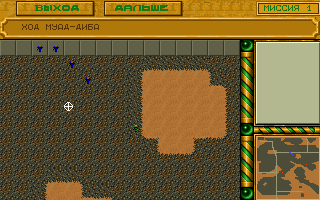
When you start the first mission of Dune III, the visual assets of Dune II hit you instantly. The sprite work, combat unit designs, and desert tilesets are ripped directly from Westwood's classic release, yet the game plays completely differently. There are no Spice Harvesters to protect, no wind traps to construct, and no fog of war obscuring the grid.
Instead, you step into the role of a Bashar serving Emperor Leto Atreides on the desert planet Rakis. Enemy forces from Ix, the Bene Tleilax, and the Scattering are trying to seize the spice supply, and you must wipe them out across a nine-mission campaign. Every scenario hands you a set force at the deployment screen, forcing you to win with whatever troops you start with.
The core loop revolves entirely around action point management. Every unit receives a fixed pool of movement points each turn, which you spend to navigate tiles or fire weapons. Because there is no base building to fall back on, every single unit loss carries heavy tactical consequences.
Positioning matters more than firepower
The central mechanic in Dune III links your movement points directly to your attack damage. If a unit spends points crawling across heavy sand before pulling the trigger, its final attack hits with far less force. A stationary tank that opens fire at the very start of its turn deals maximum damage.
This single design choice fundamentally changes how you approach every choke point on the map. Terrain comes in three main varieties: sand, rock, and road. Roads offer the cheapest travel cost, allowing troops to advance rapidly across long distances, while open sand drains your pool quickly.
- Roads: Lowest action point cost, ideal for rapid repositioning across the map.
- Rocks: Moderate movement penalty, providing decent defensive choke points.
- Sand: Heavy movement penalty, severely weakening any unit that attacks after crossing it.
Because of these movement costs, marching straight across open dunes to engage the enemy is usually a death sentence. An incoming counter-attack from stationary defender artillery will tear your weakened forces apart before you can strike back effectively.
Random placements make every run unpredictable
While map layouts stay identical every time you restart a scenario, enemy starting positions are partially randomized. This design choice prevents you from simply memorizing enemy locations across trial runs. You might set up an ambush along a road tile, only to discover the enemy commander spawned on a distant rocky ridge instead.
The interface relies on simple point-and-select controls, allowing you to cycle through troops and issue movement commands across the board. However, the game lacks an undo option or mid-mission save system. You can only save your campaign progress when exiting the application or finishing a stage, meaning a single misplaced unit can ruin twenty minutes of careful setup.
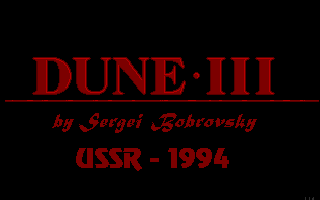
Developer Sergei Bobrovsky crafted this project with a tiny team, distributing it as freeware in the mid-1990s. Because the interface text was entirely in Russian and lacked commercial distribution, the game remained a rare curiosity outside Eastern European hobbyist circles. Yet as a pure tactics game, it offers a fascinating look at how fan developers reimagined established commercial engines.
Where the mechanics break down under pressure
The absence of fog of war means you can inspect the whole layout right from turn one. While this allows for deep forward planning, it also robs missions of tension once you understand the enemy's main force composition. Once you locate the enemy units, winning becomes a calculated game of baiting them off rock tiles onto slow sand.
The artificial intelligence is straightforward and aggressive, usually charging directly toward your line along the shortest path. You can routinely exploit this by parking heavy units on road intersections and waiting for the computer to drain its own movement points rushing toward you. Once the computer exhausts its points on movement, your stationary line can destroy them with full-power strikes.
Despite these balance quirks, this freeware release delivers a surprisingly focused tactical puzzle. It ditches the economy management of typical 1990s strategy titles to concentrate purely on tile-based unit positioning and fire control.
How to play Dune III today
If you want to experience this unusual piece of history, you can play Dune III online without setting up old hardware or messing with complex system configurations. The game runs directly in your web browser, allowing you to jump straight into the tactical campaign with zero hassle.
For your first run, pay close attention to how much movement budget your units have before firing. Keep your heavy units parked on high-value road or rock tiles, force the enemy AI to spend its points slogging through open sand, and hit them with full stationary attacks. You can play Dune III free in your browser right now, test your tactical positioning on Rakis, and see how this fan-made project transformed the real-time strategy visual style into a turn-based hex-style wargame.
Players' controls
Touch and gamepad controls
The on-screen keyboard and gamepad mapping the browser player uses on a phone, a tablet or a controller, as opposed to the real keys above. $PRO members make their own in the player and share them here; anyone can pick one to play with.
Make your own touch controlsPRO
- 1Open the editorSign in below, then pick what to make. The game starts with the editor open over it.
- 2Place your keysAdd keys and drag them where your thumbs rest, or map a controller's buttons. Test plays the game with them; Save keeps them, and you play with them from then on.
- 3Share themShare them right after saving in the game, or name and share them here. Players vote, and the best become this game's controls for everyone.
Go PROSee how it worksSign in+20 XP for sharing · +50 XP if yours become the game's own
- The game's own controlsNone yet: played with a real keyboard only.In use
2 screenshots
From the archive
No reviews yet
Tell the community what you think of Dune III. Reviews are public and tied to your username.
No archived manuals for Dune III yet
No manuals archived for this title yet. Sign in to upload the first scan.
Cheat codes, console commands and memory pokes for Dune III — each one verified and attributed.
Sign in to submitNo cheats yet for this title
Know a working cheat, poke or trainer? Add it with the button above. Moderators check every entry before it goes live.
No archived soundtrack for Dune III yet
No soundtrack archived for this title yet. Sign in to upload the first rip.
No save states for Dune III yet
No save states for this title yet. Sign in to share one.
Discussions
Sign in to post- Threads0
- Total posts0
- Online now6
Community · Dune III
Who's contributing, and what's new
- Reviews0
- Threads0
- Uploadsapproved0
- Contributors0
Recent activity
Nothing here yet
Reviews, discussion threads and approved uploads appear here as members add them.