
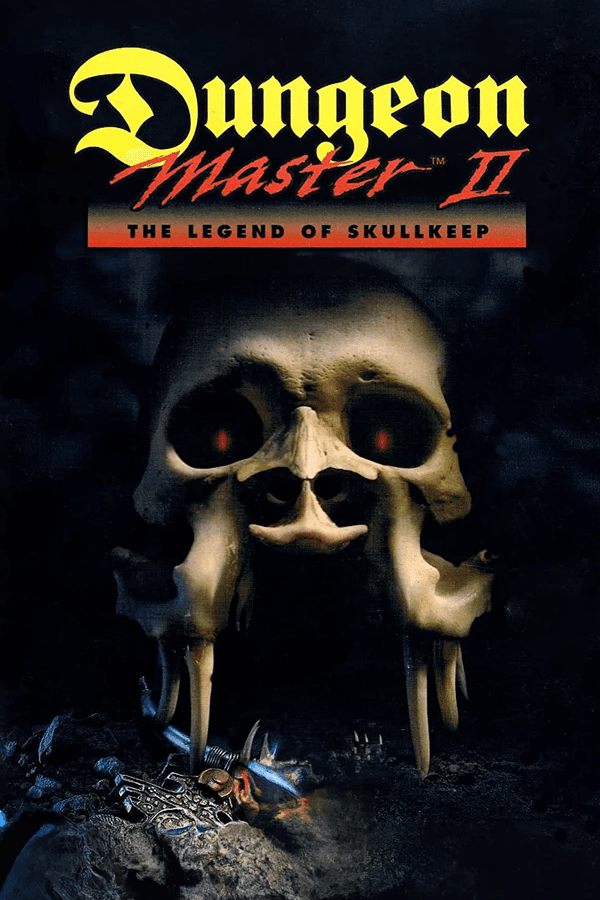

Dungeon Master II: The Legend of Skullkeep
aka DM2 · Dungeon Master II: Die Legende von Skullkeep
Checking…
In Dungeon Master II: The Legend of Skullkeep, you step outdoors for the first time in the series, dodging cavern bats and lugging heavy axemen armor to town merchants just to buy food.
Stepping out of the grid with Dungeon Master II: The Legend of Skullkeep
When director Doug Bell and producer Wayne Holder set out to build a true successor to their 1987 classic, PC RPGs were changing fast. Fast-paced 3D engines like Doom and Ultima Underworld let players turn on a dime and walk freely, but FTL Games intentionally dug their heels in. Holder publicly defended their choice to keep the step-based grid movement engine, arguing that free movement actually made puzzle-oriented game design tedious to play. They wanted precise tile alignment for complex mechanics, so step movement stayed, updated with 256-color VGA graphics, dynamic rain weather, and explicit magic rune visual effects.
That rigid design philosophy pays off early, but it also traps the game in a strange time capsule. The outdoor starting areas put your protagonist, Torham Zed, into open forests and villages like the Moon Clan settlement before you ever reach Castle Skullkeep. Instead of claustrophobic corridors from minute one, you start out tracking coins, buying supplies, and dragging heavy equipment back to town square traders. It feels distinct from its predecessor, yet every step you take strictly adheres to four discrete cardinal directions.
Combat, inventory, and farming heavy axes
As Torham Zed, your main quest is to assemble four elemental keys to operate a massive dimensional portal at Skullkeep and stop the evil Dragoth. Reaching that portal requires surviving brutal skirmishes against local wildlife, cavern bats, and heavily armed axemen. Inventory management is a massive part of the rhythm, as defeated enemies drop everything on the ground where they stand. Because gear gets expensive fast, players quickly figure out that money farming by dragging stack after stack of giant axes to merchant shops is the only way to stay funded.
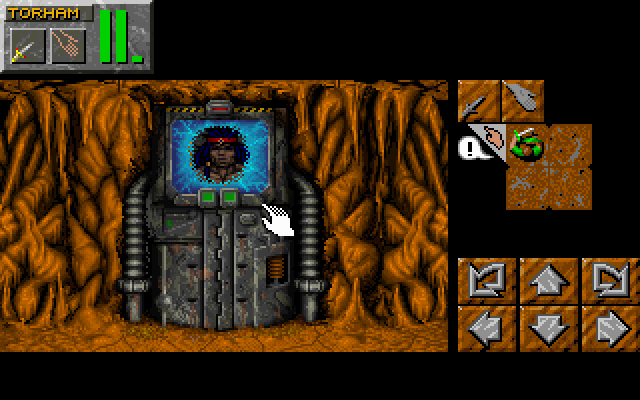
Spellcasting retains the series' classic system where you combine runes to shape magic, but managing it mid-fight while juggling weapons is stressful. Worse, the interface refuses to show basic equipment stats. You are forced to guess how much protection a breastplate provides or how much damage a newly bought blade actually deals because the game hides the numbers completely. The complete lack of item stat readouts leaves you equipping gear purely by trial and error.
How Dungeon Master II: The Legend of Skullkeep hits a late-game wall
The middle stretch delivers solid exploratory RPG mechanics, aided by a newly built automapping feature that saves you from manually drawing grid maps on paper. Music composed by Allister Brimble, Rick Jackson, and Brian Luzietti sounds strikingly different depending on your sound setup, with its HMP MIDI files delivering rich ambient tracks on a Sound Blaster 16. The atmospheric rain and lightning outside the dungeon walls add atmosphere that the original game lacked entirely.
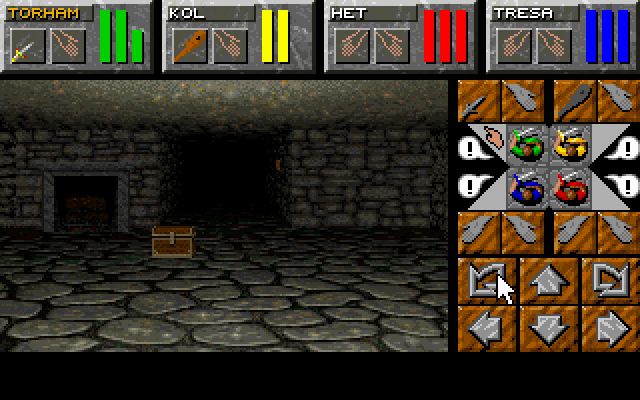
Everything falls apart near the end. When PC Player handed out its "Bestes Rollenspiel 1995" award, they were celebrating the game's ambition, but US reviewer Scorpia in Computer Gaming World famously threw up her hands during the final battle with Dragoth, stating the last encounter stopped her from finishing the game. She was far from alone in that frustration.
The finale drops the medieval atmosphere entirely in favor of industrial tedium, forcing you to manipulate endless tables, levers, and machinery switches to charge the portal. Combined with a massive, sudden spike in enemy damage, the last hour feels less like an epic fantasy showdown and more like operating an uncooperative mechanical plant under heavy fire.
Why this standard-bearer for FTL Games is worth playing today
The game ultimately sits in a strange spot between classic FTL Games design and an era that had already moved on. While GameSpot slammed its slow interface and dated graphics upon release, the tactical weight of tile-based step movement still works if you approach it on its own terms. You get a mid-nineties release published by Interplay Productions full of ambitious ideas like environmental rain, active shopkeepers, and deep magic mechanics.
If you enjoy classic early-nineties dungeon crawlers, you can play Dungeon Master II: The Legend of Skullkeep free in your browser right now without downloading a single file. Jump straight in to experiment with the rune magic, drag a few heavy axes back to town merchants for quick gold, and experience the step-based outdoor engine firsthand.
How Dungeon Master II: The Legend of Skullkeep is played — the keys the game listens to, grouped by what they do.
- Movement
Highlighted keys are mapped — hover or tap one to see what it does.
The mouse is the main interface for interacting with items, magic, attacking, and menus. Keypad or arrow keys handle movement.
Players' controls
Touch and gamepad controls
The on-screen keyboard and gamepad mapping the browser player uses on a phone, a tablet or a controller, as opposed to the real keys above. $PRO members make their own in the player and share them here; anyone can pick one to play with.
Make your own touch controlsPRO
- 1Open the editorSign in below, then pick what to make. The game starts with the editor open over it.
- 2Place your keysAdd keys and drag them where your thumbs rest, or map a controller's buttons. Test plays the game with them; Save keeps them, and you play with them from then on.
- 3Share themShare them right after saving in the game, or name and share them here. Players vote, and the best become this game's controls for everyone.
Go PROSee how it worksSign in+20 XP for sharing · +50 XP if yours become the game's own
- The game's own controlsKeyboardGamepadWhat every player starts with.In use
3 screenshots
From the archive
No gameplay video yet
No gameplay video for Dungeon Master II: The Legend of Skullkeep yet. Sign in to add one.
No reviews yet
Tell the community what you think of Dungeon Master II: The Legend of Skullkeep. Reviews are public and tied to your username.
No archived manuals for Dungeon Master II: The Legend of Skullkeep yet
No manuals archived for this title yet. Sign in to upload the first scan.
Cheat codes, console commands and memory pokes for Dungeon Master II: The Legend of Skullkeep — each one verified and attributed.
Sign in to submitNo cheats yet for this title
Know a working cheat, poke or trainer? Add it with the button above. Moderators check every entry before it goes live.
No archived soundtrack for Dungeon Master II: The Legend of Skullkeep yet
No soundtrack archived for this title yet. Sign in to upload the first rip.
No save states for Dungeon Master II: The Legend of Skullkeep yet
No save states for this title yet. Sign in to share one.
Discussions
Sign in to post- Threads0
- Total posts0
- Online now6
Community · Dungeon Master II: The Legend of Skullkeep
Who's contributing, and what's new
- Reviews0
- Threads0
- Uploadsapproved0
- Contributors0
Recent activity
Nothing here yet
Reviews, discussion threads and approved uploads appear here as members add them.