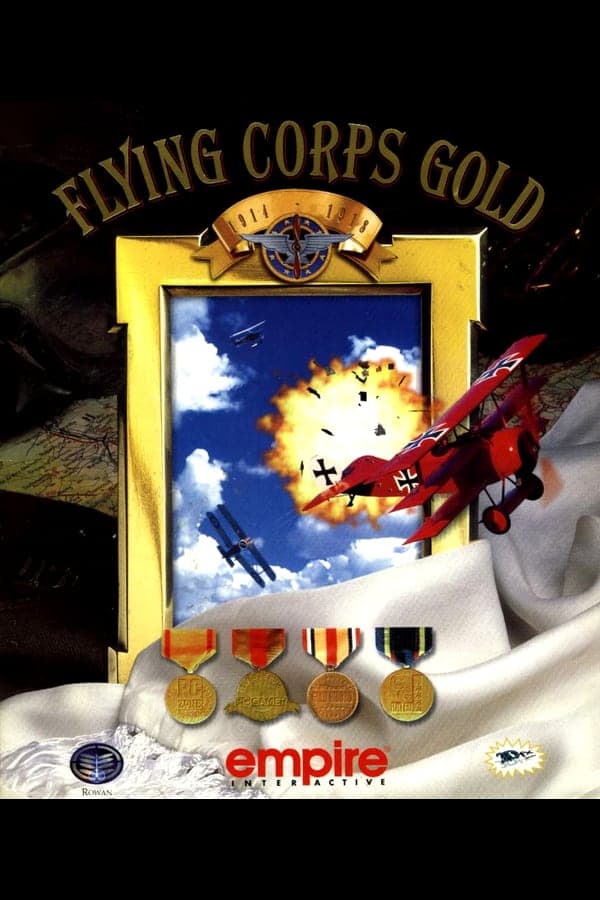
Getting a World War I fighter off the ground in Flying Corps: Gold means wrestling with gyroscopic torque before you even spot your first enemy observation balloon.
Rowan Software tackled real canvas and wood flight physics
Before this title appeared, computer flight simulations usually handed players forgiving flight physics and modern jet avionics. Developer Rowan Software chose a harsher path, expanding on their earlier Dawn Patrol engine to capture the raw mechanical nature of early combat aviation. Published by Empire Interactive in 1997, this expanded edition took the groundwork of the previous year's original release and overhauled its visual performance with Direct3D and 3dfx Glide hardware acceleration.
Flying these early machines requires unlearning every habit formed in modern jet fighters. There are no heads-up displays, target locks, or digital horizon indicators sitting on your windscreen. You navigate by staring down at roads, rivers, and rail lines, using visual landmarks and basic dead reckoning to find your patrol sector. When a dogfight starts, your primary instruments are a wind vane, a tachometer, and a compass that sloshes around laggy turns while you attempt to keep your eyes locked on an enemy scout.
The immediate difficulty hits the moment a mission loads. Spawning into a single flight mission often drops you right into the sky at full throttle, engine torque immediately twisting your nose off center. If you slam the stick back without compensating with proper rudder input, the left wing dips, the air slips off the fabric, and your craft enters a tailspin before you fire a single shot.
The brutal simulation model rewards patience and punishes bad turns
The core flight engine accounts for aerodynamic forces that many contemporary simulators simply ignored. Gyroscopic torque pulls rotary engines hard to one side, forcing you to hold counter-rudder during takeoffs and banks. Adverse yaw means that applying aileron alone causes the nose to swing opposite to your intended turn, requiring careful stick and rudder coordination on every maneuver. Push the aircraft beyond its structural limits in a steep dive, and the fabric tears free from the ribs right before the wings snap off completely.
Managing your engine is just as dangerous as tracking an enemy mark. Over-revving the engine during a steep dive risks throw rods or catching fire, while chopping the throttle too quickly during a landing approach can cause the engine to stall entirely. The aircraft included in the lineup highlight how drastically different each nation's design philosophy was during the conflict:
- Fokker D.VII: The strategic centerpiece of the Gold expansion, featuring outstanding high-altitude climb characteristics and extremely docile stall behavior that lets you hang on your prop during vertical maneuvers.
- Sopwith Camel: A twitchy fighter whose heavy rotary engine creates extreme right-hand turning speeds, though careless stick inputs easily trip it into an unrecoverable spin.
- Fokker Dr.I: The famous triplane that trades away top speed for an unmatched rate of climb and extremely tight turn radii in low-speed dogfights.
- SPAD XIII: A heavy, rigid French fighter designed for fast diving attacks, capable of zooming out of danger before enemy scouts can turn to engage.
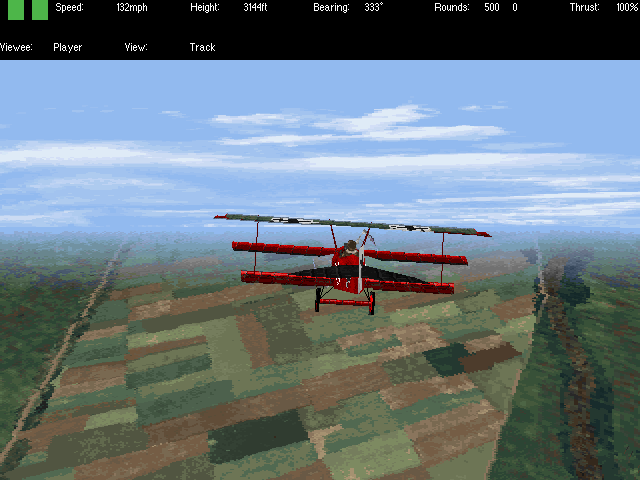
Navigating four campaigns without modern radar or mid-air saves
The campaign structure covers the central air campaigns of the Western Front across four distinct historical operations: The Flying Circus (1917), Battle of Cambrai (1917), German Spring Offensive (1918), and Hat in the Ring (1918). Single missions are also available through the Scramble mode for quick sorties, alongside an eight-player network mode for head-to-head serial dogfights. Each campaign tracks pilot survival and mission success across shifting front lines, forcing you to manage both your personal safety and your flight's operational objectives.
Mission variety spans far more than simple fighter sweeps. You will find yourself assigned to escort heavy bombers, hunt down observation balloons protected by heavy anti-aircraft fire, or dive low for ground-attack missions over muddy trench lines. Ground attack runs require dropping light handheld bombs onto enemy troop concentrations while infantry rifle fire ping off your wooden fuselage.
The Gold release also added a custom mission editor, giving players control over weather conditions, aircraft allocations, and flight paths. For those looking for odd visual touches, the developer included adjustable farmyard trivia settings in the options menu, allowing cows and rural scenery elements to populate the countryside beneath your flight path.
Hardware demands and control quirks tested player patience
When period flight sim reviews hit newsstands, public reactions were split between deep technical respect and hardware frustration. Computer Gaming World noted that it featured some of the finest flight models seen in a propeller-driven simulator, but pointed out that disorienting cockpit views and steep system requirements made it tough on average setups. Once the 3dfx Glide and Direct3D accelerated version landed, publications like COMBATSIM.COM praised the smooth 640x480 frame rates, calling the accelerated visual presentation a major leap forward over the software-rendered original.
The game was notoriously unforgiving of budget control setups. Pitch and yaw sensitivity felt aggressive on standard two-axis joysticks, making dedicated rudder pedals or a twist-stick almost mandatory if you wanted to keep your iron sights lined up on a maneuvering target. Force-feedback support for hardware like the CH Force FX joystick added real physical resistance as air pressure built across your control surfaces, but players stuck on keyboard controls faced an uphill battle against engine torque and sudden stalls.
Modern retro flight enthusiasts still encounter hurdles when trying to run original disc copies on modern computers. The original 16-bit Windows installer refuses to launch on modern 64-bit operating systems, and raw memory bugs frequently cause crash-on-launch errors without community patches. Fortunately, playing the standalone MS-DOS simulation game through modern emulation eliminates the installation headaches entirely.
Why taking the stick in Flying Corps: Gold is worth an evening today
I find that the simulation strikes a rare balance: it respects the lethality of early military aviation without burying the player in modern cockpit sub-systems. The flight modeling holds up well, demanding steady hands, real trim management, and respect for engine power limits. The lack of mid-mission saves and forgiving flight assists means every dogfight carries real tension, especially when your canvas wings start flexing under heavy high-G turns over the Western Front. Readers interested in early flight mechanics can find more historical detail on the combat aircraft of this era via Wikipedia.
You can play Flying Corps: Gold online free in your browser right now, running the complete software experience without setup delays or hardware headaches. Take a Sopwith Camel up for a quick Scramble mission, kick the rudder hard into a tight right-hand turn to feel the rotary engine torque pull your nose, and see if you can land back at the aerodrome with your canvas wings intact.