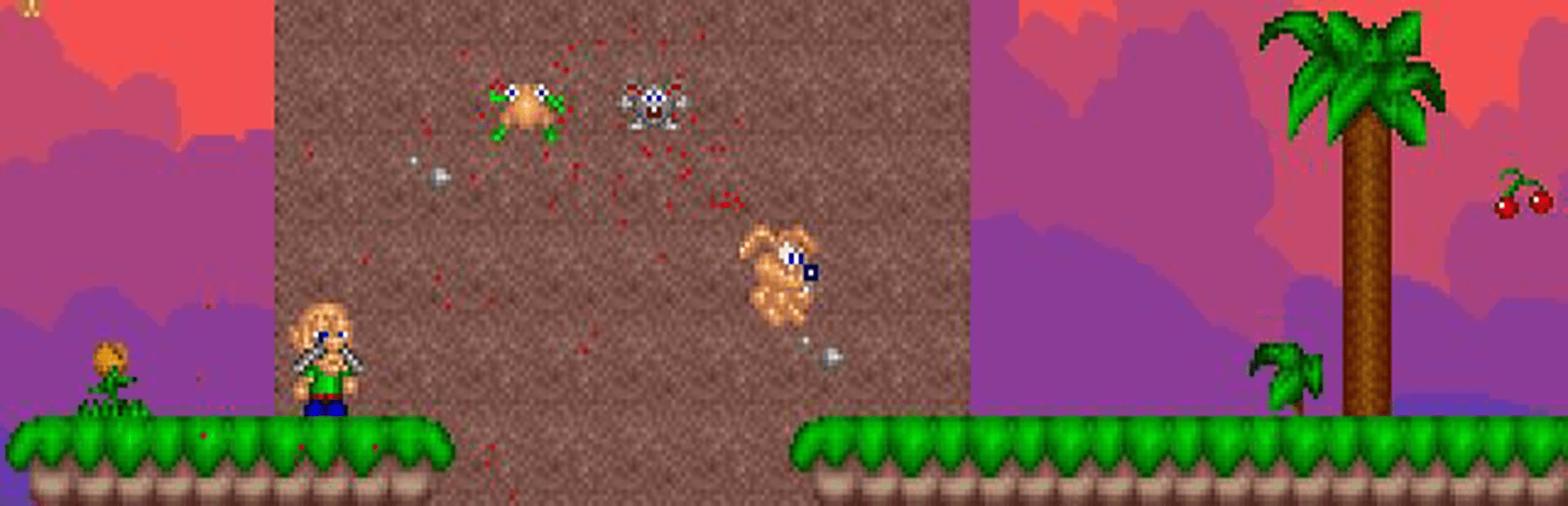
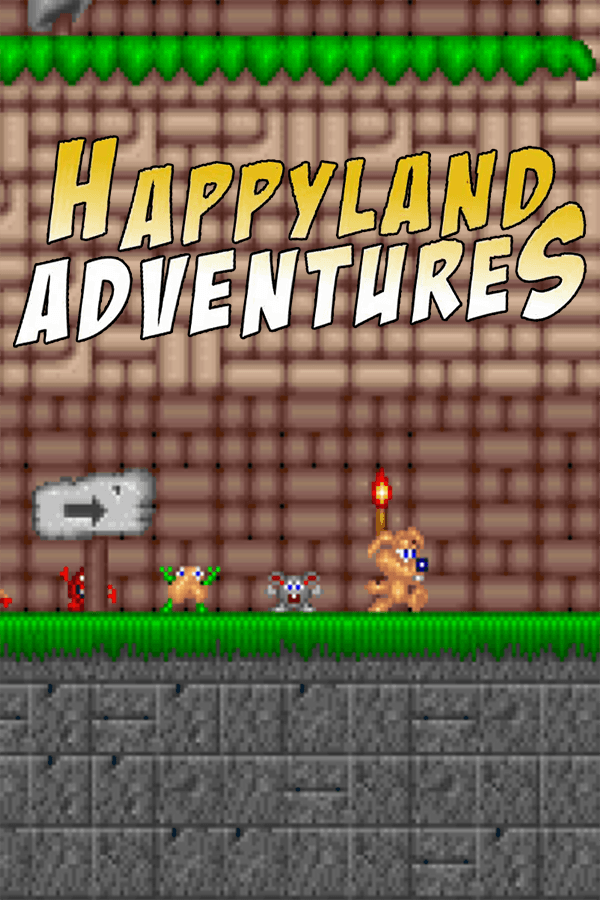

Playing HappyLand Adventures means guiding line after line of helpless creatures past patrolling monsters while hunting through solid-looking walls for the escape hatch before time runs out.
You drop into a level playing as a small dog or rabbit-like hero with zero offensive weapons, and your only job is to find the scattered Happylanders and bring them home. Walking up to a creature makes it start following you, and you can string along up to five of them in a single line. Lead them to the designated drop-off spot called the happyzone, and once you deliver the required quota, the level's exit door unlocks. The catch is that every monster on the map follows a strict patrol path, so timing your jumps while dragging five vulnerable followers behind you gets tense fast.
The core problem with the design is the artificial travel limit. Because you can only carry five Happylanders at a time, larger levels turn into mandatory backtracking exercises. You clear an area, drag five creatures all the way back to the happyzone, and then trot back through cleared territory to pick up the next batch. Combined with a countdown timer that keeps ticking while you push against suspicious walls to find hidden passages, you often end up rushing through tedious return trips just to make sure you do not get caught by the clock.
Developer Johan Peitz built HappyLand Adventures for "The SpriteLib Contest" hosted on GameDev.net, using C/C++ alongside the popular Allegro library. Rather than drawing original art from scratch, he used graphics from Ari Feldman's SpriteLib sprite pack. The project won the contest's "Best Use of SpriteLib" award and was promptly released as a free MS-DOS game online, quickly establishing Free Lunch Design as a key name in indie freeware. You can see more early titles in the 2000 games catalog.
Visually, the tilework gives it the distinct look of 8-bit NES or Master System platformers, though the background spaces are mostly bare color. Old men stand around the levels to offer tips and context, giving the world a bit of character. The audio side is a mix: the sound effects land well enough when picking up score-boosting fruits or extra heart hits, but the background music never changes. The exact same tune loops continuously from the first level to the end of the game, which makes long play sessions a test of endurance.
If a particular map layout gets too tedious, the game includes a classic password menu that lets you jump straight to any stage using specific text strings. Entering dontturnaround skips you to Level 3, yourkingandqueen loads Level 4, and maximillandrake takes you to Level 5. Higher stages use phrases like whereisthedamncat for Level 6, donteatyellowsnow for Level 7, forestofblackoaks for Level 8, herecomesyuletide for Level 9, whydoyoubuildmeup for Level 10, and sackfullofpotatoes to reach the final level.
Outside the main campaign, the game shipped with a full built-in level editor. Players could draw their own terrain, set enemy patrol routes, hide fruit pickups, and place happyzones to share custom maps with friends. The tool was surprisingly capable for a freeware release and gave the game a longer life online through user-made level packs, along with a seasonal update, HappyLand Adventures: X-mas Edition, released shortly after.
HappyLand Adventures is a straightforward late-DOS platformer built around light puzzles and spatial awareness. Having no attack move means you focus entirely on jumping and reading the layout, which works well despite repetitive music and the backtracking forced by the five-creature carrying cap. It fits right alongside other freeware games from Free Lunch Design AB. If you enjoy bright, non-violent platformers that rely on level navigation rather than shooting, spend an hour with it.
You can play HappyLand Adventures free in your browser right now with no setup needed. Jump straight into the first stage, keep an eye on your timer, and test the solid-looking wall segments near your starting point to find your first set of hidden fruits.
Playing HappyLand Adventures means guiding line after line of helpless creatures past patrolling monsters while hunting through solid-looking walls for the escape hatch before time runs out.
You drop into a level playing as a small dog or rabbit-like hero with zero offensive weapons, and your only job is to find the scattered Happylanders and bring them home. Walking up to a creature makes it start following you, and you can string along up to five of them in a single line. Lead them to the designated drop-off spot called the happyzone, and once you deliver the required quota, the level's exit door unlocks. The catch is that every monster on the map follows a strict patrol path, so timing your jumps while dragging five vulnerable followers behind you gets tense fast.
The core problem with the design is the artificial travel limit. Because you can only carry five Happylanders at a time, larger levels turn into mandatory backtracking exercises. You clear an area, drag five creatures all the way back to the happyzone, and then trot back through cleared territory to pick up the next batch. Combined with a countdown timer that keeps ticking while you push against suspicious walls to find hidden passages, you often end up rushing through tedious return trips just to make sure you do not get caught by the clock.

Developer Johan Peitz built HappyLand Adventures for "The SpriteLib Contest" hosted on GameDev.net, using C/C++ alongside the popular Allegro library. Rather than drawing original art from scratch, he used graphics from Ari Feldman's SpriteLib sprite pack. The project won the contest's "Best Use of SpriteLib" award and was promptly released as a free MS-DOS game online, quickly establishing Free Lunch Design as a key name in indie freeware. You can see more early titles in the 2000 games catalog.
Visually, the tilework gives it the distinct look of 8-bit NES or Master System platformers, though the background spaces are mostly bare color. Old men stand around the levels to offer tips and context, giving the world a bit of character. The audio side is a mix: the sound effects land well enough when picking up score-boosting fruits or extra heart hits, but the background music never changes. The exact same tune loops continuously from the first level to the end of the game, which makes long play sessions a test of endurance.
If a particular map layout gets too tedious, the game includes a classic password menu that lets you jump straight to any stage using specific text strings. Entering dontturnaround skips you to Level 3, yourkingandqueen loads Level 4, and maximillandrake takes you to Level 5. Higher stages use phrases like whereisthedamncat for Level 6, donteatyellowsnow for Level 7, forestofblackoaks for Level 8, herecomesyuletide for Level 9, whydoyoubuildmeup for Level 10, and sackfullofpotatoes to reach the final level.

Outside the main campaign, the game shipped with a full built-in level editor. Players could draw their own terrain, set enemy patrol routes, hide fruit pickups, and place happyzones to share custom maps with friends. The tool was surprisingly capable for a freeware release and gave the game a longer life online through user-made level packs, along with a seasonal update, HappyLand Adventures: X-mas Edition, released shortly after.
HappyLand Adventures is a straightforward late-DOS platformer built around light puzzles and spatial awareness. Having no attack move means you focus entirely on jumping and reading the layout, which works well despite repetitive music and the backtracking forced by the five-creature carrying cap. It fits right alongside other freeware games from Free Lunch Design AB. If you enjoy bright, non-violent platformers that rely on level navigation rather than shooting, spend an hour with it.
You can play HappyLand Adventures free in your browser right now with no setup needed. Jump straight into the first stage, keep an eye on your timer, and test the solid-looking wall segments near your starting point to find your first set of hidden fruits.
How HappyLand Adventures is played — the keys the game listens to, grouped by what they do.
Highlighted keys are mapped — hover or tap one to see what it does.
Controls can be reconfigured in the OPTIONS menu. Gamepads are supported.
The on-screen keyboard and gamepad mapping the browser player uses on a phone, a tablet or a controller, as opposed to the real keys above. $PRO members make their own in the player and share them here; anyone can pick one to play with.
Cheat codes, console commands and memory pokes for HappyLand Adventures — each one verified and attributed.
Sign in to submitHow HappyLand Adventures is played — the keys the game listens to, grouped by what they do.
Highlighted keys are mapped — hover or tap one to see what it does.
Controls can be reconfigured in the OPTIONS menu. Gamepads are supported.
The on-screen keyboard and gamepad mapping the browser player uses on a phone, a tablet or a controller, as opposed to the real keys above. $PRO members make their own in the player and share them here; anyone can pick one to play with.
Cheat codes, console commands and memory pokes for HappyLand Adventures — each one verified and attributed.
Sign in to submit