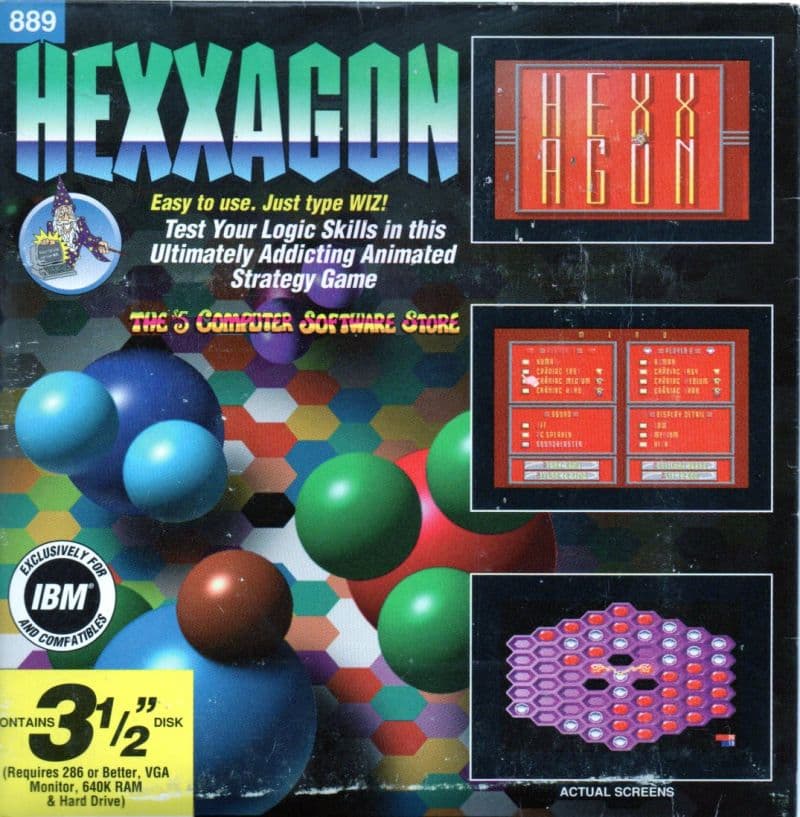
Hexxagon turns a simple 58-hexagon board into a brutal territory fight where a single greedy jump can wipe out half your pieces in a single move.
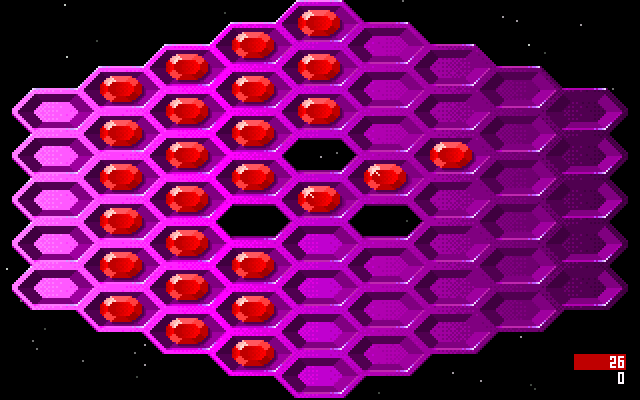
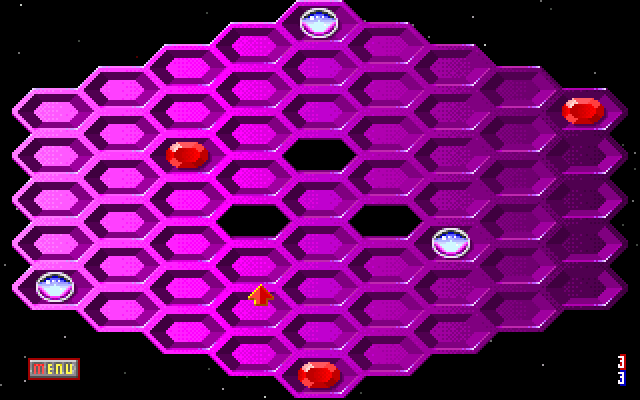
Every match begins with just three pieces apiece on a board made of 58 hexes. You play with red rubies while your opponent holds blue pearls, taking turns across a top-down view that gives you complete visibility of the grid. Because there are no hidden cards, fog of war, or dice rolls, the outcome depends entirely on reading two or three moves ahead.
Your pieces move in two ways, and understanding the difference between them is the core of the game. Moving one hex creates a copy of your pawn in the new space while keeping the original alive. Moving two hexes executes a jump, shifting the pawn to the target spot and leaving its starting space empty. The moment your piece lands, every adjacent enemy pawn turns into your color instantly.
That conversion rule creates wild board flips. A double-hex jump might let you gobble four enemy pieces at once, but leaving that empty hex behind opens a landing pad for your opponent. On the very next turn, they can jump right into that gap and convert your fresh landing piece along with everything surrounding it. Winning requires resisting the urge to jump into crowded enemy clusters unless you can lock down the surrounding board edge.
When you are not playing a friend in hotseat mode, you face an artificial opponent named Craniac, an animated lightbulb character who changes appearance as you raise the difficulty. On higher settings, Craniac puts on thick glasses and a bow tie to signal his extra processing power. The presentation was sharp for the time, using 256-color VGA graphics crafted by Don Glassford and digitised Sound Blaster audio effects built by sound designer Robert Prince.
The presentation carries a lot of attitude, mostly through Craniac's vocal reactions. Lose a match and the game blasts a taunting "na na na na nère" sound byte through your PC speaker or Sound Blaster card. While period reviewers praised the clean visual design and smooth mouse controls, players quickly found that Craniac's tactical depth does not match his swagger.
The computer opponent evaluates board states with short-term greed. Craniac almost always prioritizes the move that captures the maximum number of pieces on the current turn, ignoring whether that move exposes a backline hex. Once you learn to drop bait pieces near board edges, you can trap the AI into jumping into dead ends, leaving it open to a complete wipe on your turn.
Designed and programmed by Jason Blochowiak and Abraham Edlin, the game reached players as a $22 shareware package published by Software Creations in 1993. Argo Games kept the download lightweight, focusing on tight board geometry rather than animated cutscenes or complex story campaigns.
One of the best features included in this Argo Games creation is the built-in board editor. Players can block off specific hexes to build custom board shapes and save up to five custom layouts. Cutting holes in the center of the board or creating narrow chokepoints completely changes piece movement, making single-hex duplication far more valuable than risky double-hex jumps.
Sound design was a mixed bag for players at release. While the Sound Blaster card produced crisp audio clips for piece placement and conversions, the game completely lacks background music during matches. Playing through five long rounds against Craniac in total silence, punctuated only by clicking sounds and the occasional taunt, can feel eerie after twenty minutes.
The biggest flaw in this Software Creations release is its rapid skill ceiling. Because the board consists of exactly 58 spaces and the AI relies on predictable evaluation routines, you can master the standard layout in a single afternoon. Once you learn to secure the corner hexes early, the computer opponent rarely puts up a fight even on the hardest difficulty setting.
Without a strong computer player, the game relies heavily on having a real human sitting next to you on the same keyboard and mouse. Played against a friend who understands spatial positioning, matches become intense tactical duels where keeping piece density matters much more than taking early territory leads.
Compared to other strategy tactics titles from the same year, it offers quick five-minute sessions rather than hours of campaign progression. It works best as a fast puzzle break where a minor miscalculation leaves you exposed to a full board takeover.
If you want a pure abstract puzzle match that takes thirty seconds to learn, this DOS classic is well worth a look. Focus on building solid clusters of pieces along the outer borders of the board rather than reaching into the center early, and never leave an open hex directly behind your frontline pieces when jumping.
You can play Hexxagon online right here without installing anything. You can run this classic Hexxagon MS-DOS game directly in your browser with full mouse support and Sound Blaster audio enabled. Jump straight into a match against Craniac or set up a hotseat game with a friend, try out a short single-step duplication opening, and see how quickly you can wipe the board clean of blue pearls.
Hexxagon turns a simple 58-hexagon board into a brutal territory fight where a single greedy jump can wipe out half your pieces in a single move.
Every match begins with just three pieces apiece on a board made of 58 hexes. You play with red rubies while your opponent holds blue pearls, taking turns across a top-down view that gives you complete visibility of the grid. Because there are no hidden cards, fog of war, or dice rolls, the outcome depends entirely on reading two or three moves ahead.
Your pieces move in two ways, and understanding the difference between them is the core of the game. Moving one hex creates a copy of your pawn in the new space while keeping the original alive. Moving two hexes executes a jump, shifting the pawn to the target spot and leaving its starting space empty. The moment your piece lands, every adjacent enemy pawn turns into your color instantly.
That conversion rule creates wild board flips. A double-hex jump might let you gobble four enemy pieces at once, but leaving that empty hex behind opens a landing pad for your opponent. On the very next turn, they can jump right into that gap and convert your fresh landing piece along with everything surrounding it. Winning requires resisting the urge to jump into crowded enemy clusters unless you can lock down the surrounding board edge.
When you are not playing a friend in hotseat mode, you face an artificial opponent named Craniac, an animated lightbulb character who changes appearance as you raise the difficulty. On higher settings, Craniac puts on thick glasses and a bow tie to signal his extra processing power. The presentation was sharp for the time, using 256-color VGA graphics crafted by Don Glassford and digitised Sound Blaster audio effects built by sound designer Robert Prince.
The presentation carries a lot of attitude, mostly through Craniac's vocal reactions. Lose a match and the game blasts a taunting "na na na na nère" sound byte through your PC speaker or Sound Blaster card. While period reviewers praised the clean visual design and smooth mouse controls, players quickly found that Craniac's tactical depth does not match his swagger.
The computer opponent evaluates board states with short-term greed. Craniac almost always prioritizes the move that captures the maximum number of pieces on the current turn, ignoring whether that move exposes a backline hex. Once you learn to drop bait pieces near board edges, you can trap the AI into jumping into dead ends, leaving it open to a complete wipe on your turn.
Designed and programmed by Jason Blochowiak and Abraham Edlin, the game reached players as a $22 shareware package published by Software Creations in 1993. Argo Games kept the download lightweight, focusing on tight board geometry rather than animated cutscenes or complex story campaigns.
One of the best features included in this Argo Games creation is the built-in board editor. Players can block off specific hexes to build custom board shapes and save up to five custom layouts. Cutting holes in the center of the board or creating narrow chokepoints completely changes piece movement, making single-hex duplication far more valuable than risky double-hex jumps.
Sound design was a mixed bag for players at release. While the Sound Blaster card produced crisp audio clips for piece placement and conversions, the game completely lacks background music during matches. Playing through five long rounds against Craniac in total silence, punctuated only by clicking sounds and the occasional taunt, can feel eerie after twenty minutes.
The biggest flaw in this Software Creations release is its rapid skill ceiling. Because the board consists of exactly 58 spaces and the AI relies on predictable evaluation routines, you can master the standard layout in a single afternoon. Once you learn to secure the corner hexes early, the computer opponent rarely puts up a fight even on the hardest difficulty setting.
Without a strong computer player, the game relies heavily on having a real human sitting next to you on the same keyboard and mouse. Played against a friend who understands spatial positioning, matches become intense tactical duels where keeping piece density matters much more than taking early territory leads.
Compared to other strategy tactics titles from the same year, it offers quick five-minute sessions rather than hours of campaign progression. It works best as a fast puzzle break where a minor miscalculation leaves you exposed to a full board takeover.
If you want a pure abstract puzzle match that takes thirty seconds to learn, this DOS classic is well worth a look. Focus on building solid clusters of pieces along the outer borders of the board rather than reaching into the center early, and never leave an open hex directly behind your frontline pieces when jumping.
You can play Hexxagon online right here without installing anything. You can run this classic Hexxagon MS-DOS game directly in your browser with full mouse support and Sound Blaster audio enabled. Jump straight into a match against Craniac or set up a hotseat game with a friend, try out a short single-step duplication opening, and see how quickly you can wipe the board clean of blue pearls.
The on-screen keyboard and gamepad mapping the browser player uses on a phone, a tablet or a controller, as opposed to the real keys above. $PRO members make their own in the player and share them here; anyone can pick one to play with.
Cheat codes, console commands and memory pokes for Hexxagon — each one verified and attributed.
Sign in to submitThe on-screen keyboard and gamepad mapping the browser player uses on a phone, a tablet or a controller, as opposed to the real keys above. $PRO members make their own in the player and share them here; anyone can pick one to play with.
Cheat codes, console commands and memory pokes for Hexxagon — each one verified and attributed.
Sign in to submit