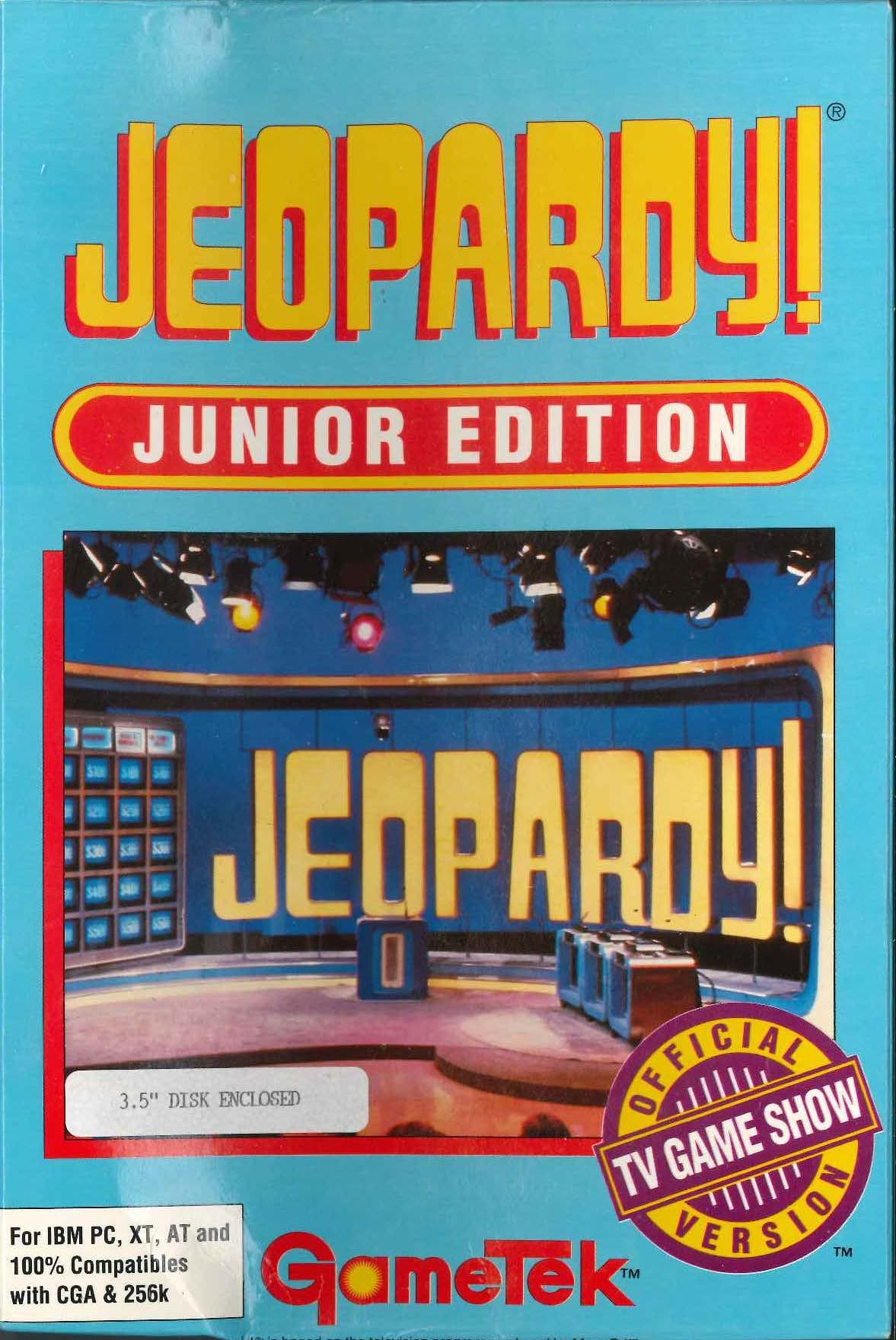
Taking on the computer in Jeopardy! New Junior Edition meant fighting two enemies at once: the ruthless computer opponents who seemed to know every answer instantly, and a strict spelling checker that punished every single typo on your keyboard.
Behind the pixelated podiums of Jeopardy! New Junior Edition
Most players who booted up this trivia title in 1989 expected a gentle introduction to game show trivia, given the target audience on the box. Instead, developer ShareData, Inc. created a faithful reconstruction of the television show that demanded speed, precise typing, and exact phrasing from behind the keyboard.
Launching the game on a standard system with CGA or Hercules display adapters yielded bright, blocky graphics and a sharp PC speaker rendition of the familiar television theme. You start by setting up a match for up to three players, mixing human competitors with computer-controlled avatars. Choosing your character avatar gives you a simple animated contestant standing behind a podium, waiting for the board to fill with point values.
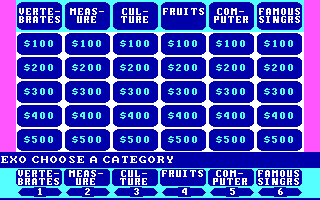
The core setup mirrors the TV format closely. You pick a category and a dollar value, read the prompt on screen, and slap the buzzer key before anyone else can jump in. It feels surprisingly tense for a trivia game aimed at younger audiences, mostly because the computer players do not hesitate once a clue appears.
Three rounds, strict typing, and zero mercy for typos
Every full match progresses through three distinct phases: the main round, Double Jeopardy!, and Final Jeopardy!. The game board displays six distinct categories, each stocked with five answers arranged by increasing cash value. Selecting a high-value clue gives you harder questions, but it also gives you the bank balance needed to secure a lead before the final round.
To succeed during a match, you have to manage several strict rules during play:
- You must hit your buzzer key fast enough to beat the computer opponents to the prompt.
- Your response must be phrased correctly, starting with mandatory question phrases like "Who is" or "What is".
- Every single word in your answer must be spelled correctly, down to the exact letter.
- Uncovering a Daily Doubles clue allows you to wager up to your total current bank before seeing the statement.
The insistence on absolute spelling accuracy is where most players run into trouble. If you know the correct answer but accidentally hit a adjacent key or miss a double consonant, the game marks your entire answer incorrect and deducts the dollar value from your score. I learned quickly that typing slowly and accurately beats rushing through a response every time.
Computer opponents who never guess wrong and sound effects that test your patience
Playing against the system in this puzzle game reveals an artificial intelligence that can feel completely unyielding. Computer-controlled contestants do not make human typing mistakes, nor do they struggle with obscure geography or historical facts. When a clue hits the screen, the computer often buzzes in within a fraction of a second and inputs the exact string instantly.
The audio design adds its own layer of pressure to every match. Every letter you enter on the keyboard triggers a harsh PC speaker click, creating a buzzing string of sound effects that accompanies your typing. Combined with the ticking clock during your response window, entering a long answer like "What is Massachusetts" becomes a nerve-wracking exercise in typing under fire.
Despite the noisy sound effects, winning a game and earning a spot on the persistent high score table feels genuine. The game tracks top scores across sessions, giving you a clear target to shoot for when playing solo or against friends around a single keyboard.
400 kid-friendly categories that hit the mark without talking down
Where this title succeeds most is in its content library. ShareData packed in 400 unique categories designed specifically for younger players, covering science, literature, pop culture, and geography. Rather than dumbing down the material, the clues focus on topic areas that school-aged players actually study and enjoy.
This balance keeps the competition fair when adults and younger players sit down together. The clues require genuine recall rather than simple pattern recognition, so Daily Doubles carry real tension when someone risks their entire bank on a single science question. It respects the player's intelligence while keeping the reading level appropriate.
The hardware requirements were low even for the late eighties, requiring only MS-DOS 2.11 or higher and 256K of RAM. That low barrier allowed it to run smoothly on modest home setups, making it a staple for family computer rooms of the era.
How to play Jeopardy! New Junior Edition online today
If you want a straightforward trivia challenge that tests your typing speed as much as your knowledge, this title still delivers a surprisingly firm workout. The ruthless AI and picky spell-checker make every victory feel earned, even if the PC speaker clicks occasionally grate on your nerves.
You do not need an ancient IBM clone or floppy disks to test your trivia skills now. You can play Jeopardy! New Junior Edition online free in your browser right here on this page, with zero setup required. Jump straight into the host's chair, select your avatar, and see if your typing fingers can keep up with the classic game show board.