


Loom
Streaming build
Checking storage…457 MB
Preload in background
You begin Loom wearing a hooded cloak on a desolate, fog-wrapped island, armed with nothing but a wooden staff that plays musical notes.
A graphic adventure that tossed out verb lists
Brian Moriarty designed this 1990 release for LucasArts Entertainment Company with a radical idea in mind. Instead of filling the bottom half of your monitor with action verbs and inventory slots like Maniac Mansion, the team stripped the screen bare. You control Bobbin Threadbare, an outcast in the Guild of Weavers who wakes up on his seventeenth birthday to find the elders turned into swans.
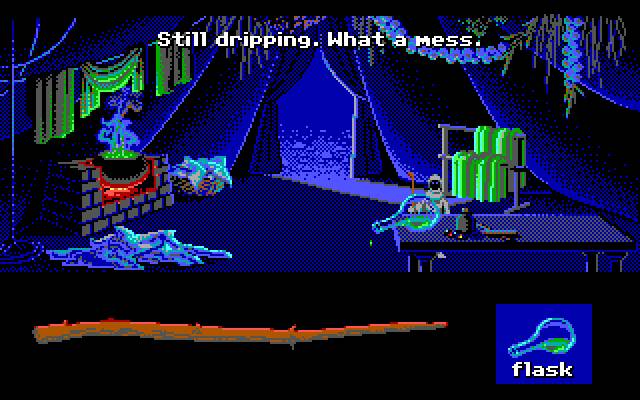
Your only tool is the Distaff, a magical wooden rod. Clicking on objects around the screen plays four-note melodies called drafts. Reading a spinning wheel gives you the sequence for drafting thread. Playing those same four notes in reverse unspools the thread. It is an intuitive, elegant mechanic that makes every puzzle feel like learning a musical spellbook rather than rubbing items together in your pockets.
Drafting spells across a surreal fantasy realm
The journey takes you far beyond the starting village to strange, specialized guilds across the land. You visit Crystalgard, where the Glassmakers construct clear towers, and the rolling pastures of the Shepherds in Fold. Later, you cross into Forge to meet the ironmasters before facing Bishop Mandible and the terrifying Lord of Chaos.
The puzzle logic plays fair because every draft operates on simple, logical rules. You learn drafts by observing natural phenomena or examining tools in the environment:
- Examining a glowing lantern reveals the draft for night vision.
- Playing the draft backward turns bright light into darkness to bypass guards.
- Listening to a sharpening wheel grants a spell that hone dull blades.
- Reversing the sharpening draft blunts sharp edges to break iron bars.
The design forces you to take notes with a pencil. Pitch sequences change every time you start a new campaign. You cannot simply memorize a walkthrough from a magazine, because the note sequence for turning straw into gold in your friend's game will not work in yours.
Where the experience cuts too short
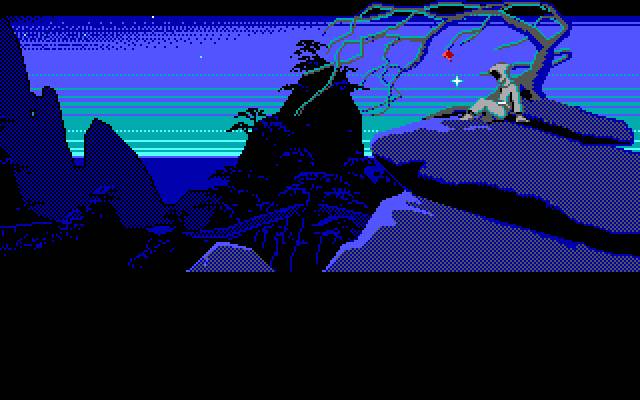
For all its cleverness, the adventure suffers from a total lack of friction. The box famously declared it was designed to be completed, not played halfway through and thrown on a shelf. Moriarty certainly achieved that goal, but perhaps too thoroughly. Experienced players routinely reach the ending credits in under three hours.
There are no death traps, no locked states, and very few roadblocks that require real brainteasers. Once you know that draft notes run from C to C on a musical scale, higher notes unlock automatically as Bobbin gains experience. That artificial gating means you are often just waiting for the story to give you permission to cast the spell you already figured out twenty minutes earlier.
The abrupt finale leaves several major plot threads dangling. Lucasfilm originally envisioned a sprawling trilogy, where planned sequels named Forge and The Fold would follow other guild heroes. When Moriarty left the studio, those follow-ups were canceled, leaving Bobbin's cliffhanger hanging forever in the void.
Sound Blaster pipes and classic cameos in Loom
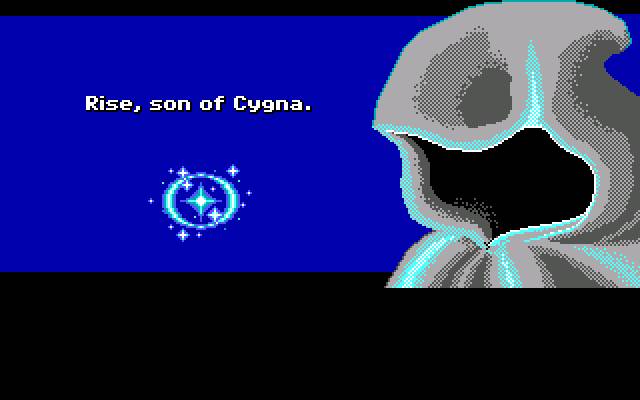
What the DOS version lacked in length, it made up for in presentation. The team hired Eric Hammond and George "Fat Man" Sanger to transcribe classical pieces from Tchaikovsky's Swan Lake into computer audio tracks. Hearing those themes run through an early Roland MT-32 synthesizer gave the world an eerie, theatrical atmosphere that PC speaker audio could never match.
The package shipped with an audio drama cassette tape establishing the origin story of the Guild of Weavers before you ever booted the game. That kind of narrative production was unheard of at the time. Mark Ferrari and Steve Purcell provided background art and character designs that squeezed astonishing depth out of 16-color EGA graphics.
The game left a distinct mark on software culture. Sierra famously spoofed it in Space Quest IV with a floppy disk floppy labeled "BOOM" by "Morrie Brianarty". Meanwhile, internal jokes stayed inside the company. A hungry seagull eating a clam on Weavers' Island was reused directly in The Secret of Monkey Island and its sequel.
Step into Bobbin's cloak today
Differences between releases remain a heated debate among retro enthusiasts today. The 1992 VGA CD-ROM talkie version added full voice acting and 256-color art, but cut close-up character shots and trimmed spoken dialogue to fit the track capacity of early CD hardware. The original 16-color release remains the purest execution of Moriarty's sight and sound vision.
If you enjoy creative adventure games, this short masterwork belongs on your list. It trades frustrating inventory hunting for atmosphere, beauty, and melodic puzzle solving. You can play Loom online free in your browser right now, with no extra setup required. Spend an evening exploring Weavers' Island, listen closely to the draft notes on your Distaff, and see how LucasArts re-invented the point-and-click interface in 1990.
How Loom is played — the keys the game listens to, grouped by what they do.
- Movement
- Action
- Interface
- Left click / Right click — Move, select, or play note
Highlighted keys are mapped — hover or tap one to see what it does.
Spells learned are randomized per playthrough and must be written down manually by the player.
Players' controls
Touch and gamepad controls
The on-screen keyboard and gamepad mapping the browser player uses on a phone, a tablet or a controller, as opposed to the real keys above. $PRO members make their own in the player and share them here; anyone can pick one to play with.
Make your own touch controlsPRO
- 1Open the editorSign in below, then pick what to make. The game starts with the editor open over it.
- 2Place your keysAdd keys and drag them where your thumbs rest, or map a controller's buttons. Test plays the game with them; Save keeps them, and you play with them from then on.
- 3Share themShare them right after saving in the game, or name and share them here. Players vote, and the best become this game's controls for everyone.
Go PROSee how it worksSign in+20 XP for sharing · +50 XP if yours become the game's own
- The game's own controlsKeyboardGamepadWhat every player starts with.In use
9 screenshots
From the archive
No reviews yet
Tell the community what you think of Loom. Reviews are public and tied to your username.
No archived manuals for Loom yet
No manuals archived for this title yet. Sign in to upload the first scan.
Cheat codes, console commands and memory pokes for Loom — each one verified and attributed.
Sign in to submitNo cheats yet for this title
Know a working cheat, poke or trainer? Add it with the button above. Moderators check every entry before it goes live.
No archived soundtrack for Loom yet
No soundtrack archived for this title yet. Sign in to upload the first rip.
No save states for Loom yet
No save states for this title yet. Sign in to share one.
Discussions
Sign in to post- Threads0
- Total posts0
- Online now6
Community · Loom
Who's contributing, and what's new
- Reviews0
- Threads0
- Uploadsapproved0
- Contributors0
Recent activity
Nothing here yet
Reviews, discussion threads and approved uploads appear here as members add them.