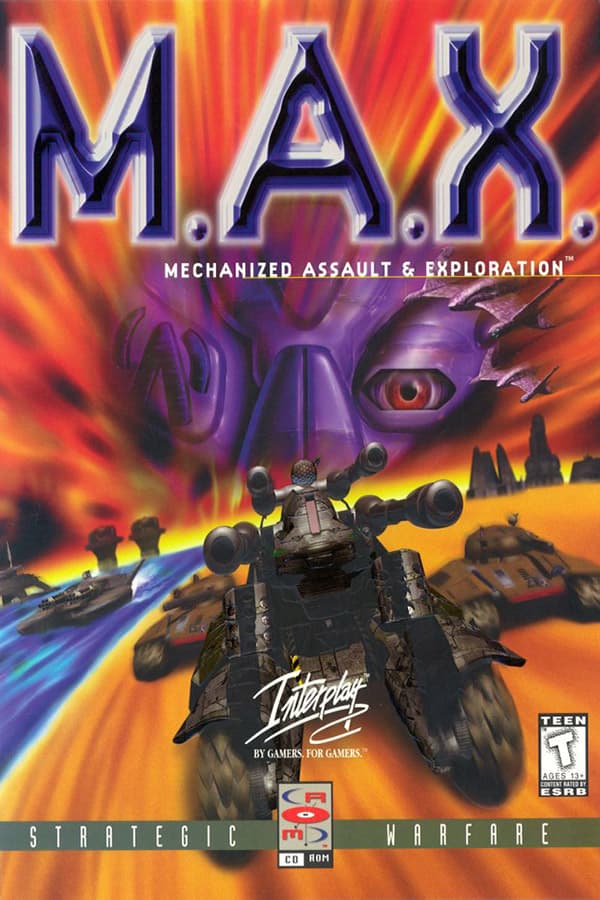
Before strategy games split permanently into twitchy clicking races and slow grid-based hex maps, M.A.X.: Mechanized Assault & Exploration attempted to bridge both worlds by letting you play the exact same battle in real-time or turn-based mode.
By late 1996, real-time strategy games were exploding across the PC scene. Most studios rushed to clone Command & Conquer, sacrificing logistical depth for faster clicking. Interplay took a completely different path with this sci-fi tactical hit.
You play as a Mech-Commander, a human brain transplanted into a heavy command unit. Your job is to lead one of eight human factions down to planet surfaces, drop habitat eco-spheres, harvest raw materials, and wipe out rival commanders. The setup seems familiar, but winning relies on layered resource chains rather than simple unit spamming.
Every base needs power grids, raw metal extraction, and processing plants connected by clear supply lines. If a missile turret runs out of material to reload its tubes, it turns into expensive target practice. That focus on logistical infrastructure forces you to plan bases like functional industrial complexes rather than throwaway gun clusters.
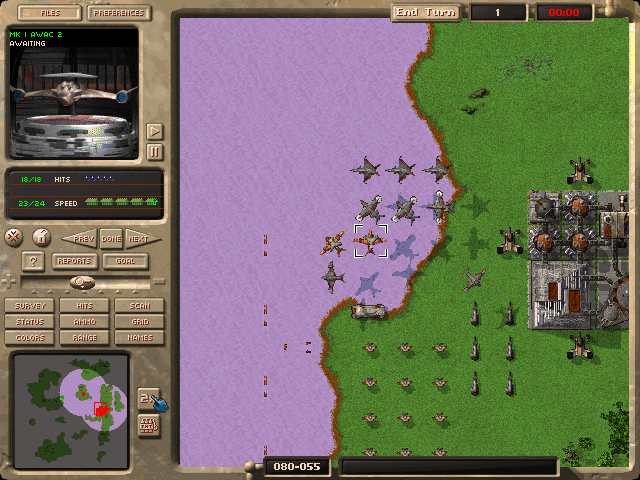
The core gimmick in M.A.X.: Mechanized Assault & Exploration is the choice between simultaneous real-time action and structured turn-based tactical combat. You can set strict turn timers, action point limits, or raw real-time pacing depending on your preference.
In turn-based play, every vehicle and infantry unit spends action points to move, aim, or fire. A heavy tank might move three tiles and fire once, or save points to respond with defensive fire during the enemy phase. That calculated dance changes combat from a frantic match of clicking speeds into a methodical chess match.
The top-down SVGA engine gives you complete control over scale, offering continuous map zoom from high-altitude theater view right down to individual treads. You can inspect over 50 distinct land, sea, and air units across four planetary biomes.
The unit roster offers deep customization options that set it apart from typical strategy titles of 1996:
When gaming magazines reviewed the title upon release, the response reflected its complex nature. GameSpot awarded it an 8.6 out of 10, calling it superior to its mainstream competitors. Computer Gaming World gave it 4 out of 5 stars, praising its sharp artificial intelligence and deep replay value while noting its punishing campaign difficulty.
Not everyone was sold on the overwhelming interface, however. PC Gamer UK slapped it with a 61% rating, overwhelmed by the micro-management requirements. Designed by Ali N. Atabek, Paul Kellner, and Gus Smedstad, the game rewarded analytical thinkers while turning away players looking for quick arcade thrills.
The actual killer for dedicated fans was a crippling technical bug hidden inside the executable. Long matches that stretch past 100 turns often trigger a fatal Memory Stack Overflow bug. The entire executable freezes mid-turn, ruining extended campaign maps and massive multiplayer games.
Despite that crash hazard, the game sold over 150,000 copies by mid-1998. Hardcore fans even set up play-by-email leagues like the RU M.A.X. Club to keep competitive leagues running for years. Programmers eventually built open-source projects like M.A.X. Port to bypass the stack overflow completely.
If you like deep systems, Interplay rarely put out anything better than this. Few mid-nineties strategy tactics games give you this much control over your army. You can tweak hit points, range, and speed on individual units, creating custom heavy armor builds that counter specific enemy strategies.
The original developers built map creation tools directly inside the preference menu, using internal debug options to design the campaign levels. Typing debug command strings like [MAXSPY] or toggles like quick_build=1 opened up complete map visibility and rapid testing tools for scenario creators.
The locked 640x480 screen resolution feels cramped on modern desktop monitors today, but the detailed sprite artwork made by Anthony Postma and Arlene Caberto Somers retains its metallic, industrial punch. Hearing the heavy metallic clank of production lines accompanied by Brian Luzietti's industrial soundtrack immediately brings back the golden era of PC gaming.
If you want to experience this landmark Interplay Productions release without setting up old config files, you can play this classic MS-DOS game right now. You can run M.A.X.: Mechanized Assault & Exploration free in your browser without downloading extra files or configuring local DOS emulators.
Launching the game instantly gives you access to the fluid map zoom that static screenshots simply cannot convey. You can jump straight into a single-player skirmish map or test your logistical skills in the original tutorial campaign with a single click today.
Before strategy games split permanently into twitchy clicking races and slow grid-based hex maps, M.A.X.: Mechanized Assault & Exploration attempted to bridge both worlds by letting you play the exact same battle in real-time or turn-based mode.
By late 1996, real-time strategy games were exploding across the PC scene. Most studios rushed to clone Command & Conquer, sacrificing logistical depth for faster clicking. Interplay took a completely different path with this sci-fi tactical hit.
You play as a Mech-Commander, a human brain transplanted into a heavy command unit. Your job is to lead one of eight human factions down to planet surfaces, drop habitat eco-spheres, harvest raw materials, and wipe out rival commanders. The setup seems familiar, but winning relies on layered resource chains rather than simple unit spamming.
Every base needs power grids, raw metal extraction, and processing plants connected by clear supply lines. If a missile turret runs out of material to reload its tubes, it turns into expensive target practice. That focus on logistical infrastructure forces you to plan bases like functional industrial complexes rather than throwaway gun clusters.

The core gimmick in M.A.X.: Mechanized Assault & Exploration is the choice between simultaneous real-time action and structured turn-based tactical combat. You can set strict turn timers, action point limits, or raw real-time pacing depending on your preference.
In turn-based play, every vehicle and infantry unit spends action points to move, aim, or fire. A heavy tank might move three tiles and fire once, or save points to respond with defensive fire during the enemy phase. That calculated dance changes combat from a frantic match of clicking speeds into a methodical chess match.
The top-down SVGA engine gives you complete control over scale, offering continuous map zoom from high-altitude theater view right down to individual treads. You can inspect over 50 distinct land, sea, and air units across four planetary biomes.
The unit roster offers deep customization options that set it apart from typical strategy titles of 1996:
When gaming magazines reviewed the title upon release, the response reflected its complex nature. GameSpot awarded it an 8.6 out of 10, calling it superior to its mainstream competitors. Computer Gaming World gave it 4 out of 5 stars, praising its sharp artificial intelligence and deep replay value while noting its punishing campaign difficulty.
Not everyone was sold on the overwhelming interface, however. PC Gamer UK slapped it with a 61% rating, overwhelmed by the micro-management requirements. Designed by Ali N. Atabek, Paul Kellner, and Gus Smedstad, the game rewarded analytical thinkers while turning away players looking for quick arcade thrills.
The actual killer for dedicated fans was a crippling technical bug hidden inside the executable. Long matches that stretch past 100 turns often trigger a fatal Memory Stack Overflow bug. The entire executable freezes mid-turn, ruining extended campaign maps and massive multiplayer games.

Despite that crash hazard, the game sold over 150,000 copies by mid-1998. Hardcore fans even set up play-by-email leagues like the RU M.A.X. Club to keep competitive leagues running for years. Programmers eventually built open-source projects like M.A.X. Port to bypass the stack overflow completely.
If you like deep systems, Interplay rarely put out anything better than this. Few mid-nineties strategy tactics games give you this much control over your army. You can tweak hit points, range, and speed on individual units, creating custom heavy armor builds that counter specific enemy strategies.
The original developers built map creation tools directly inside the preference menu, using internal debug options to design the campaign levels. Typing debug command strings like [MAXSPY] or toggles like quick_build=1 opened up complete map visibility and rapid testing tools for scenario creators.
The locked 640x480 screen resolution feels cramped on modern desktop monitors today, but the detailed sprite artwork made by Anthony Postma and Arlene Caberto Somers retains its metallic, industrial punch. Hearing the heavy metallic clank of production lines accompanied by Brian Luzietti's industrial soundtrack immediately brings back the golden era of PC gaming.
If you want to experience this landmark Interplay Productions release without setting up old config files, you can play this classic MS-DOS game right now. You can run M.A.X.: Mechanized Assault & Exploration free in your browser without downloading extra files or configuring local DOS emulators.
Launching the game instantly gives you access to the fluid map zoom that static screenshots simply cannot convey. You can jump straight into a single-player skirmish map or test your logistical skills in the original tutorial campaign with a single click today.
How M.A.X.: Mechanized Assault & Exploration is played — the keys the game listens to, grouped by what they do.
Highlighted keys are mapped — hover or tap one to see what it does.
Keyboard remapping settings can be adjusted using external SETUP.EXE program. Game supports both real-time and turn-based strategy pacing options.
The on-screen keyboard and gamepad mapping the browser player uses on a phone, a tablet or a controller, as opposed to the real keys above. $PRO members make their own in the player and share them here; anyone can pick one to play with.
Cheat codes, console commands and memory pokes for M.A.X.: Mechanized Assault & Exploration — each one verified and attributed.
Sign in to submitHow M.A.X.: Mechanized Assault & Exploration is played — the keys the game listens to, grouped by what they do.
Highlighted keys are mapped — hover or tap one to see what it does.
Keyboard remapping settings can be adjusted using external SETUP.EXE program. Game supports both real-time and turn-based strategy pacing options.
The on-screen keyboard and gamepad mapping the browser player uses on a phone, a tablet or a controller, as opposed to the real keys above. $PRO members make their own in the player and share them here; anyone can pick one to play with.
Cheat codes, console commands and memory pokes for M.A.X.: Mechanized Assault & Exploration — each one verified and attributed.
Sign in to submit