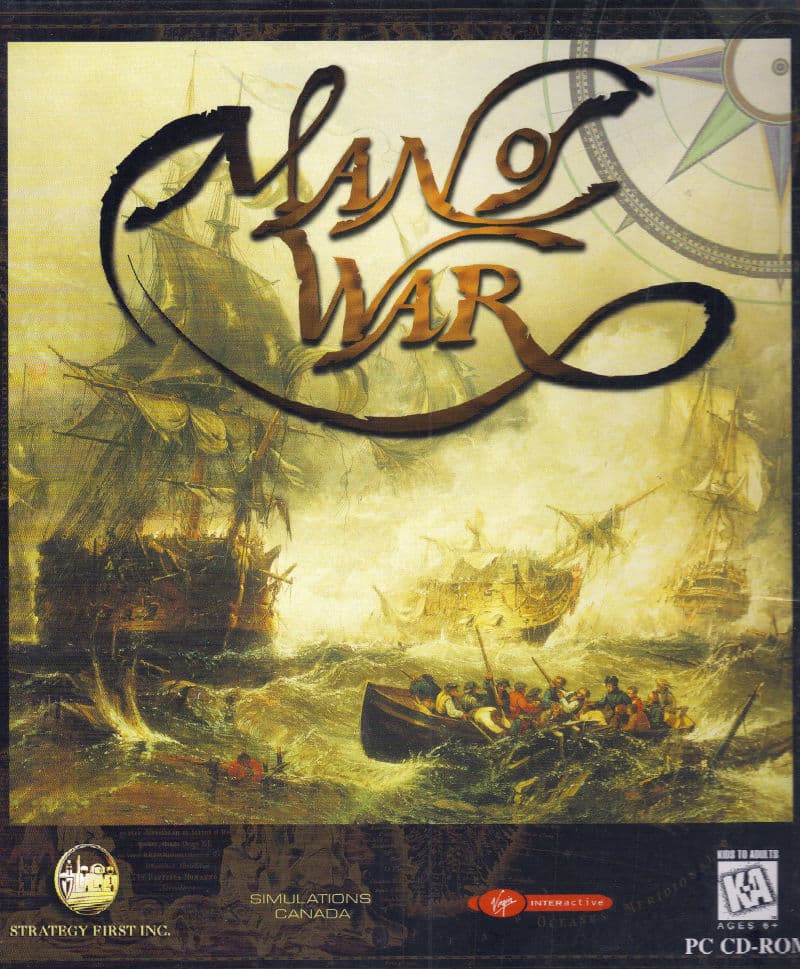
In 1997, Man of War attempted to bridge traditional tabletop wargaming with real-time 3D perspective, letting players command Age of Sail wooden fleets from the quarterdeck of their flagship.
Simulations Canada built a reputation on dry, rigorous tabletop games. When Montreal developer Strategy First adapted one of those board designs into a video game, they aimed to solve a fundamental wargaming dilemma. Tactical maps show where every ship sits, but they hide the tension of watching enemy hulls emerge from sea fog.
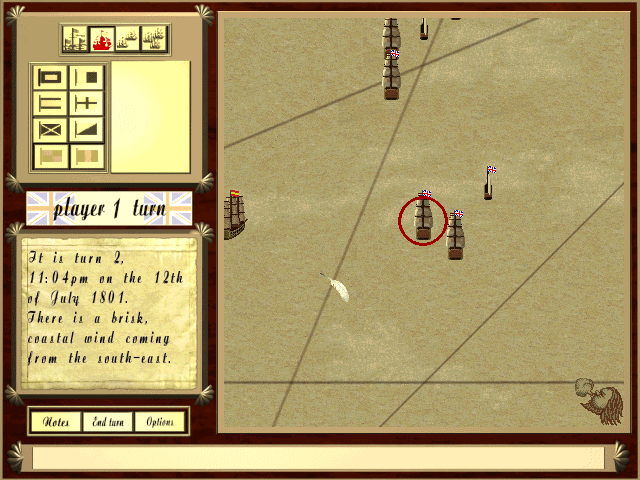
The solution was a hybrid loop split into two phases. First, you inspect a 2D map screen to evaluate wind angles and fleet positions. Here you assign pre-battle doctrine and issue tactical orders using a set of 15 historical signal flags. Once you commit your plan, the engine locks in four minutes of real-time movement.
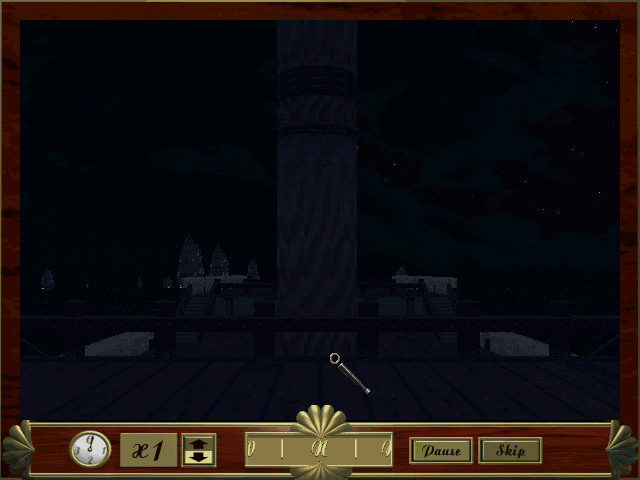
That four-minute resolution shifts your view to a 1st-person camera right on the deck of your vessel. You can walk around freely, look up at the rigging, and watch broadsides tear through wooden hulls under 16 different weather conditions. Publisher Virgin Interactive Entertainment pushed the DOS title onto store shelves in 1997 as an ambitious step for naval wargames.
Yet that jump from flat cardboard tokens to early 3D graphics came with odd artistic compromises. While you hear the roar of broadside cannons and cannonballs splintering wood, you are entirely alone on deck. Not a single crew member or sailor appears anywhere on your ship.
The structure gives you plenty of naval history to chew through. A 10-scenario British campaign moves you from single-ship commands up through massive line-of-battle fleet operations between 1765 and 1815. You also get 12 standalone scenarios featuring major encounters like Trafalgar, though history buffs will notice the absence of Copenhagen and the Nile.
In practice, playing the 1997 game means wrestling with information delays. You order your frigates to turn into the wind using signal flags, but those orders do not take effect until the planning stage resolves. When the 3D phase starts, you simply hold position on deck and watch the simulation play out.
Managing your fleet requires picking the right ammunition for the job. You can fire standard cannonballs to wreck opponent hulls or switch to grapeshot to shred rigging and reduce crew efficiency. If standard historical battles are not enough, the built-in scenario editor and character creator let you construct custom sea engagements from scratch.
When Computer Gaming World reviewed issue 162, they noted that it felt like a classic wargame inside a new wrapper. They rightly criticized the eerie silence of the empty quarterdeck. Nobody shouts incoming damage reports or carries word from the gun decks. You have to wait for the next plotting turn to inspect numerical damage screens.
The ambition behind this title was real, but execution pulled it in opposing directions. GamesDomain pointed out that while the concept felt fresh, the overall package was not nearly polished enough. Game Revolution was harsher, noting that the design sounded great on paper but fell flat in actual play.
The main culprit is the user interface. OldGame.cz described it as a stubborn DOS strategy game that repeatedly trips over its own controls. Swapping between map screens, character stats, and flag orders takes far more clicks than it should. When an enemy line turns unexpectedly, reissuing simple fleet maneuvers becomes a chore.
The decision loop forces you to think ahead. Because turn resolutions last four full minutes in real time, a single mistake in plotting wind angles leaves your flagship vulnerable to broadsides. You cannot quickly adjust course mid-turn if an enemy division cuts across your line of fire.
Commercial results reflected that rough edge. By April 1999, the title had sold roughly 30,000 copies. Strategy First pressed ahead with a 1999 sequel, Man of War II: Chains of Command, which tried to refine the command interface. Yet the original entry remains a curious experiment in combining board wargame math with real-time deck views.

Despite its clunky menus and ghost ships, the core idea behind this game still offers something unique. Stepping onto the flagship deck right as a full broadside of grapeshot fires across the water gives you a perspective few modern titles bother to capture. It highlights the sheer slowness and friction of 18th-century naval command.
You can experience this unusual mix of tactical map planning and deck-walking action without hunting down old MS-DOS hardware. You can play Man of War online free in your browser right now, with no setup required. Load up a quick custom scenario, set your initial flag signals, and hit the deck to watch your broadsides light up the horizon.
In 1997, Man of War attempted to bridge traditional tabletop wargaming with real-time 3D perspective, letting players command Age of Sail wooden fleets from the quarterdeck of their flagship.
Simulations Canada built a reputation on dry, rigorous tabletop games. When Montreal developer Strategy First adapted one of those board designs into a video game, they aimed to solve a fundamental wargaming dilemma. Tactical maps show where every ship sits, but they hide the tension of watching enemy hulls emerge from sea fog.
The solution was a hybrid loop split into two phases. First, you inspect a 2D map screen to evaluate wind angles and fleet positions. Here you assign pre-battle doctrine and issue tactical orders using a set of 15 historical signal flags. Once you commit your plan, the engine locks in four minutes of real-time movement.
That four-minute resolution shifts your view to a 1st-person camera right on the deck of your vessel. You can walk around freely, look up at the rigging, and watch broadsides tear through wooden hulls under 16 different weather conditions. Publisher Virgin Interactive Entertainment pushed the DOS title onto store shelves in 1997 as an ambitious step for naval wargames.
Yet that jump from flat cardboard tokens to early 3D graphics came with odd artistic compromises. While you hear the roar of broadside cannons and cannonballs splintering wood, you are entirely alone on deck. Not a single crew member or sailor appears anywhere on your ship.

The structure gives you plenty of naval history to chew through. A 10-scenario British campaign moves you from single-ship commands up through massive line-of-battle fleet operations between 1765 and 1815. You also get 12 standalone scenarios featuring major encounters like Trafalgar, though history buffs will notice the absence of Copenhagen and the Nile.
In practice, playing the 1997 game means wrestling with information delays. You order your frigates to turn into the wind using signal flags, but those orders do not take effect until the planning stage resolves. When the 3D phase starts, you simply hold position on deck and watch the simulation play out.
Managing your fleet requires picking the right ammunition for the job. You can fire standard cannonballs to wreck opponent hulls or switch to grapeshot to shred rigging and reduce crew efficiency. If standard historical battles are not enough, the built-in scenario editor and character creator let you construct custom sea engagements from scratch.
When Computer Gaming World reviewed issue 162, they noted that it felt like a classic wargame inside a new wrapper. They rightly criticized the eerie silence of the empty quarterdeck. Nobody shouts incoming damage reports or carries word from the gun decks. You have to wait for the next plotting turn to inspect numerical damage screens.

The ambition behind this title was real, but execution pulled it in opposing directions. GamesDomain pointed out that while the concept felt fresh, the overall package was not nearly polished enough. Game Revolution was harsher, noting that the design sounded great on paper but fell flat in actual play.
The main culprit is the user interface. OldGame.cz described it as a stubborn DOS strategy game that repeatedly trips over its own controls. Swapping between map screens, character stats, and flag orders takes far more clicks than it should. When an enemy line turns unexpectedly, reissuing simple fleet maneuvers becomes a chore.
The decision loop forces you to think ahead. Because turn resolutions last four full minutes in real time, a single mistake in plotting wind angles leaves your flagship vulnerable to broadsides. You cannot quickly adjust course mid-turn if an enemy division cuts across your line of fire.
Commercial results reflected that rough edge. By April 1999, the title had sold roughly 30,000 copies. Strategy First pressed ahead with a 1999 sequel, Man of War II: Chains of Command, which tried to refine the command interface. Yet the original entry remains a curious experiment in combining board wargame math with real-time deck views.

Despite its clunky menus and ghost ships, the core idea behind this game still offers something unique. Stepping onto the flagship deck right as a full broadside of grapeshot fires across the water gives you a perspective few modern titles bother to capture. It highlights the sheer slowness and friction of 18th-century naval command.
You can experience this unusual mix of tactical map planning and deck-walking action without hunting down old MS-DOS hardware. You can play Man of War online free in your browser right now, with no setup required. Load up a quick custom scenario, set your initial flag signals, and hit the deck to watch your broadsides light up the horizon.
The on-screen keyboard and gamepad mapping the browser player uses on a phone, a tablet or a controller, as opposed to the real keys above. $PRO members make their own in the player and share them here; anyone can pick one to play with.
Cheat codes, console commands and memory pokes for Man of War — each one verified and attributed.
Sign in to submitThe on-screen keyboard and gamepad mapping the browser player uses on a phone, a tablet or a controller, as opposed to the real keys above. $PRO members make their own in the player and share them here; anyone can pick one to play with.
Cheat codes, console commands and memory pokes for Man of War — each one verified and attributed.
Sign in to submit