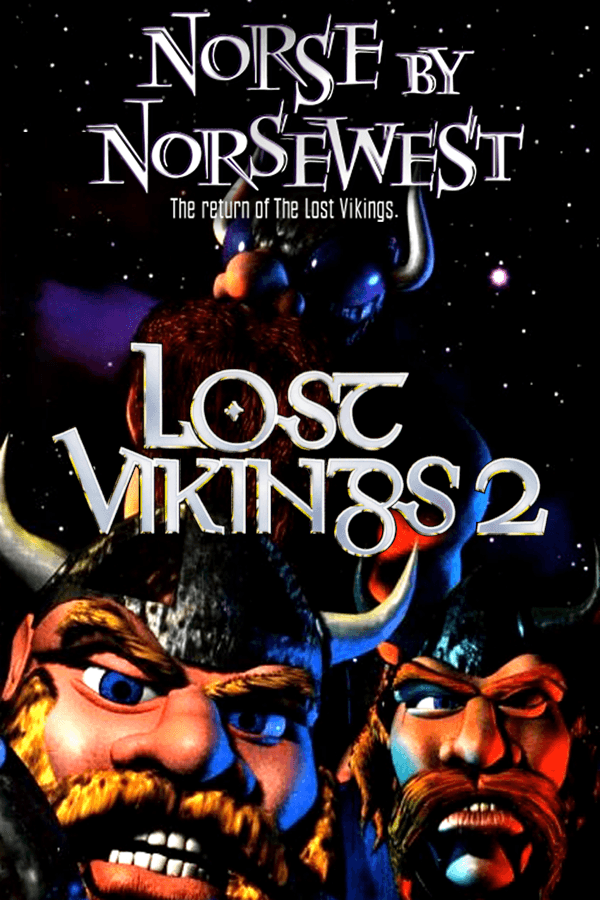
In Norse by Norse West: The Return of the Lost Vikings, the classic side-scrolling formula expands from three trapped heroes to five, turning every stage into a sequence of lethal hurdles and precise button flips.
The original trio of Erik the Swift, Baleog the Fierce, and Olaf the Stout return after another abduction by the alien overlord Tomator, but their toolkit has evolved. Erik gets turbo boots that let him jump higher and smash through weak ceilings, Baleog switches his bow for a bionic arm capable of punching foes and hooking distant items, and Olaf can shrink his massive frame down to slip through narrow gaps. Adding Fang the Werewolf and Scorch the Dragon breaks up the old dynamic, giving you wall-climbing mobility and actual flight across the game's 31 stages.
Every level assigns a specific team of three, forcing you to think carefully about character combinations rather than relying on one comfort strategy. You might need Olaf to shield a hallway from laser fire while Baleog grabs a keycard with his arm, or use Scorch to drop past hazards that would kill Erik instantly. Because every single Viking must reach the exit alive to clear a stage, a single slip means restarting the whole room.
The project sits at a curious point in the history of Blizzard Entertainment. Designed by Ron Millar and programmed by James Phinney, with visual design from Samwise Didier and music by Glenn Stafford, the game originated on 16-bit consoles before studio porting specialists at Beam Software brought it to platforms like the MS-DOS PC. Interplay Productions, Inc. published the title during a transition period when PC releases were shifting from simple floppy disk installations to rich CD-ROM presentations.
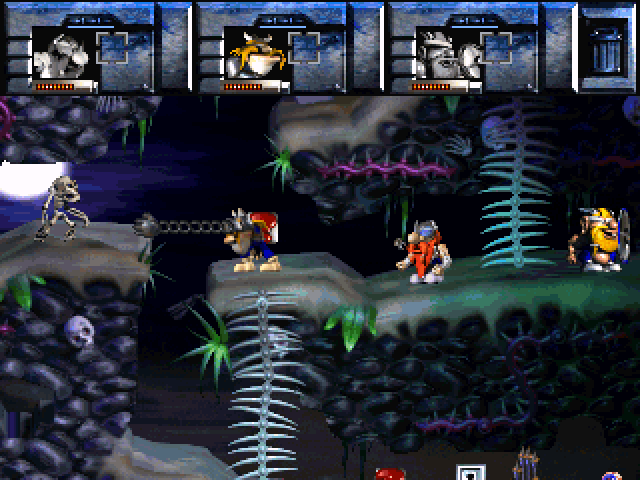
That CD format allowed the 32-bit ports to include full voice acting for the cast, featuring high-profile talent like Rob Paulsen voicing Erik, Jeff Bennett handling Baleog and Fang, and Jim Cummings playing Olaf and Tomator. On standard PC monitors, the Norse by Norse West: The Return of the Lost Vikings MS-DOS game runs at a classic 320x240 resolution in 256 colors, placing pre-rendered character models over detailed background layers. The system requirements called for an 80486DX4 100 MHz processor and 16 MB of RAM to render its animated stages smoothly.
Where early stages act as gentle tutorials for new gear, the final worlds present steep difficulty spikes that expect pixel-perfect item usage. You spend a lot of time managing inventory slots filled with red, silver, and gold keys, colored keycards, smart bombs, spell scrolls, and food to heal damage. The puzzle logic remains fair, but trial and error takes over when a trap door drops your character directly into a pit of spikes because you flipped a switch out of sequence.
If the penalty for failure gets tedious, password codes offer a shortcut around the trickier screens. Typing CH3T at the password entry prompt unlocks infinite energy, while codes like W0LF, B0MB, or LOST let you jump straight to specific stages across different time periods. Having those built-in shortcuts keeps the experience accessible when a single puzzle room threatens to stall your progress for an entire evening.
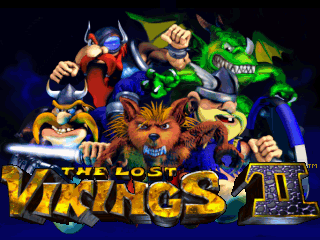
When reviewed in PC and console magazines in late 1997, opinions split on the presentation. While outlets like Player One awarded high marks for the character moves and heavy emphasis on lateral thinking, others noted that the rendered character sprites looked blocky up close and complained that the CD soundtrack loop became repetitive during long puzzle sessions. Even so, the core loop of character swapping and spatial planning stood firm alongside prominent puzzle games of the mid-90s.
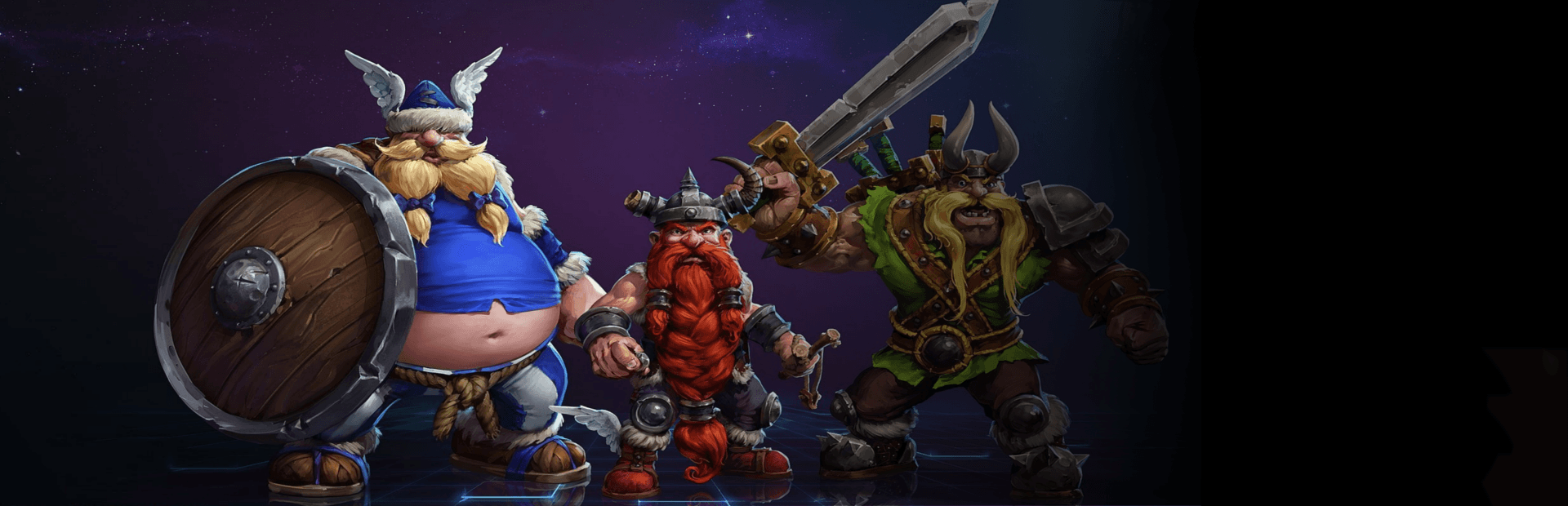
Blizzard never made another direct sequel, but they kept referencing the crew for decades. A playable cabinet called The Lost Viking made an appearance inside the cantina in StarCraft II, and the original three heroes eventually joined the roster of Heroes of the Storm as a single multi-unit character. Yet this 1997 release remains the only chapter where you get to control the werewolf and dragon alongside the main trio.
If you want to experience how 16-bit puzzle mechanics expanded with pre-rendered art and voice tracks, this entry holds up as a solid brain-teaser. The multi-character execution requires clever planning, and finding the sequence that gets all three heroes past a room of laser turrets feels just as satisfying now as it did back then.
You can play Norse by Norse West: The Return of the Lost Vikings online, free in your browser, with nothing to install. Load up the first stage to see how Fang's wall jumps immediately alter the pacing of the original formula, and see if you can lead the crew past Tomator's guards without losing a single Viking.
In Norse by Norse West: The Return of the Lost Vikings, the classic side-scrolling formula expands from three trapped heroes to five, turning every stage into a sequence of lethal hurdles and precise button flips.
The original trio of Erik the Swift, Baleog the Fierce, and Olaf the Stout return after another abduction by the alien overlord Tomator, but their toolkit has evolved. Erik gets turbo boots that let him jump higher and smash through weak ceilings, Baleog switches his bow for a bionic arm capable of punching foes and hooking distant items, and Olaf can shrink his massive frame down to slip through narrow gaps. Adding Fang the Werewolf and Scorch the Dragon breaks up the old dynamic, giving you wall-climbing mobility and actual flight across the game's 31 stages.
Every level assigns a specific team of three, forcing you to think carefully about character combinations rather than relying on one comfort strategy. You might need Olaf to shield a hallway from laser fire while Baleog grabs a keycard with his arm, or use Scorch to drop past hazards that would kill Erik instantly. Because every single Viking must reach the exit alive to clear a stage, a single slip means restarting the whole room.

The project sits at a curious point in the history of Blizzard Entertainment. Designed by Ron Millar and programmed by James Phinney, with visual design from Samwise Didier and music by Glenn Stafford, the game originated on 16-bit consoles before studio porting specialists at Beam Software brought it to platforms like the MS-DOS PC. Interplay Productions, Inc. published the title during a transition period when PC releases were shifting from simple floppy disk installations to rich CD-ROM presentations.
That CD format allowed the 32-bit ports to include full voice acting for the cast, featuring high-profile talent like Rob Paulsen voicing Erik, Jeff Bennett handling Baleog and Fang, and Jim Cummings playing Olaf and Tomator. On standard PC monitors, the Norse by Norse West: The Return of the Lost Vikings MS-DOS game runs at a classic 320x240 resolution in 256 colors, placing pre-rendered character models over detailed background layers. The system requirements called for an 80486DX4 100 MHz processor and 16 MB of RAM to render its animated stages smoothly.
Where early stages act as gentle tutorials for new gear, the final worlds present steep difficulty spikes that expect pixel-perfect item usage. You spend a lot of time managing inventory slots filled with red, silver, and gold keys, colored keycards, smart bombs, spell scrolls, and food to heal damage. The puzzle logic remains fair, but trial and error takes over when a trap door drops your character directly into a pit of spikes because you flipped a switch out of sequence.
If the penalty for failure gets tedious, password codes offer a shortcut around the trickier screens. Typing CH3T at the password entry prompt unlocks infinite energy, while codes like W0LF, B0MB, or LOST let you jump straight to specific stages across different time periods. Having those built-in shortcuts keeps the experience accessible when a single puzzle room threatens to stall your progress for an entire evening.

When reviewed in PC and console magazines in late 1997, opinions split on the presentation. While outlets like Player One awarded high marks for the character moves and heavy emphasis on lateral thinking, others noted that the rendered character sprites looked blocky up close and complained that the CD soundtrack loop became repetitive during long puzzle sessions. Even so, the core loop of character swapping and spatial planning stood firm alongside prominent puzzle games of the mid-90s.
Blizzard never made another direct sequel, but they kept referencing the crew for decades. A playable cabinet called The Lost Viking made an appearance inside the cantina in StarCraft II, and the original three heroes eventually joined the roster of Heroes of the Storm as a single multi-unit character. Yet this 1997 release remains the only chapter where you get to control the werewolf and dragon alongside the main trio.
If you want to experience how 16-bit puzzle mechanics expanded with pre-rendered art and voice tracks, this entry holds up as a solid brain-teaser. The multi-character execution requires clever planning, and finding the sequence that gets all three heroes past a room of laser turrets feels just as satisfying now as it did back then.
You can play Norse by Norse West: The Return of the Lost Vikings online, free in your browser, with nothing to install. Load up the first stage to see how Fang's wall jumps immediately alter the pacing of the original formula, and see if you can lead the crew past Tomator's guards without losing a single Viking.
How Norse by Norse West: The Return of the Lost Vikings is played — the keys the game listens to, grouped by what they do.
Highlighted keys are mapped — hover or tap one to see what it does.
Default keyboard bindings for the MS-DOS release were not documented in the provided search notes.
The on-screen keyboard and gamepad mapping the browser player uses on a phone, a tablet or a controller, as opposed to the real keys above. $PRO members make their own in the player and share them here; anyone can pick one to play with.
Cheat codes, console commands and memory pokes for Norse by Norse West: The Return of the Lost Vikings — each one verified and attributed.
Sign in to submitHow Norse by Norse West: The Return of the Lost Vikings is played — the keys the game listens to, grouped by what they do.
Highlighted keys are mapped — hover or tap one to see what it does.
Default keyboard bindings for the MS-DOS release were not documented in the provided search notes.
The on-screen keyboard and gamepad mapping the browser player uses on a phone, a tablet or a controller, as opposed to the real keys above. $PRO members make their own in the player and share them here; anyone can pick one to play with.
Cheat codes, console commands and memory pokes for Norse by Norse West: The Return of the Lost Vikings — each one verified and attributed.
Sign in to submit