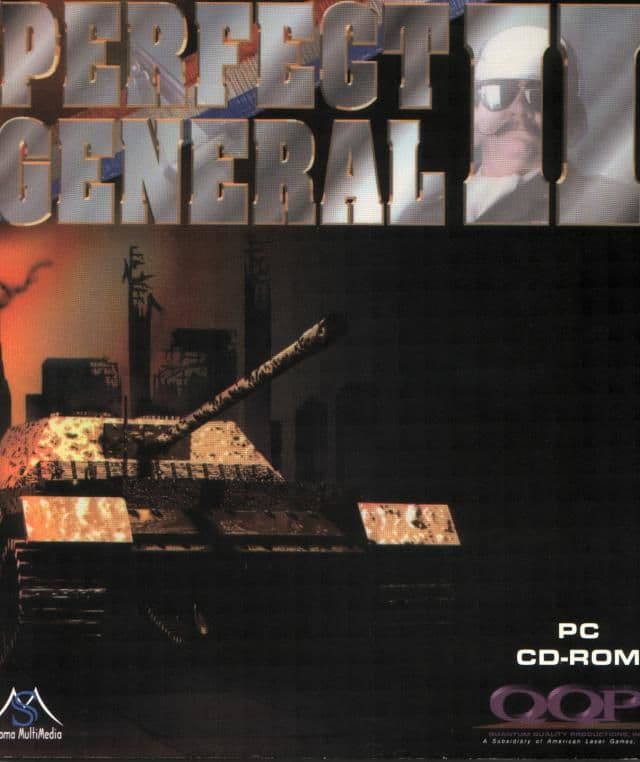
You drop onto a top-down hex grid with a tight budget, buying infantry and tanks to hold key cities while Perfect General II forces you through structured movement, firing, and counter-firing phases. Built by Quantum Quality Productions in 1994, this turn-based tactical wargame trims away administrative clutter to focus entirely on direct combat mechanics.
Every match begins with direct tactical choices rather than empire management. You select your force from a shared unit roster, spending scenario points on infantry squads, standard tanks, heavily armored elephant tanks, mobile machine guns, static gun nests, and air support modules before laying out defense lines or preparing an assault. Terrain dictates every step of the battle, where defensive modifiers and movement penalties turn single choke points into meat grinders if you push armor into dense forests or across unbridged rivers.
The turn structure separates planning from execution by cycling through strict combat phases. Rather than letting one player move and wipe out an entire army before the other can react, the engine breaks each turn into distinct movement, direct fire, and reaction firing windows. If you advance a group of tanks across open ground without scouting, hidden enemy gun nests or planted minefields will interrupt your push with defensive fire before your guns ever clear their barrels.
Match parameters give you complete control over the battlefield rules before the first shot is fired. You can enable fog of war to obscure enemy placements, hide minefields, toggle random hit percentages, or adjust weather conditions that impair visibility and movement. You can also turn on city repairs, allowing damaged units to retreat to friendly urban centers to patch up their armor over multiple turns, turning municipal control into the central supply objective of the game.
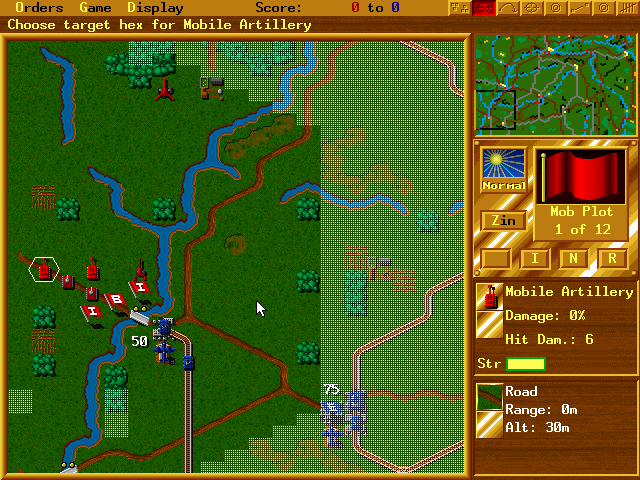
While equal-budget custom maps offer balanced competitive play, the historical scenarios push players into brutal asymmetric conflicts. Famous operations like Tobruk, Desert Fox, The Kursk Campaign, Battle of the Bulge, and Eclipse of the Rising Sun force you into concrete historical shoes. I spent three consecutive attempts watching my defense crumble on the Kursk map simply because the enemy armor concentration overwhelmed my forward gun nests before my mobile reserves could flank the hex lines.
Winning as the historically disadvantaged side in these scenarios requires precise phase execution and total map control. Scenario victory depends on accumulating victory points, usually tied to holding key cities or clearing specific geographic zones before the battle duration counter runs out. Because both armies pull from the same basic hardware archetypes, victory comes down to line of sight, range exploitation, and force concentration rather than unlocking late-game super units.
Later expansions and re-releases expanded this tactical pool with grouped campaign modules like Surgical Strike, Infantry Battles, Mutual Neutral, Destination Islands, Set-Piece Setup, Random Ecstasy, and Little Jewels. Each grouping shifts the strategic balance, with infantry-heavy maps turning urban tiles into deadlocks and island maps forcing players to rely heavily on technical air support to breach coastal defenses.
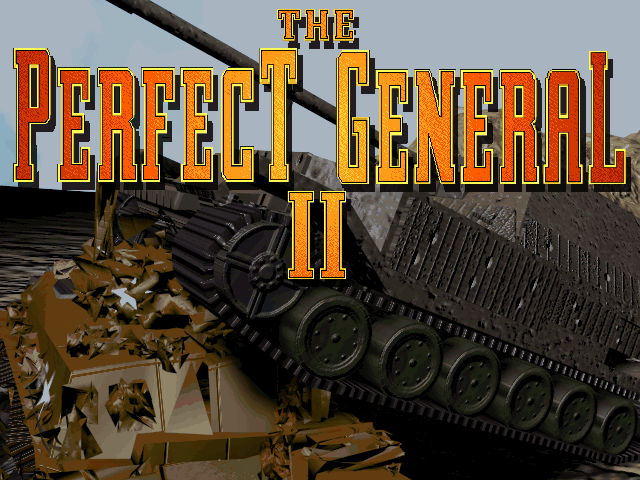
Designed by Andrew Visscher and Bruce Williams Zaccagnino, the game was programmed by Visscher with visuals by Timothy R. Cuccolo and 3D artwork from Jeffrey M. Birns. The audio side relied on the AIL and Miles Sound System engine, featuring General MIDI arrangements crafted by George Alistair Sanger, known as "The Fat Man", alongside K. Weston Phelan, with background compositions by Ken Norris. The CD-ROM edition pushed multimedia gimmicks of the era by including full-motion video strategy advice recorded by real-world military generals.
When this Quantum Quality Productions title arrived in 1994, it collided directly with Strategic Simulations' juggernaut Panzer General. While SSI captured casual wargamers with branch-based narrative campaigns and operational flair, QQP stuck to clean, board-game-style mechanics. Reviewers split down the middle: PC Gamer scored it a high 91% and Computer Gaming World gave it an 80%, while several German publications like PC Games awarded it a harsh 55%, citing its dry presentation and tough historical scenarios.
The studio backed the title with a standalone release in 1995 titled Perfect General II: Scenario & Campaign Editor, which added a construction suite and ten fresh scenarios. Over time, fans maintaining the original DOS releases ran into frustrating technical walls, particularly with late-stage official patches that refused to launch without detecting a physical CD-ROM drive in the system. The core source code eventually found new life years later when Killer Bee Software acquired the rights to build a dedicated modern Windows release.
The fundamental design behind this turn-based classic still holds up for anyone who appreciates clean rules over flashy graphics. The clean interface makes selecting units and issuing attack vectors straightforward, avoiding the hidden calculations that plague many sub-genre rivals. Its historical missions remain brutally difficult, but the satisfaction of executing a flawless counter-fire trap across hex lines never loses its punch.
If you want to experience this MS-DOS game directly, you can play Perfect General II online free in your browser right now. Everything runs inside a web window with nothing to install and no hardware configuration needed, letting you jump straight to the hex grid, set up your budget, and test your defensive lines against the AI within minutes.
You drop onto a top-down hex grid with a tight budget, buying infantry and tanks to hold key cities while Perfect General II forces you through structured movement, firing, and counter-firing phases. Built by Quantum Quality Productions in 1994, this turn-based tactical wargame trims away administrative clutter to focus entirely on direct combat mechanics.
Every match begins with direct tactical choices rather than empire management. You select your force from a shared unit roster, spending scenario points on infantry squads, standard tanks, heavily armored elephant tanks, mobile machine guns, static gun nests, and air support modules before laying out defense lines or preparing an assault. Terrain dictates every step of the battle, where defensive modifiers and movement penalties turn single choke points into meat grinders if you push armor into dense forests or across unbridged rivers.
The turn structure separates planning from execution by cycling through strict combat phases. Rather than letting one player move and wipe out an entire army before the other can react, the engine breaks each turn into distinct movement, direct fire, and reaction firing windows. If you advance a group of tanks across open ground without scouting, hidden enemy gun nests or planted minefields will interrupt your push with defensive fire before your guns ever clear their barrels.
Match parameters give you complete control over the battlefield rules before the first shot is fired. You can enable fog of war to obscure enemy placements, hide minefields, toggle random hit percentages, or adjust weather conditions that impair visibility and movement. You can also turn on city repairs, allowing damaged units to retreat to friendly urban centers to patch up their armor over multiple turns, turning municipal control into the central supply objective of the game.

While equal-budget custom maps offer balanced competitive play, the historical scenarios push players into brutal asymmetric conflicts. Famous operations like Tobruk, Desert Fox, The Kursk Campaign, Battle of the Bulge, and Eclipse of the Rising Sun force you into concrete historical shoes. I spent three consecutive attempts watching my defense crumble on the Kursk map simply because the enemy armor concentration overwhelmed my forward gun nests before my mobile reserves could flank the hex lines.
Winning as the historically disadvantaged side in these scenarios requires precise phase execution and total map control. Scenario victory depends on accumulating victory points, usually tied to holding key cities or clearing specific geographic zones before the battle duration counter runs out. Because both armies pull from the same basic hardware archetypes, victory comes down to line of sight, range exploitation, and force concentration rather than unlocking late-game super units.
Later expansions and re-releases expanded this tactical pool with grouped campaign modules like Surgical Strike, Infantry Battles, Mutual Neutral, Destination Islands, Set-Piece Setup, Random Ecstasy, and Little Jewels. Each grouping shifts the strategic balance, with infantry-heavy maps turning urban tiles into deadlocks and island maps forcing players to rely heavily on technical air support to breach coastal defenses.

Designed by Andrew Visscher and Bruce Williams Zaccagnino, the game was programmed by Visscher with visuals by Timothy R. Cuccolo and 3D artwork from Jeffrey M. Birns. The audio side relied on the AIL and Miles Sound System engine, featuring General MIDI arrangements crafted by George Alistair Sanger, known as "The Fat Man", alongside K. Weston Phelan, with background compositions by Ken Norris. The CD-ROM edition pushed multimedia gimmicks of the era by including full-motion video strategy advice recorded by real-world military generals.
When this Quantum Quality Productions title arrived in 1994, it collided directly with Strategic Simulations' juggernaut Panzer General. While SSI captured casual wargamers with branch-based narrative campaigns and operational flair, QQP stuck to clean, board-game-style mechanics. Reviewers split down the middle: PC Gamer scored it a high 91% and Computer Gaming World gave it an 80%, while several German publications like PC Games awarded it a harsh 55%, citing its dry presentation and tough historical scenarios.
The studio backed the title with a standalone release in 1995 titled Perfect General II: Scenario & Campaign Editor, which added a construction suite and ten fresh scenarios. Over time, fans maintaining the original DOS releases ran into frustrating technical walls, particularly with late-stage official patches that refused to launch without detecting a physical CD-ROM drive in the system. The core source code eventually found new life years later when Killer Bee Software acquired the rights to build a dedicated modern Windows release.
The fundamental design behind this turn-based classic still holds up for anyone who appreciates clean rules over flashy graphics. The clean interface makes selecting units and issuing attack vectors straightforward, avoiding the hidden calculations that plague many sub-genre rivals. Its historical missions remain brutally difficult, but the satisfaction of executing a flawless counter-fire trap across hex lines never loses its punch.
If you want to experience this MS-DOS game directly, you can play Perfect General II online free in your browser right now. Everything runs inside a web window with nothing to install and no hardware configuration needed, letting you jump straight to the hex grid, set up your budget, and test your defensive lines against the AI within minutes.
The on-screen keyboard and gamepad mapping the browser player uses on a phone, a tablet or a controller, as opposed to the real keys above. $PRO members make their own in the player and share them here; anyone can pick one to play with.
Cheat codes, console commands and memory pokes for Perfect General II — each one verified and attributed.
Sign in to submitThe on-screen keyboard and gamepad mapping the browser player uses on a phone, a tablet or a controller, as opposed to the real keys above. $PRO members make their own in the player and share them here; anyone can pick one to play with.
Cheat codes, console commands and memory pokes for Perfect General II — each one verified and attributed.
Sign in to submit