
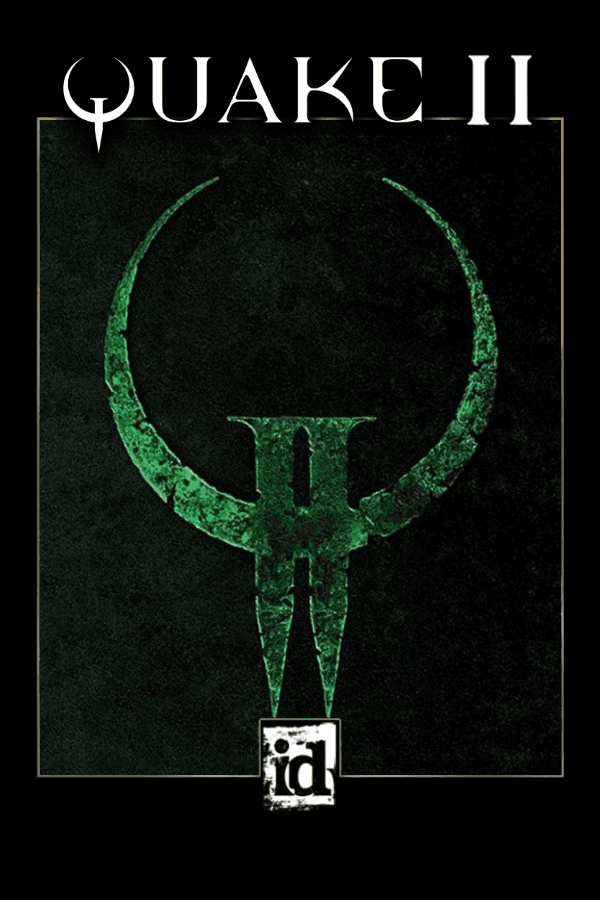

Quake II throws you into the heavy boots of a space marine named Bitterman, landing straight into a meat grinder on the alien homeworld Stroggos.
When id Software finished their first 3D engine, they were left with a major design hurdle: how to build an actual game around real-time light maps and full spatial freedom without repeating the dark, fragmented aesthetic of their previous titles. Programmers John Carmack, John Cash, and Brian Hook pushed the technology into id Tech 2, creating native support for 3Dfx Voodoo hardware acceleration alongside dynamic lighting. Designers Tim Willits and American McGee then built an industrial sci-fi campaign around it, trading gothic castles for brutalist alien military bases.
You drop into enemy territory on a suicide mission to eliminate the cybernetic Strogg, an alien empire that harvests living flesh to build cyborg soldiers. Your ship crashes, your squad is immediately wiped out, and you are left to clear the planet solo. Instead of moving from one isolated room to the next, levels link together into active hubs. You might need to locate a power cube in one installation, carry it across two sectors to power a blast door, and track down data disks to bypass high-security lockdowns.
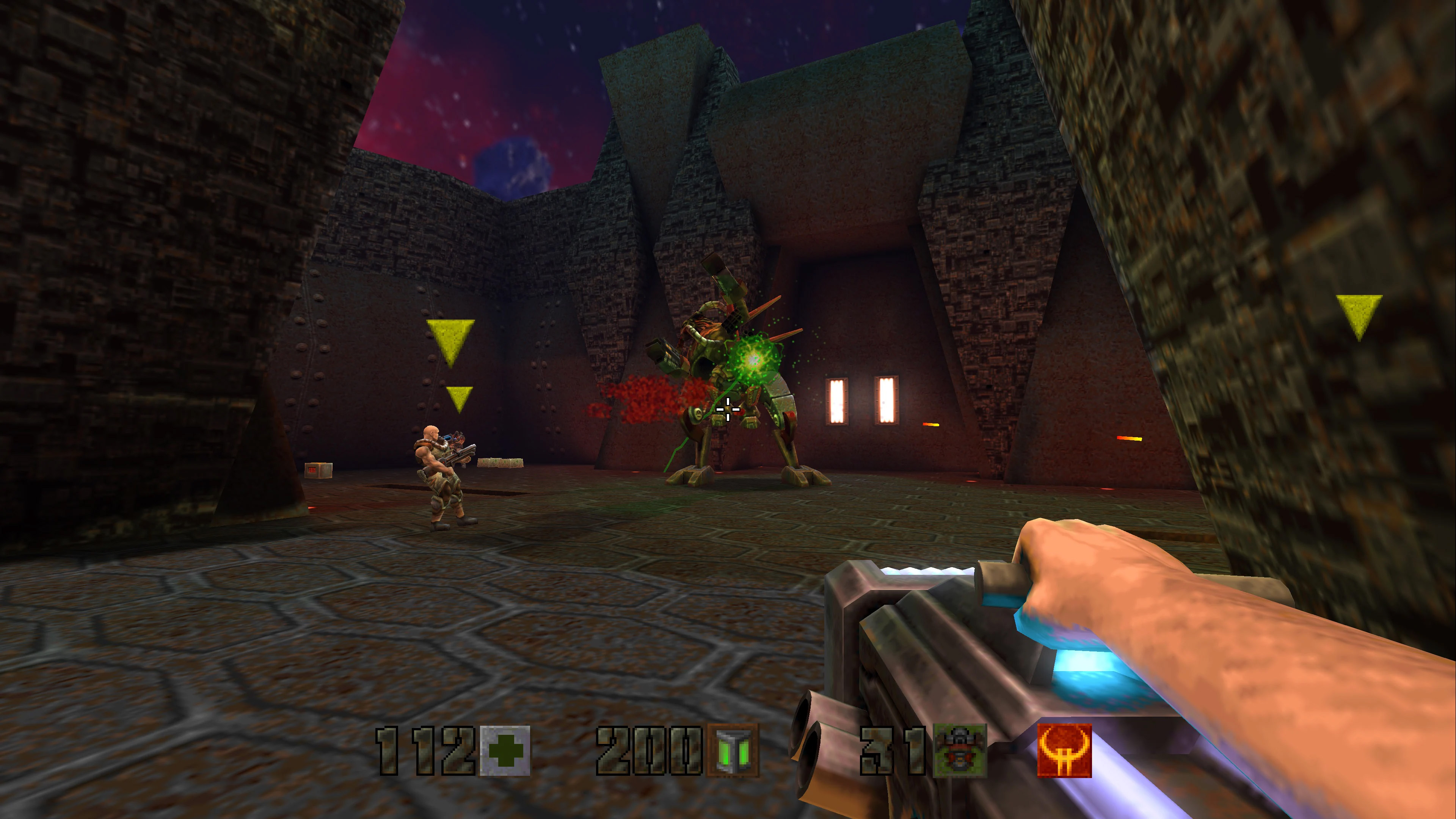
The combat in Quake II relies on weight and feedback. You begin with a basic pea-shooter blaster, but you quickly assemble an arsenal of heavy guns. The Super Shotgun delivers a bone-crunching kick at close range, while the Railgun drives a high-velocity slug through an enemy line with a trail of blue corkscrew smoke. Every shot lands with a tactile crunch, backed by a hard-driving industrial metal score composed by Sonic Mayhem.
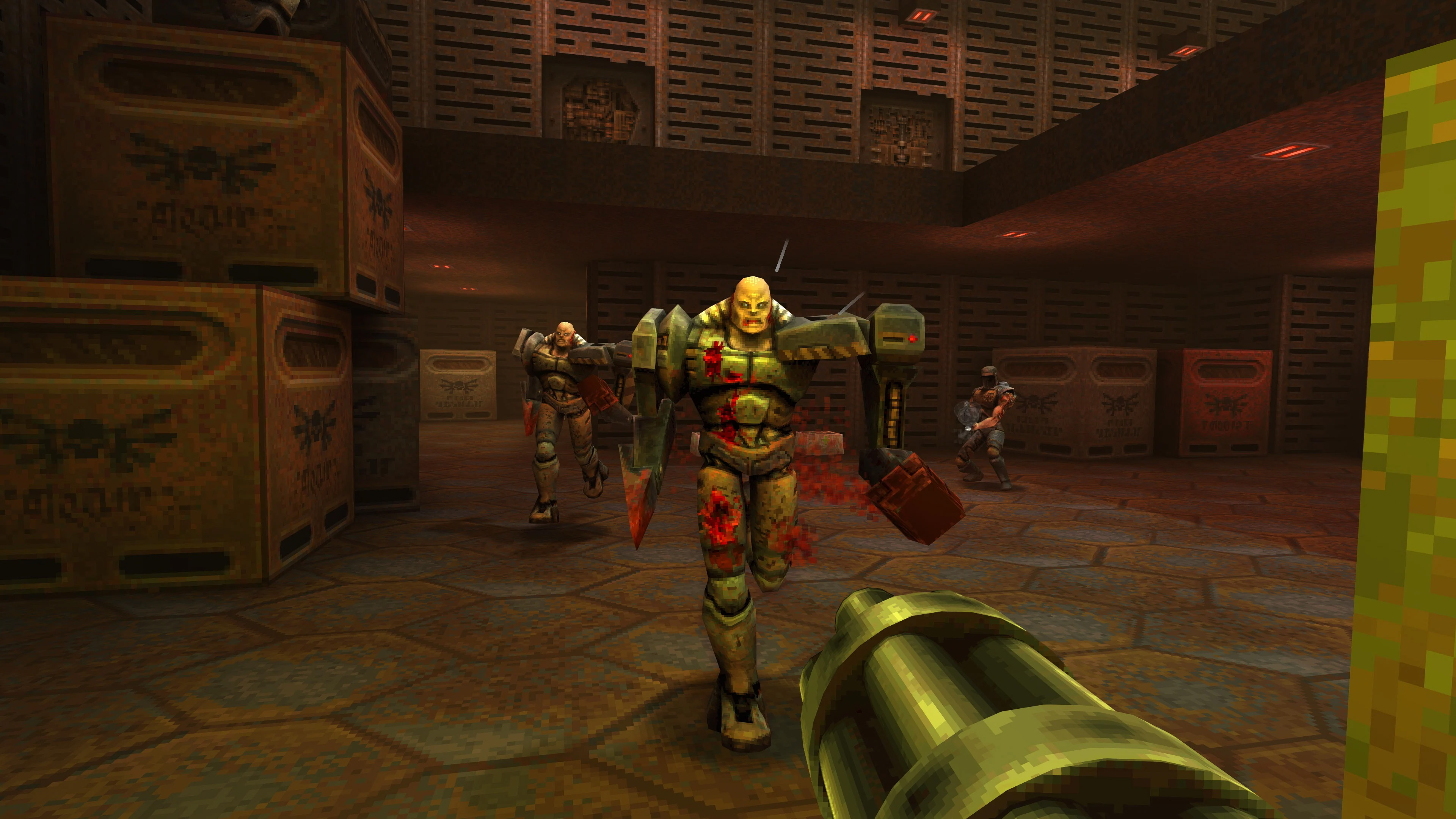
The Strogg do not just stand in open corridors waiting to take hits. Cybernetic guards duck behind low cover, leap down from overhead walkways, and continue firing back even as their limbs get blown away. To clear out these heavily armed complexes, you will need to learn the layout and manage your arsenal efficiently:
While contemporary reviews hailed the fast-paced combat and visual lighting upgrades, critics rightfully called out the thin narrative. John Carmack famously held that story in a shooter was as unimportant as story in a porn movie, and it shows here. The level architecture can also grow monotonous. After five hours of grey metal hallways, rusty iron pipes, and brown Strogg machinery, the visual design begins to blur together.
Originally developed for Windows, the 1997 release was built from the ground up for modern operating systems. However, after id Software made the source code open-source under the GNU General Public License in December 2001, community developer Frank Sapone ([HCI]Mara'akate) and contributor Özkan Sezer set out to backport the entire engine using DJGPP. Their effort resulted in the Q2DOS fan project, bringing the full campaign down to pure 16-bit DOS environments.
This backport is a technical wonder for retro computing hardware. It adds full Sound Blaster and Gravis UltraSound family audio, supports packet drivers for real-time multiplayer networking, and features 3DFX OpenGL hardware acceleration. If you try to run original releases natively in software mode on modern setups, you often encounter color palette glitches and broken wall textures. Even on original era hardware, high-end resolutions can hit severe framerate drops depending on your CPU configuration.
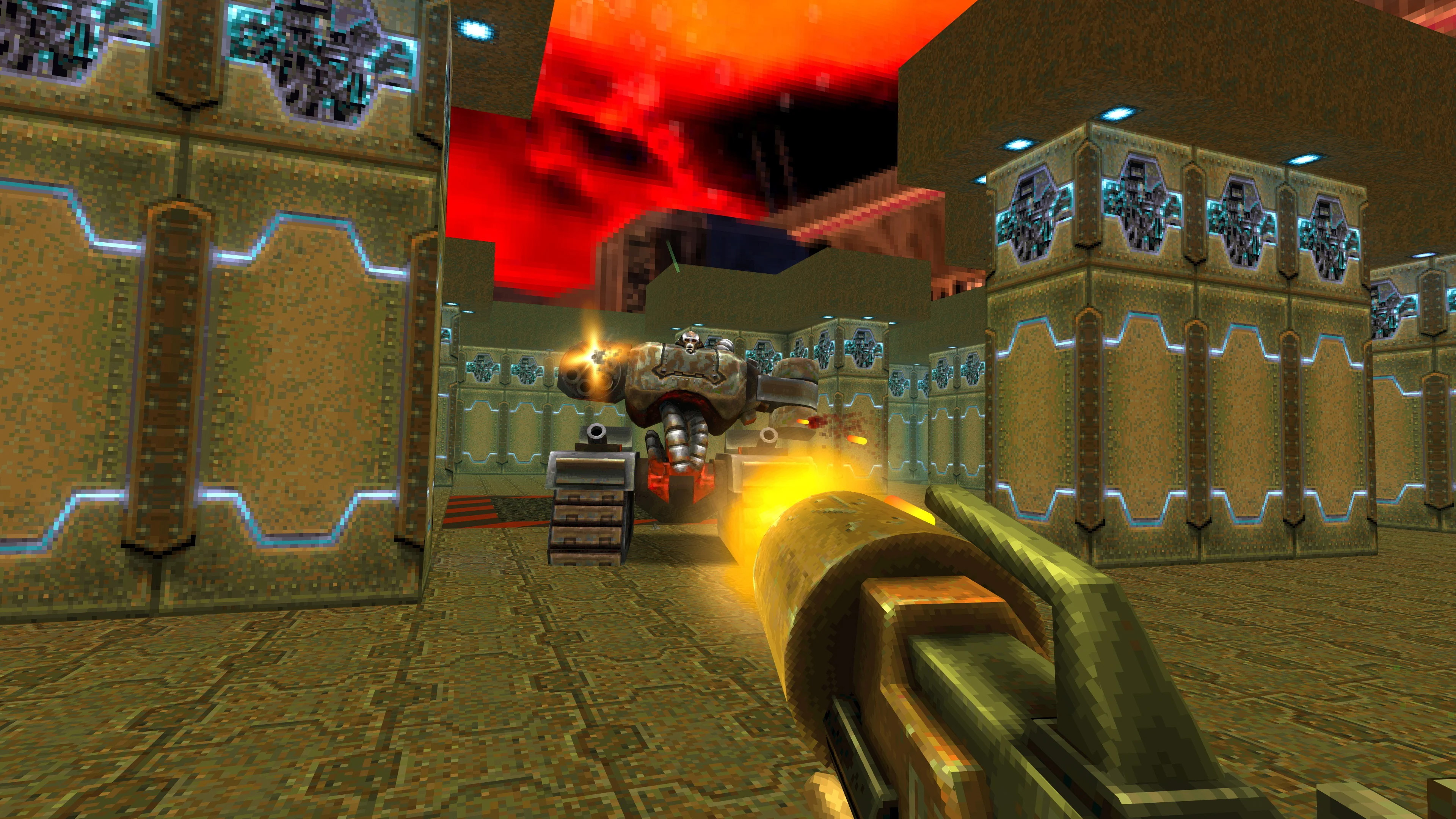
If you want to play a landmark single-player action game, Quake II holds up well. While the environmental color palette can be drab, the gunplay feels instantly satisfying, and the movement stays razor-sharp. The weapons design from id Software, Inc. set the template for late-nineties single-player campaign design.
You can play 1997's Quake II free in your browser right now, with no setup or local files required. If you only have ten minutes to spare, load up the first sector, pick up the shotgun, and fire a few rounds down a dark Strogg hallway to feel how good nineties weapon feedback can be. It is the perfect place to jump into classic action games directly in your web browser.
Quake II throws you into the heavy boots of a space marine named Bitterman, landing straight into a meat grinder on the alien homeworld Stroggos.
When id Software finished their first 3D engine, they were left with a major design hurdle: how to build an actual game around real-time light maps and full spatial freedom without repeating the dark, fragmented aesthetic of their previous titles. Programmers John Carmack, John Cash, and Brian Hook pushed the technology into id Tech 2, creating native support for 3Dfx Voodoo hardware acceleration alongside dynamic lighting. Designers Tim Willits and American McGee then built an industrial sci-fi campaign around it, trading gothic castles for brutalist alien military bases.
You drop into enemy territory on a suicide mission to eliminate the cybernetic Strogg, an alien empire that harvests living flesh to build cyborg soldiers. Your ship crashes, your squad is immediately wiped out, and you are left to clear the planet solo. Instead of moving from one isolated room to the next, levels link together into active hubs. You might need to locate a power cube in one installation, carry it across two sectors to power a blast door, and track down data disks to bypass high-security lockdowns.

The combat in Quake II relies on weight and feedback. You begin with a basic pea-shooter blaster, but you quickly assemble an arsenal of heavy guns. The Super Shotgun delivers a bone-crunching kick at close range, while the Railgun drives a high-velocity slug through an enemy line with a trail of blue corkscrew smoke. Every shot lands with a tactile crunch, backed by a hard-driving industrial metal score composed by Sonic Mayhem.
The Strogg do not just stand in open corridors waiting to take hits. Cybernetic guards duck behind low cover, leap down from overhead walkways, and continue firing back even as their limbs get blown away. To clear out these heavily armed complexes, you will need to learn the layout and manage your arsenal efficiently:
While contemporary reviews hailed the fast-paced combat and visual lighting upgrades, critics rightfully called out the thin narrative. John Carmack famously held that story in a shooter was as unimportant as story in a porn movie, and it shows here. The level architecture can also grow monotonous. After five hours of grey metal hallways, rusty iron pipes, and brown Strogg machinery, the visual design begins to blur together.

Originally developed for Windows, the 1997 release was built from the ground up for modern operating systems. However, after id Software made the source code open-source under the GNU General Public License in December 2001, community developer Frank Sapone ([HCI]Mara'akate) and contributor Özkan Sezer set out to backport the entire engine using DJGPP. Their effort resulted in the Q2DOS fan project, bringing the full campaign down to pure 16-bit DOS environments.
This backport is a technical wonder for retro computing hardware. It adds full Sound Blaster and Gravis UltraSound family audio, supports packet drivers for real-time multiplayer networking, and features 3DFX OpenGL hardware acceleration. If you try to run original releases natively in software mode on modern setups, you often encounter color palette glitches and broken wall textures. Even on original era hardware, high-end resolutions can hit severe framerate drops depending on your CPU configuration.

If you want to play a landmark single-player action game, Quake II holds up well. While the environmental color palette can be drab, the gunplay feels instantly satisfying, and the movement stays razor-sharp. The weapons design from id Software, Inc. set the template for late-nineties single-player campaign design.
You can play 1997's Quake II free in your browser right now, with no setup or local files required. If you only have ten minutes to spare, load up the first sector, pick up the shotgun, and fire a few rounds down a dark Strogg hallway to feel how good nineties weapon feedback can be. It is the perfect place to jump into classic action games directly in your web browser.
How Quake II is played — the keys the game listens to, grouped by what they do.
Highlighted keys are mapped — hover or tap one to see what it does.
Set up for modern play: W A S D move, the mouse turns and aims, left click fires. The arrow keys still turn. Ctrl and Alt are left free because the browser uses them (Ctrl + W closes the tab).
The on-screen keyboard and gamepad mapping the browser player uses on a phone, a tablet or a controller, as opposed to the real keys above. $PRO members make their own in the player and share them here; anyone can pick one to play with.
Cheat codes, console commands and memory pokes for Quake II — each one verified and attributed.
Sign in to submitHow Quake II is played — the keys the game listens to, grouped by what they do.
Highlighted keys are mapped — hover or tap one to see what it does.
Set up for modern play: W A S D move, the mouse turns and aims, left click fires. The arrow keys still turn. Ctrl and Alt are left free because the browser uses them (Ctrl + W closes the tab).
The on-screen keyboard and gamepad mapping the browser player uses on a phone, a tablet or a controller, as opposed to the real keys above. $PRO members make their own in the player and share them here; anyone can pick one to play with.
Cheat codes, console commands and memory pokes for Quake II — each one verified and attributed.
Sign in to submit