Unearthing Quake Level Master V reveals a bizarre snapshot of 1997 CD-ROM shovelware that somehow tried to construct an entire single-player campaign out of internet fan creations. Beyond its main attraction, this disc holds 500 standalone add-ons, utility programs, and some of the stranger enemy replacements created during the early days of id Software modding.
Back when high-speed internet was a luxury, buying a physical CD-ROM filled with downloaded internet files was the primary way many players expanded their games. Most of these budget packages simply dumped thousands of unsorted user maps onto a disc with a terrible file browser. Developer Macmillan Digital tried something slightly different by taking fifty custom maps and stringing twenty-one of them together into an actual structured adventure.
You begin in a central starting hub with no enemies in sight, directly imitating the layout of id's original shooter. Walking through one of four gateways sets your difficulty to Easy, Medium, Hard, or Nightmare before dropping you into the main map flow. It gives the collection a surprisingly professional structure, even if the actual geometry behind those teleporters varies wildly in quality from map to map.
Because these levels were pulled from disparate community mappers and tweaked after the fact, the pacing is completely erratic. One room challenges you to tight, tactical combat against classic fiends, while the next corridor drops you into a bizarrely lit hallway constructed with mismatched wall textures. That chaotic unpredictability gives the campaign an odd charm, but it also means sudden difficulty spikes will catch you completely off guard.
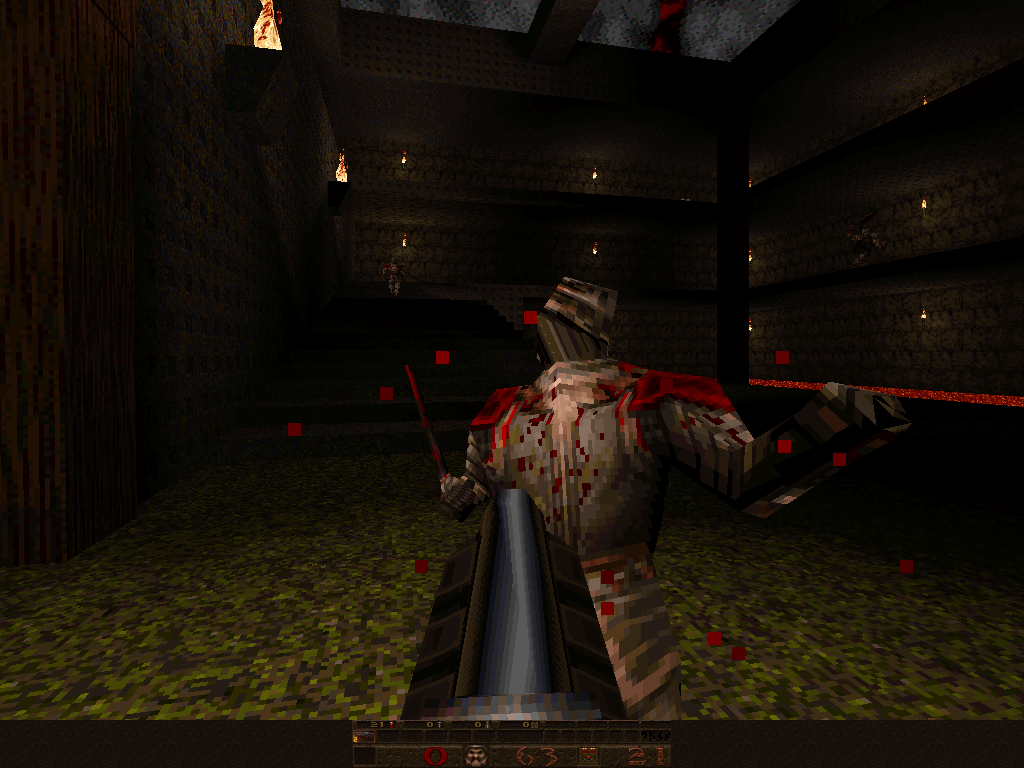
The campaign maps try something different by replacing standard game graphics with customized textures and fan-made entity models. Instead of standard grunts and knights, you end up fighting bizarre original creations like Psionic Slugs, Snakemen, and copyright-dubious additions such as Bazooka Babes and Manga Babes. Facing off against anime-inspired sprites holding heavy ordnance inside medieval stone dungeons feels completely absurd, even if their audio cues and hitboxes are thoroughly unpolished.
Navigation remains pure run-and-gun action. Movement is lightning fast, weapon fire is heavy, and enemy aggression is unforgiving. When the level geometry works, dodging rocket fire while circle-strafing past groups of custom monsters captures the raw adrenaline that made 1996 1st-person shooters brilliant. When the level design stumbles, you end up humping walls looking for hidden switches that unlock unmarked doors across the arena.
The 500 standalone add-on maps sitting on the rest of the disc range from polished deathmatch arenas to half-finished experiments. Sorting through them feels like exploring an unorganized digital attic. You will find small, lightning-fast arenas built for local network play right alongside sprawling castles where the designer forgot to place enough ammunition to kill the final wave of Ogres.
Beyond the raw map files, Macmillan Digital included a suite of utility programs that made modifying the core game far more accessible to average users in 1997. The disc came bundled with WorldCraft LM, an edition of the level design editor that allowed fans to construct their own custom architecture without wrestling with command-line tools. Getting a full editor on a retail disc was a huge selling point for aspiring mappers who lacked fast internet access.
Another major inclusion was the Multimodel patch, an utility that let players customize player model shapes, gender options, and visual or audio settings. Long before modern games built character customization directly into the main menu, running this patch let you alter how your avatar appeared and sounded in multiplayer matches. To get players online, the package even included QSpy, the premier server browser software of the period, alongside an installer for AT&T WorldNet Service.
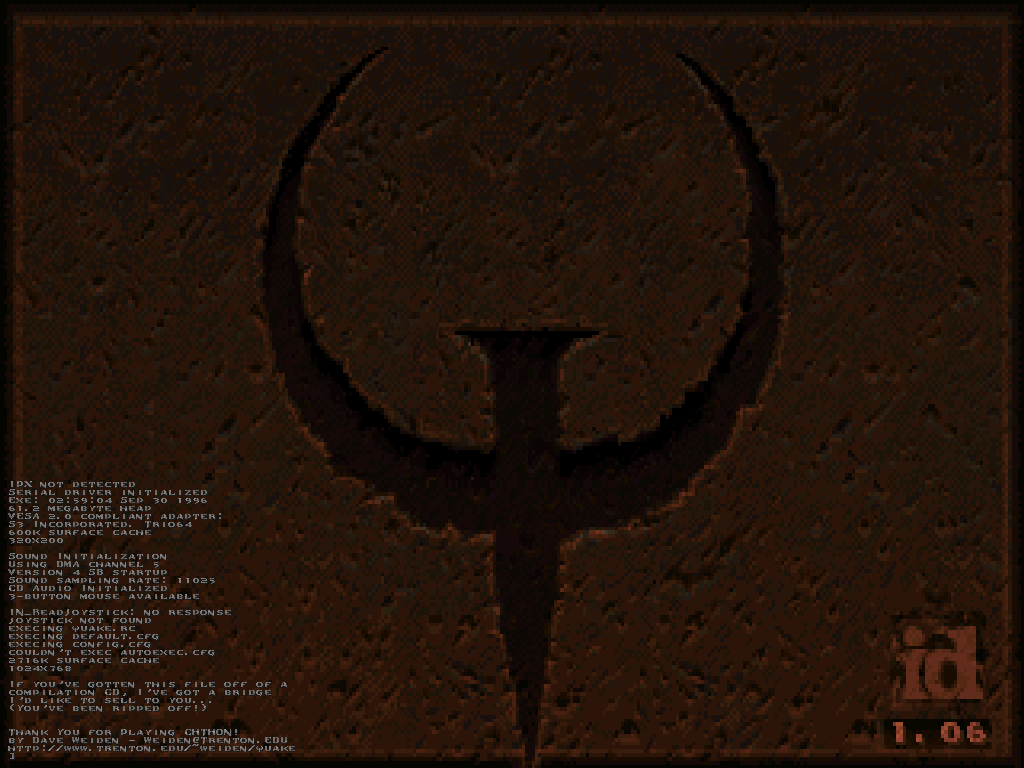
Here is what caught buyers' attention on store shelves:
It is easy to dismiss this disc as another attempt by an retail publisher to capitalize on id Software's blockbuster hit, and in many ways, that assessment is accurate. The textures do not always align cleanly, the custom monsters feel wildly out of place, and the quality control on the 500 secondary maps is virtually non-existent. Yet as a historical snapshot of early internet mod culture, it offers an incredible window into what creative fans were building in their bedrooms during the late nineties.
If you enjoy fast movement speed, heavy shotgun blasts, and historical modding experiments, the custom campaign offers an entertaining afternoon of retro shooter chaos. The sheer variety of weird textures and bizarre sprite replacements makes it far more memorable than the dozens of generic compilation discs that flooded bargain bins during the same months. It is chaotic, unpolished, and completely unfiltered.
You can play Quake Level Master V free in your browser right now without downloading obsolete editors or configuring old dial-up utilities. Jump straight into the hub level, pick your difficulty door, and see how nineties mappers tried to reshape id's engine in this classic Quake Level Master V MS-DOS game.
Unearthing Quake Level Master V reveals a bizarre snapshot of 1997 CD-ROM shovelware that somehow tried to construct an entire single-player campaign out of internet fan creations. Beyond its main attraction, this disc holds 500 standalone add-ons, utility programs, and some of the stranger enemy replacements created during the early days of id Software modding.
Back when high-speed internet was a luxury, buying a physical CD-ROM filled with downloaded internet files was the primary way many players expanded their games. Most of these budget packages simply dumped thousands of unsorted user maps onto a disc with a terrible file browser. Developer Macmillan Digital tried something slightly different by taking fifty custom maps and stringing twenty-one of them together into an actual structured adventure.
You begin in a central starting hub with no enemies in sight, directly imitating the layout of id's original shooter. Walking through one of four gateways sets your difficulty to Easy, Medium, Hard, or Nightmare before dropping you into the main map flow. It gives the collection a surprisingly professional structure, even if the actual geometry behind those teleporters varies wildly in quality from map to map.
Because these levels were pulled from disparate community mappers and tweaked after the fact, the pacing is completely erratic. One room challenges you to tight, tactical combat against classic fiends, while the next corridor drops you into a bizarrely lit hallway constructed with mismatched wall textures. That chaotic unpredictability gives the campaign an odd charm, but it also means sudden difficulty spikes will catch you completely off guard.
The campaign maps try something different by replacing standard game graphics with customized textures and fan-made entity models. Instead of standard grunts and knights, you end up fighting bizarre original creations like Psionic Slugs, Snakemen, and copyright-dubious additions such as Bazooka Babes and Manga Babes. Facing off against anime-inspired sprites holding heavy ordnance inside medieval stone dungeons feels completely absurd, even if their audio cues and hitboxes are thoroughly unpolished.
Navigation remains pure run-and-gun action. Movement is lightning fast, weapon fire is heavy, and enemy aggression is unforgiving. When the level geometry works, dodging rocket fire while circle-strafing past groups of custom monsters captures the raw adrenaline that made 1996 1st-person shooters brilliant. When the level design stumbles, you end up humping walls looking for hidden switches that unlock unmarked doors across the arena.
The 500 standalone add-on maps sitting on the rest of the disc range from polished deathmatch arenas to half-finished experiments. Sorting through them feels like exploring an unorganized digital attic. You will find small, lightning-fast arenas built for local network play right alongside sprawling castles where the designer forgot to place enough ammunition to kill the final wave of Ogres.
Beyond the raw map files, Macmillan Digital included a suite of utility programs that made modifying the core game far more accessible to average users in 1997. The disc came bundled with WorldCraft LM, an edition of the level design editor that allowed fans to construct their own custom architecture without wrestling with command-line tools. Getting a full editor on a retail disc was a huge selling point for aspiring mappers who lacked fast internet access.
Another major inclusion was the Multimodel patch, an utility that let players customize player model shapes, gender options, and visual or audio settings. Long before modern games built character customization directly into the main menu, running this patch let you alter how your avatar appeared and sounded in multiplayer matches. To get players online, the package even included QSpy, the premier server browser software of the period, alongside an installer for AT&T WorldNet Service.
Here is what caught buyers' attention on store shelves:
It is easy to dismiss this disc as another attempt by an retail publisher to capitalize on id Software's blockbuster hit, and in many ways, that assessment is accurate. The textures do not always align cleanly, the custom monsters feel wildly out of place, and the quality control on the 500 secondary maps is virtually non-existent. Yet as a historical snapshot of early internet mod culture, it offers an incredible window into what creative fans were building in their bedrooms during the late nineties.
If you enjoy fast movement speed, heavy shotgun blasts, and historical modding experiments, the custom campaign offers an entertaining afternoon of retro shooter chaos. The sheer variety of weird textures and bizarre sprite replacements makes it far more memorable than the dozens of generic compilation discs that flooded bargain bins during the same months. It is chaotic, unpolished, and completely unfiltered.
You can play Quake Level Master V free in your browser right now without downloading obsolete editors or configuring old dial-up utilities. Jump straight into the hub level, pick your difficulty door, and see how nineties mappers tried to reshape id's engine in this classic Quake Level Master V MS-DOS game.
How Quake Level Master V is played — the keys the game listens to, grouped by what they do.
Highlighted keys are mapped — hover or tap one to see what it does.
Set up for modern play: W A S D move, the mouse turns and aims, left click fires. The arrow keys still turn. Ctrl and Alt are left free because the browser uses them (Ctrl + W closes the tab).
The on-screen keyboard and gamepad mapping the browser player uses on a phone, a tablet or a controller, as opposed to the real keys above. $PRO members make their own in the player and share them here; anyone can pick one to play with.
Cheat codes, console commands and memory pokes for Quake Level Master V — each one verified and attributed.
Sign in to submitHow Quake Level Master V is played — the keys the game listens to, grouped by what they do.
Highlighted keys are mapped — hover or tap one to see what it does.
Set up for modern play: W A S D move, the mouse turns and aims, left click fires. The arrow keys still turn. Ctrl and Alt are left free because the browser uses them (Ctrl + W closes the tab).
The on-screen keyboard and gamepad mapping the browser player uses on a phone, a tablet or a controller, as opposed to the real keys above. $PRO members make their own in the player and share them here; anyone can pick one to play with.
Cheat codes, console commands and memory pokes for Quake Level Master V — each one verified and attributed.
Sign in to submit