
Screenshot×712h ago
If you picked up Rayman Forever expecting a gentle stroll through colourful cartoon worlds, you were probably met with one of the most unforgiving dexterity tests of the DOS era.
Michel Ancel’s lush visuals hid a surprisingly brutal platformer
The first few screens of the Dream Forest feel downright welcoming. You guide a limbless mascot through pastel glades, punching wooden plums and bouncing off giant flowers. Within an hour, that serene landscape turns into a gauntlet of pixel-perfect leaps, spiky fruit, and tiny ledges that test every bit of your patience. Michel Ancel and the team at Ubi Soft Entertainment Software crafted a world that looked like a playable Saturday morning cartoon, but under the hood lay a hardcore twitch platformer.
Your goal sounds simple enough: rescue the caged Electoons, recover the stolen Great Protoon from Mr. Dark, and fix the balance of Rayman’s world. In practice, progress is gated by strict collection requirements and precise momentum controls. Rayman slowly builds up his arsenal thanks to Betilla the Fairy, starting with a basic jump before earning his winding fist punch, ledge grabs, and hair-gliding helicopter move. Missing a single caged Electoon in an early stage means backtracking through brutal terrain later, because the final lair will not open until every cage is broken.
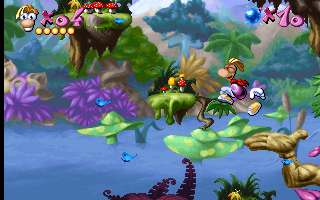
That contrast between art direction and mechanical difficulty caught a lot of players off guard back in 1996. You might spend ten minutes carefully navigating slipper-shaped hills in Band Land or dodging flying trumpets, only to lose your last life on a blind jump. For players accustomed to forgiving console platformers, this action title felt like a wall. GameSpot noted in a later retro review that while the visual polish was obvious, the sheer frustration meant the core game could be a tough sell on its own.
What makes the Rayman Forever bundle different from the console original
When this release arrived in stores, it was not merely a standalone re-issue of the 1995 original. Package contents expanded the experience by bundling three distinct software components together:
- The base game: The full original PC campaign across zones like Blue Mountains and Picture City.
- Rayman Designer: A kit with 24 brand new official stages alongside a map creator that ran as a Windows 95 program.
- Rayman by His Fans: A collection of 40 custom levels curated from community submissions sent directly to Ubi Soft.
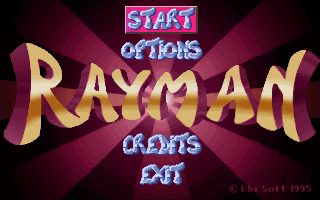
While that added plenty of value for diehard fans, the underlying translation to the PC came with trade-offs. The classic Rayman Forever MS-DOS game cut roughly a third of the red-book CD audio music tracks found on the PlayStation build. It also dropped the animated intro cinematic entirely, launching you straight into the main menu without the story setup that console owners received.
Even the audio playback suffered a tiny technical hitch in certain DOS releases. The looped background tracks sometimes contained slightly malformed RIFF header chunks, causing an audible pop or click every time a track restarted. It was the sort of odd quirk you only noticed when playing through desktop speakers connected to your Sound Blaster card with the volume turned up late at night.
Level design, precision jumps, and the 99-lives cheat
What makes the level design so taxing is how the game handles movement physics and screen space. Top-tier platforming requires you to throw your telescoping fist, wait for it to return, and time your helicopter float while dodging fast-moving hazards. In Band Land, walking across slippery musical bars while dodging lightning strikes requires memorising screen layouts rather than reacting on the fly. Reviewers at the time pointed out that success often came down to trial and error rather than pure instinct.
Because the initial stack of lives vanished quickly in tricky places like the Blue Mountains, most PC players ended up memorising the game’s famous pause-screen cheat code. Typing a quick key sequence granted 99 lives, turning an otherwise grueling progression wall into something you could actually finish over a weekend. Without that code, reaching Mr. Dark was a feat reserved for the most dedicated players.
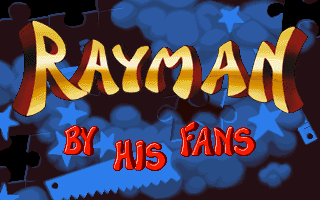
The extra content included in the set offered a very different pacing. The 24 levels in Rayman Designer focused heavily on puzzle-like item collection, forcing you to pick up blue gems in a set order to spawn the exit portal. Meanwhile, the 40 fan-made levels ranged from clever, tightly constructed challenges to wild obstacle courses that pushed the engine's jump mechanics to their absolute limit.
Where the PC conversion stumbles on modern displays
Playing the DOS edition on modern hardware presents its own eccentricities. Without vertical sync toggled or proper emulator cycle caps, the engine speed skyrockets, sending Rayman sprinting into death pits before your fingers can register the input. The original executable expected a very specific range of 486 or early Pentium clock speeds to keep the animation timings intact.
If you want to play Rayman Forever online without tweaking old config files, browser emulation sidesteps those speed matching bugs automatically. The bright graphics and expressive character animations look every bit as sharp on a modern monitor as they did on a CRT screen in the mid-nineties. The steep difficulty curve hits just as hard now, but being able to hop into a level instantaneously takes the sting out of a game-over screen.
You can play Rayman Forever free in your browser right now
The tight jump mechanics and stunning hand-drawn art of this platforming classic are fully preserved, even if the punishing level progression will test your patience within three levels. If you want to experience one of Ubi Soft Entertainment Software's defining nineties releases, you can jump straight into the action here.
You can launch Rayman Forever free in your browser right now with no setup required. Jump in, test your timing against the Dream Forest, and do not be ashamed to look up that 99-lives code if Band Land gives you a hard time.