aka Reader Rabbit and the Fabulous Word Factory · Reader Rabbit Builds Early Learning & Thinking · Reader Rabbit 1
In Reader Rabbit, you guide a bunny through a word factory, sorting three-letter words into conveyor belts while trying to survive the constant bleeping of early 1990s PC audio.
The core of Reader Rabbit takes place across four mini-games set inside a stylized factory. Designed by Leslie Grimm alongside Corinne Grimm and Cynthia Bruschi, the 1991 MS-DOS release takes the original 1984 concept and translates it into 256-color VGA graphics. You operate a series of word-sorting and pattern-matching screens designed to help young children learn basic spelling. There are no enemies, health bars, or secret stages here, just pure pattern recognition aimed at a preschool audience.
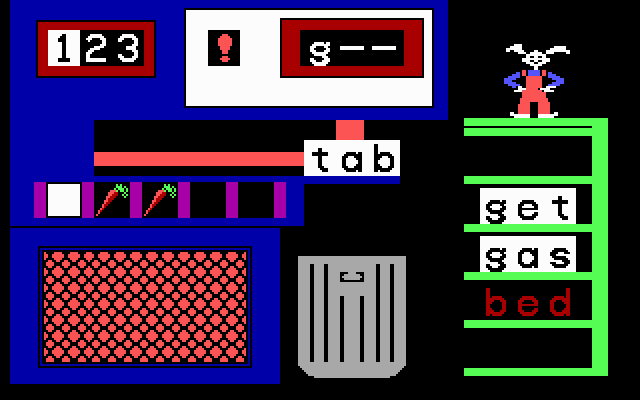
The first activity, the Sorter Game, forms the main engine of the title. Words drift down a conveyor belt, and you must check if they fit a specific letter pattern, like words starting with a specific letter or containing a target middle vowel. Valid words get dropped into a machine, while wrong matches are discarded. It sounds simple, but managing the flow of three-letter combinations forces kids to recognize phonetics quickly without feeling entirely overwhelmed by timed mechanics.
Once you step beyond the conveyor belt, the mechanics shift slightly to test different visual and spelling skills. The remaining three modes break down into distinct activities that focus on spatial layout and memory:
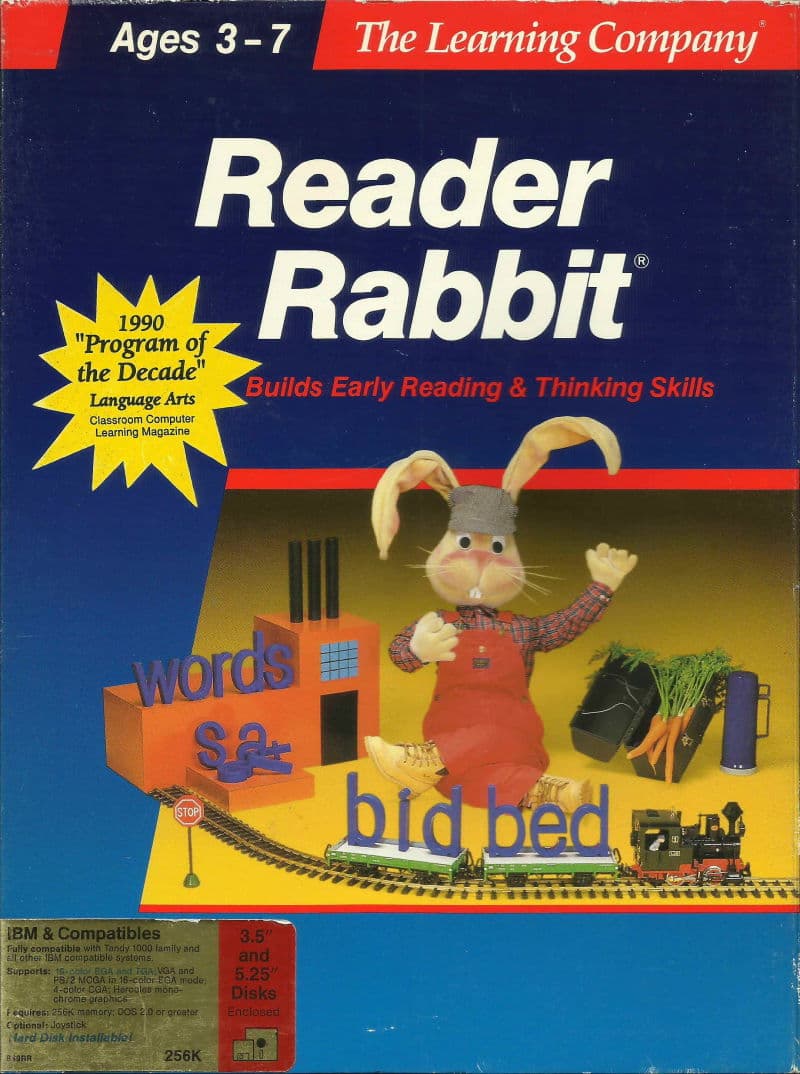
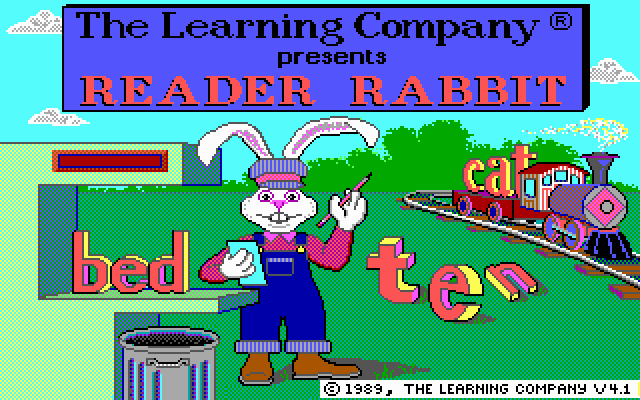
The visual leap from earlier 8-bit versions to this 1991 VGA build made a major difference for The Learning Company. Contemporary computer magazines noted that early childhood software could look just as slick as full-priced arcade conversions. Yet there is a strange quirk on display: while the main character wears blue overalls over a red sweater on the physical box art, his sprite inside the DOS software sticks strictly to a plain red sweater without the overalls.
The biggest issue with this 1991 MS-DOS build comes down to audio design. If you ran the game using a proper Sound Blaster or AdLib card, the music and sound effects sounded decent enough. However, fallback support for the internal PC Speaker meant that thousands of kids listened to harsh, high-pitched bleeps that quickly became agonizing during long sorting sessions. The sound loops for correctly sorted words repeat endlessly, driving parents and older siblings out of the room.
Another sticking point is the pacing. While the point-and-select mouse controls are a massive step up from basic keyboard navigation, the execution speed of the animations can feel sluggish on modern setups if your emulator cycle count is not dialed in correctly. Without enemies or escalating hazards, the game relies entirely on a child's intrinsic drive to keep sorting letters, meaning older kids will exhaust the content in under an hour.
Despite the audio repetition, this was a major release for educational games. It targeted early childhood literacy before most studios saw the potential in that market, carving out an entire software niche that sustained the publisher for decades through sequels like Reader Rabbit 2 and later CD-ROM remakes.
You can play Reader Rabbit online free in your browser right now, with no extra software to setup. Launch into the Word Factory, try your hand at the Sorter Game, and see how fast you can identify three-letter matches before the endless audio loops wear down your patience.
In Reader Rabbit, you guide a bunny through a word factory, sorting three-letter words into conveyor belts while trying to survive the constant bleeping of early 1990s PC audio.
The core of Reader Rabbit takes place across four mini-games set inside a stylized factory. Designed by Leslie Grimm alongside Corinne Grimm and Cynthia Bruschi, the 1991 MS-DOS release takes the original 1984 concept and translates it into 256-color VGA graphics. You operate a series of word-sorting and pattern-matching screens designed to help young children learn basic spelling. There are no enemies, health bars, or secret stages here, just pure pattern recognition aimed at a preschool audience.
The first activity, the Sorter Game, forms the main engine of the title. Words drift down a conveyor belt, and you must check if they fit a specific letter pattern, like words starting with a specific letter or containing a target middle vowel. Valid words get dropped into a machine, while wrong matches are discarded. It sounds simple, but managing the flow of three-letter combinations forces kids to recognize phonetics quickly without feeling entirely overwhelmed by timed mechanics.

Once you step beyond the conveyor belt, the mechanics shift slightly to test different visual and spelling skills. The remaining three modes break down into distinct activities that focus on spatial layout and memory:
The visual leap from earlier 8-bit versions to this 1991 VGA build made a major difference for The Learning Company. Contemporary computer magazines noted that early childhood software could look just as slick as full-priced arcade conversions. Yet there is a strange quirk on display: while the main character wears blue overalls over a red sweater on the physical box art, his sprite inside the DOS software sticks strictly to a plain red sweater without the overalls.

The biggest issue with this 1991 MS-DOS build comes down to audio design. If you ran the game using a proper Sound Blaster or AdLib card, the music and sound effects sounded decent enough. However, fallback support for the internal PC Speaker meant that thousands of kids listened to harsh, high-pitched bleeps that quickly became agonizing during long sorting sessions. The sound loops for correctly sorted words repeat endlessly, driving parents and older siblings out of the room.
Another sticking point is the pacing. While the point-and-select mouse controls are a massive step up from basic keyboard navigation, the execution speed of the animations can feel sluggish on modern setups if your emulator cycle count is not dialed in correctly. Without enemies or escalating hazards, the game relies entirely on a child's intrinsic drive to keep sorting letters, meaning older kids will exhaust the content in under an hour.
Despite the audio repetition, this was a major release for educational games. It targeted early childhood literacy before most studios saw the potential in that market, carving out an entire software niche that sustained the publisher for decades through sequels like Reader Rabbit 2 and later CD-ROM remakes.
You can play Reader Rabbit online free in your browser right now, with no extra software to setup. Launch into the Word Factory, try your hand at the Sorter Game, and see how fast you can identify three-letter matches before the endless audio loops wear down your patience.
How Reader Rabbit is played — the keys the game listens to, grouped by what they do.
Highlighted keys are mapped — hover or tap one to see what it does.
Control key map is incomplete due to full 1991 MS-DOS reference documentation not being fully available online. Supports optional mouse input and word typing for activities.
The on-screen keyboard and gamepad mapping the browser player uses on a phone, a tablet or a controller, as opposed to the real keys above. $PRO members make their own in the player and share them here; anyone can pick one to play with.
Cheat codes, console commands and memory pokes for Reader Rabbit — each one verified and attributed.
Sign in to submitHow Reader Rabbit is played — the keys the game listens to, grouped by what they do.
Highlighted keys are mapped — hover or tap one to see what it does.
Control key map is incomplete due to full 1991 MS-DOS reference documentation not being fully available online. Supports optional mouse input and word typing for activities.
The on-screen keyboard and gamepad mapping the browser player uses on a phone, a tablet or a controller, as opposed to the real keys above. $PRO members make their own in the player and share them here; anyone can pick one to play with.
Cheat codes, console commands and memory pokes for Reader Rabbit — each one verified and attributed.
Sign in to submit