
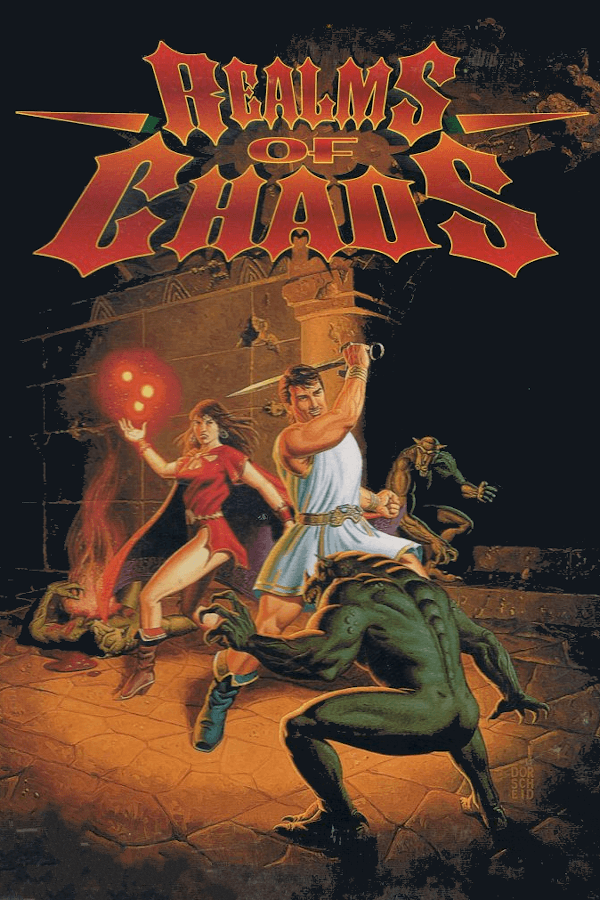

Realms of Chaos
aka Alabama Smith and the Bloodfire Pendant · Paganitzu II: The Bloodfire Pendant
Checking…
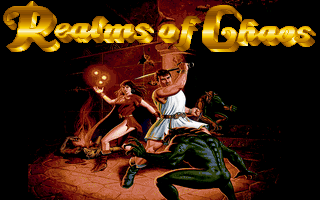
In Realms of Chaos, you swap instantly between a sword-swinging warrior and a fireball-hurling sorceress to chop and blast your way through 26 bloody, side-scrolling levels of fantasy mayhem.
Two heroes, one life bar, and a sudden swap
You realize what the game wants from you the second a high-tier enemy steps into view. Endrick, the warrior, has enough health and swing range to chop down frontline goblins up close, but throwing him blindly into a screen full of flying pests is a quick way to watch his stamina melt. Pressing the character switch key instantly trades him for his sister Elandra, who floats in with a ranged fireball attack powered by collected gems, melting distant snipers before they pick you apart.
That dynamic gives the action a rhythm distinct from standard mid-nineties run-and-gun platformers. Instead of hunting down separate power-ups for different combat situations, both toolsets sit in your hands at all times. The trick is that the siblings share a single combined health bar. If Elandra takes three arrow hits while tossing magic from a ledge, Endrick takes the field with that exact same missing health, and a single mistake with either hero sends you back to the beginning of the level.
From a tile-puzzler sequel to Realms of Chaos
Designer Keith Schuler did not set out to make a dark fantasy action game right away. He initially began building a top-down puzzle-adventure titled Paganitzu II: The Bloodfire Pendant, which was meant to follow his earlier tile-based hit. As development shifted, the project evolved into an action game built on Apogee's FAST engine, trading quiet cavern navigation for side-scrolling violence, fluid character sprites, and multi-layered parallax backgrounds.
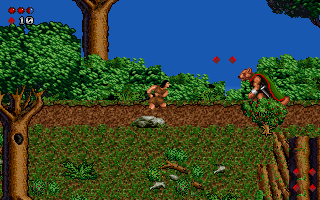
Published late in 1995 by Beaucomm Interactive and developer Apogee Software, Ltd., the game came fitted with a soundtrack composed by Bobby Prince. His heavy synth basslines and punchy MIDI chords keep the pacing tense through dark dungeons and blood-soaked keep courtyards. Like many classics of the shareware distribution era, the first episode, "Revolt of the Myraal", circulated freely on bulletin boards and shareware discs, while the remaining two episodes were unlocked upon full purchase.
Where the platforming lands and where the DOS cycles bite
The campaign spans three full episodes: "Revolt of the Myraal", "The Goblin Plague", and "Foray into Chaos". Across these 26 stages, the design stays focused on straightforward platforming, breakable walls containing secret caches, and heavy combat encounters. Boss battles in particular demand strict timing, forcing you to dodge floor traps while alternating between Endrick's heavy sword blows and Elandra's gem-funded distance casting.
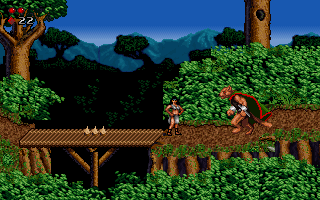
There is, however, a hardware quirk that catches modern retro players off guard. When running this classic software through default emulator configurations, hitting an enemy or triggering heavy particle explosions can cause the frame rate to stutter heavily. The issue stems from how original MS-DOS cycle timing interacts with collision routines in the FAST engine, requiring players to manually bump up CPU cycles to stabilize the game when screen action gets intense.
Why this side-scroller still deserves an evening
At the time of release, critical reception hit both ends of the spectrum. German magazine PC Joker handed the game a modest 54% score, criticizing its simple approach to level design compared to cinematic platformers. On the other hand, Dutch outlet Power Unlimited gave it an 8 out of 10, praising its snappy movement speed and satisfying hit feedback. Looked at today, it sits somewhere in the middle: a tough, honest fantasy brawler that gets down to business without unnecessary delay.
To get the most out of your run, keep these core mechanics in mind:
- Swap to Endrick when navigating tight corridors where enemies spawn right on top of you.
- Conserve Elandra's gems for flying monsters and stationary archers on high ledges.
- Smash every discolored wall section, as secret rooms house crucial health refills and gem stockpiles.
- Keep an eye on the single health meter before initiating tough boss fights.
Fire up Realms of Chaos free in your browser
If you want to experience this solid slice of nineties DOS history, you do not need to hunt down original floppy disks or tweak obscure CPU cycle settings manually. You can play Realms of Chaos online right now, running full screen with sound directly in your web browser. Jump right into the first episode, test out character swapping across the initial goblin-infested caves, and see if you have the reflexes to survive Mysteria's darkest corners tonight.
How Realms of Chaos is played — the keys the game listens to, grouped by what they do.
- Movement
- Action
- Interface
Highlighted keys are mapped — hover or tap one to see what it does.
Controls can be customized or reconfigured via setup/config options or in SETUP.EXE, and joystick input can be toggled via F5.
Players' controls
Touch and gamepad controls
The on-screen keyboard and gamepad mapping the browser player uses on a phone, a tablet or a controller, as opposed to the real keys above. $PRO members make their own in the player and share them here; anyone can pick one to play with.
Make your own touch controlsPRO
- 1Open the editorSign in below, then pick what to make. The game starts with the editor open over it.
- 2Place your keysAdd keys and drag them where your thumbs rest, or map a controller's buttons. Test plays the game with them; Save keeps them, and you play with them from then on.
- 3Share themShare them right after saving in the game, or name and share them here. Players vote, and the best become this game's controls for everyone.
Go PROSee how it worksSign in+20 XP for sharing · +50 XP if yours become the game's own
- The game's own controlsKeyboardGamepadWhat every player starts with.In use
3 screenshots
From the archive
No gameplay video yet
No gameplay video for Realms of Chaos yet. Sign in to add one.
No reviews yet
Tell the community what you think of Realms of Chaos. Reviews are public and tied to your username.
No archived manuals for Realms of Chaos yet
No manuals archived for this title yet. Sign in to upload the first scan.
Cheat codes, console commands and memory pokes for Realms of Chaos — each one verified and attributed.
Sign in to submitNo cheats yet for this title
Know a working cheat, poke or trainer? Add it with the button above. Moderators check every entry before it goes live.
No archived soundtrack for Realms of Chaos yet
No soundtrack archived for this title yet. Sign in to upload the first rip.
No save states for Realms of Chaos yet
No save states for this title yet. Sign in to share one.
Discussions
Sign in to post- Threads0
- Total posts0
- Online now6
Community · Realms of Chaos
Who's contributing, and what's new
- Reviews0
- Threads0
- Uploadsapproved0
- Contributors0
Recent activity
Nothing here yet
Reviews, discussion threads and approved uploads appear here as members add them.