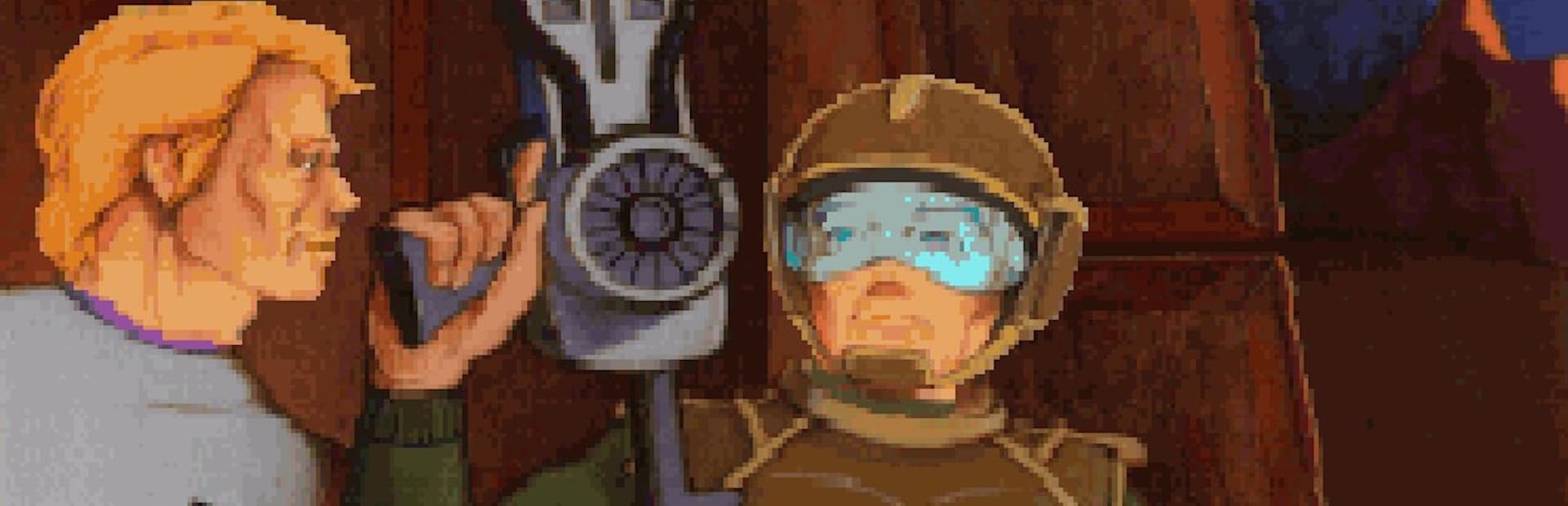
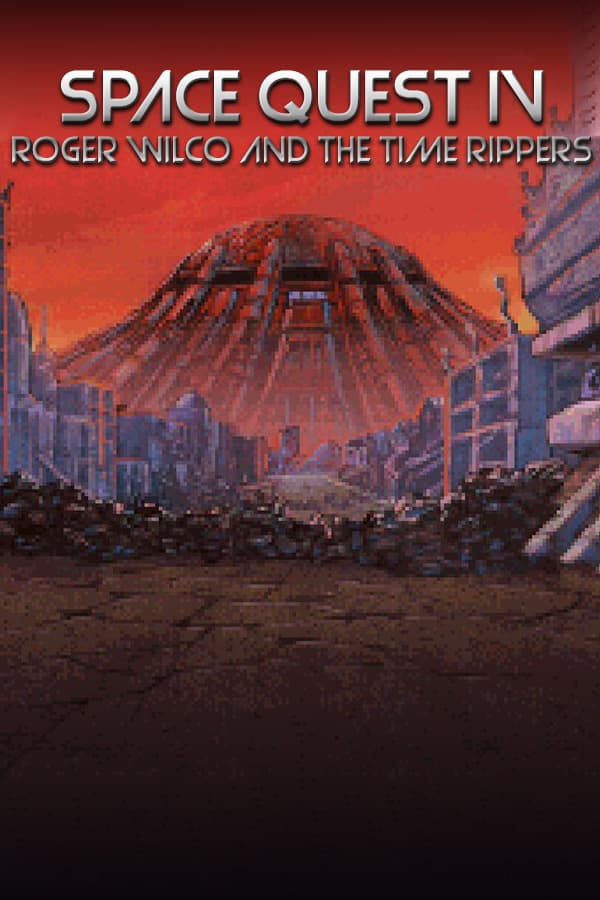
Getting vaporized by a time-traveling cyborg within five minutes of starting Space Quest IV: Roger Wilco and the Time Rippers is the true initiation into Sierra On-Line's lavish, hilariously mean-spirited 1991 sci-fi comedy.
The moment you step onto the glass-strewn pavement of post-apocalyptic Xenon in 1991's Space Quest IV: Roger Wilco and the Time Rippers, the leap forward from its predecessors hits immediately. Sierra dumped the old text parser in favor of their point-and-click Creative Interpreter interface, backing it with a massive production budget over one million dollars that funded hand-painted 256-color VGA backgrounds and rotoscoped character movement. Instead of typing commands, your cursor cycles through distinct icons for walking, looking, taking, talking, and even smelling or tasting objects in the world. Hovering the eye icon over a pile of rubble yields sharp commentary from a deadpan narrator, while clicking the hand icon directly on Roger triggers a swift fourth-wall break as the narrator reminds you this is a family game.
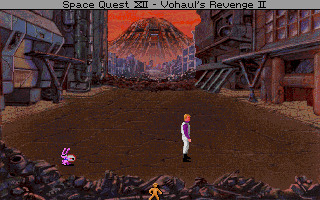
That high-budget sheen extends to the narrative structure, which bouncing space-janitor Roger Wilco back and forth through time to escape his recurring nemesis Sludge Vohaul. After escaping soldiers in a space-pub thanks to a mysterious time traveler, Roger lands straight into Space Quest XII: Vohaul's Revenge II. It is a ruined, dystopian nightmare where Vohaul survives as a digital ghost controlling the city via hunter-killer Sequel Police cyborgs. To survive, you have to scrounge through the rubble, avoid patrolling patrols, and eventually steal a Time Ripper vehicle by punching coordinate codes into its panel.
The core joy of playing this adventure lies in how designers Scott Murphy and Mark Crowe, the self-titled "Two Guys from Andromeda," weaponize the series' own history as the ultimate joke. Jumping forward into Space Quest X: Latex Babes of Estros drops you into a giant space mall complete with an arcade cabinet running a fully playable version of Ms. Astro Chicken. To fund your time-hopping errands, you end up slaving away at a fast-food joint flipping alien burgers, earning money to buy clothes and navigational spatial codes.
The visual comedy peaks when Roger time-warps back into the retro, chunky world of Space Quest I: The Sarien Encounter. Roger lands as a smooth, high-detail VGA sprite inside a 16-color CGA environment. Monochromatic pixelated bikers threaten him at a desert bar purely because they consider his high-resolution colors pretentious and soft. It is an inspired piece of visual satire that could only work on the Sierra On-Line, Inc. hardware setups of the early nineties, where a Sound Blaster card cranked out Mark Seibert and Ken Allen's synthesizer score while the graphics engine poked fun at its own technical evolution.
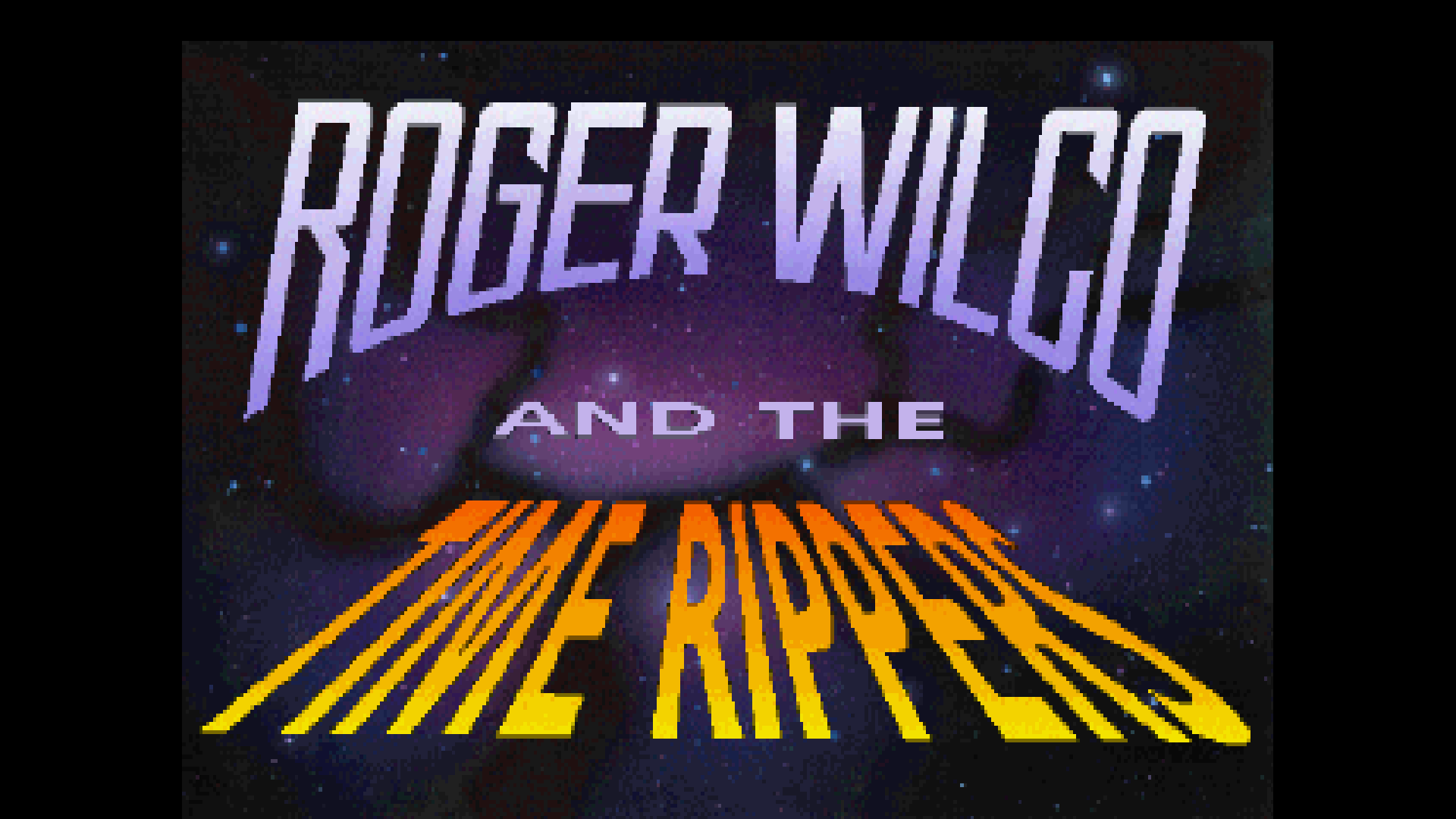
For all its charm, Space Quest IV: Roger Wilco and the Time Rippers harbors the absolute worst instincts of classic computer adventure design. The move to a icon interface streamlined interaction, but the underlying puzzle logic remains deeply treacherous. You can miss an apparently trivial item early in a screen, progress through two whole time periods, and then find yourself entirely soft-locked late in the game with no way to backtrack and no indication of what went wrong. Sierra's infamous dead-end states are everywhere here, forcing players to hoard multiple save files like safety nets.
Action sequences present an even harsher wall. Stepping out from cover a fraction of a second too late when dodging the Sequel Police results in instant death, forcing you to watch Roger get blasted to ash again and again. While some critics rightfully praised the incredible art style and sci-fi parodies, others noted that the puzzle design often relies on blind trial-and-error rather than actual deduction. You will find yourself clicking the tongue and nose icons on every single prop in desperation just to figure out what tiny interaction the designers demanded to unlock the next corridor.
Despite the controller-crushing frustration of its dead ends, the title was a massive commercial hit for Sierra On-Line, Inc., rapidly outperforming the sales of its three predecessors combined. It catches a studio at the peak of its graphical ambition right before co-creator Mark Crowe departed to join Dynamix. If you go into it expecting fair modern design, you will end up hating it, but if you treat it as a chaotic interactive comedy where death is part of the running commentary, it is one of the most distinctive point-and-click releases on MS-DOS.
New players often assume that point-and-click games are slow, gentle affairs where you can casually explore at your own pace, but Roger Wilco will punish that assumption within three screens if you do not stay sharp. You can play Space Quest IV: Roger Wilco and the Time Rippers online free in your browser right now, with nothing to install and no setup required. Just remember to save your progress every single time you cross a room, and keep your eyes open the second you land on the streets of Space Quest XII.
Getting vaporized by a time-traveling cyborg within five minutes of starting Space Quest IV: Roger Wilco and the Time Rippers is the true initiation into Sierra On-Line's lavish, hilariously mean-spirited 1991 sci-fi comedy.
The moment you step onto the glass-strewn pavement of post-apocalyptic Xenon in 1991's Space Quest IV: Roger Wilco and the Time Rippers, the leap forward from its predecessors hits immediately. Sierra dumped the old text parser in favor of their point-and-click Creative Interpreter interface, backing it with a massive production budget over one million dollars that funded hand-painted 256-color VGA backgrounds and rotoscoped character movement. Instead of typing commands, your cursor cycles through distinct icons for walking, looking, taking, talking, and even smelling or tasting objects in the world. Hovering the eye icon over a pile of rubble yields sharp commentary from a deadpan narrator, while clicking the hand icon directly on Roger triggers a swift fourth-wall break as the narrator reminds you this is a family game.
That high-budget sheen extends to the narrative structure, which bouncing space-janitor Roger Wilco back and forth through time to escape his recurring nemesis Sludge Vohaul. After escaping soldiers in a space-pub thanks to a mysterious time traveler, Roger lands straight into Space Quest XII: Vohaul's Revenge II. It is a ruined, dystopian nightmare where Vohaul survives as a digital ghost controlling the city via hunter-killer Sequel Police cyborgs. To survive, you have to scrounge through the rubble, avoid patrolling patrols, and eventually steal a Time Ripper vehicle by punching coordinate codes into its panel.

The core joy of playing this adventure lies in how designers Scott Murphy and Mark Crowe, the self-titled "Two Guys from Andromeda," weaponize the series' own history as the ultimate joke. Jumping forward into Space Quest X: Latex Babes of Estros drops you into a giant space mall complete with an arcade cabinet running a fully playable version of Ms. Astro Chicken. To fund your time-hopping errands, you end up slaving away at a fast-food joint flipping alien burgers, earning money to buy clothes and navigational spatial codes.
The visual comedy peaks when Roger time-warps back into the retro, chunky world of Space Quest I: The Sarien Encounter. Roger lands as a smooth, high-detail VGA sprite inside a 16-color CGA environment. Monochromatic pixelated bikers threaten him at a desert bar purely because they consider his high-resolution colors pretentious and soft. It is an inspired piece of visual satire that could only work on the Sierra On-Line, Inc. hardware setups of the early nineties, where a Sound Blaster card cranked out Mark Seibert and Ken Allen's synthesizer score while the graphics engine poked fun at its own technical evolution.

For all its charm, Space Quest IV: Roger Wilco and the Time Rippers harbors the absolute worst instincts of classic computer adventure design. The move to a icon interface streamlined interaction, but the underlying puzzle logic remains deeply treacherous. You can miss an apparently trivial item early in a screen, progress through two whole time periods, and then find yourself entirely soft-locked late in the game with no way to backtrack and no indication of what went wrong. Sierra's infamous dead-end states are everywhere here, forcing players to hoard multiple save files like safety nets.
Action sequences present an even harsher wall. Stepping out from cover a fraction of a second too late when dodging the Sequel Police results in instant death, forcing you to watch Roger get blasted to ash again and again. While some critics rightfully praised the incredible art style and sci-fi parodies, others noted that the puzzle design often relies on blind trial-and-error rather than actual deduction. You will find yourself clicking the tongue and nose icons on every single prop in desperation just to figure out what tiny interaction the designers demanded to unlock the next corridor.
Despite the controller-crushing frustration of its dead ends, the title was a massive commercial hit for Sierra On-Line, Inc., rapidly outperforming the sales of its three predecessors combined. It catches a studio at the peak of its graphical ambition right before co-creator Mark Crowe departed to join Dynamix. If you go into it expecting fair modern design, you will end up hating it, but if you treat it as a chaotic interactive comedy where death is part of the running commentary, it is one of the most distinctive point-and-click releases on MS-DOS.
New players often assume that point-and-click games are slow, gentle affairs where you can casually explore at your own pace, but Roger Wilco will punish that assumption within three screens if you do not stay sharp. You can play Space Quest IV: Roger Wilco and the Time Rippers online free in your browser right now, with nothing to install and no setup required. Just remember to save your progress every single time you cross a room, and keep your eyes open the second you land on the streets of Space Quest XII.
How Space Quest IV: Roger Wilco and the Time Rippers is played — the keys the game listens to, grouped by what they do.
Highlighted keys are mapped — hover or tap one to see what it does.
MS-DOS system settings are configured via INSTALL.EXE or SETUP.EXE in the game directory. Movement via keypad or arrow keys can also be performed.
The on-screen keyboard and gamepad mapping the browser player uses on a phone, a tablet or a controller, as opposed to the real keys above. $PRO members make their own in the player and share them here; anyone can pick one to play with.
Cheat codes, console commands and memory pokes for Space Quest IV: Roger Wilco and the Time Rippers — each one verified and attributed.
Sign in to submitHow Space Quest IV: Roger Wilco and the Time Rippers is played — the keys the game listens to, grouped by what they do.
Highlighted keys are mapped — hover or tap one to see what it does.
MS-DOS system settings are configured via INSTALL.EXE or SETUP.EXE in the game directory. Movement via keypad or arrow keys can also be performed.
The on-screen keyboard and gamepad mapping the browser player uses on a phone, a tablet or a controller, as opposed to the real keys above. $PRO members make their own in the player and share them here; anyone can pick one to play with.
Cheat codes, console commands and memory pokes for Space Quest IV: Roger Wilco and the Time Rippers — each one verified and attributed.
Sign in to submit