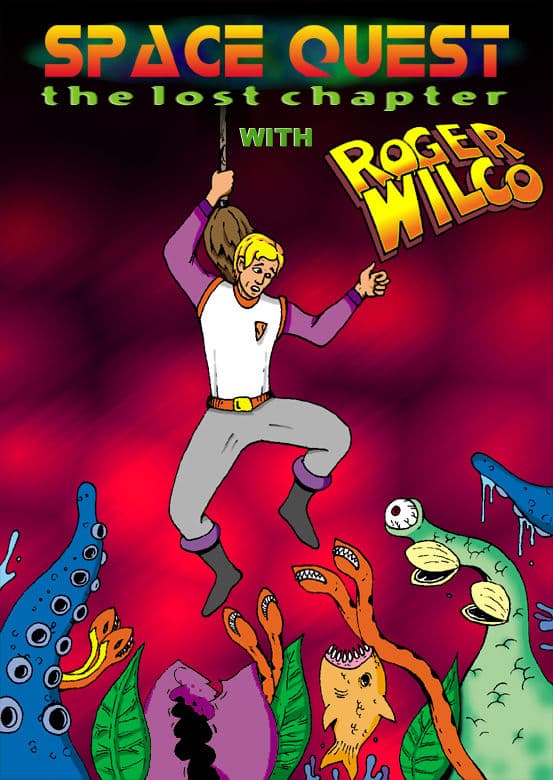
Space Quest: The Lost Chapter
Waking up in an escape pod drifting through deep space, Space Quest: The Lost Chapter drops you right into the missing bridge between Sierra's second and third janitorial adventures.
Bridging two Sierra classics with a broom and a text parser
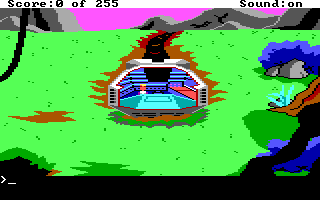
For years, fans of Sierra On-Line wondered what happened to Roger Wilco between the explosive ending of his second adventure and his peaceful slumber in an escape pod at the start of the third. Developer Vaughn Gosine built this fan-made project using Sierra's Adventure Game Interpreter to answer that exact question. You start in the familiar Pod 1, carrying over inventory items directly from the previous game, before crashing onto an uncharted alien world. The goal is simple enough: find a way off the rock, survive the environment, and navigate your way onto the starship Vercotron.
What sets this fan release apart from typical community homages is how committed it is to the 1980s EGA experience. Built entirely in AGI Studio, the artwork uses the fixed 16-color palette and low-resolution flip-screen backgrounds that defined early Sierra titles. You move Roger around with the arrow keys and type commands into a command line interface. The PC speaker bleeps and simple synth melodies hit the exact tone of a late-eighties DOS release, making it feel like a discovered diskette from Sierra's vault rather than a modern creation from 2001.
Because the project aims to fit right into the official series timeline, it does not rewrite Roger's character or rely on cheap parody. He is still an unlucky janitor who stumbles into triumph through sheer luck and basic survival instincts. If you enjoy classic adventure games, the narrative handoff into the third main installment feels surprisingly genuine.
Living with unforgiving design choices in Space Quest: The Lost Chapter
While the game captures the charm of early Sierra, it also embraces the most brutal habits of eighties game design. The text parser demands strict syntax, often refusing perfectly reasonable verbs because it expects a specific phrase. You will frequently find yourself retyping basic instructions in three or four different ways just to interact with a simple object in the background. If you leave out a single qualifying noun, the game usually responds with a blank refusal or a dry hint that leaves you guessing.
The puzzle logic leans heavily on obscure lateral thinking without offering subtle clues in the environment. Early in the adventure, you encounter a swampy jungle world, move into an underwater city, and eventually face a giant squid puzzle that halts almost every player who tackles it without a walkthrough. There are no written hints, no built-in assist systems, and no safety nets. A few key items can be missed entirely, leaving you stranded hours later without knowing why your progress has ground to a halt.
Death comes frequently and suddenly, exactly as it did in the original releases. Walking too close to alien wildlife, drinking unanalyzed water, or stepping off a precipice instantly triggers a comedic death screen. If you forget the Golden Rule of 1980s parser adventures, saving early and saving often, a single misstep will send you back to the starting pod.
Pushing AGI Studio to its absolute memory limits
Creating a full adventure within Sierra's original AGI framework in 2001 was a serious technical challenge. The engine was originally designed for early IBM PCs with strict memory constraints, limiting screen resolution, color count, and script sizes. Developer Vaughn Gosine stretched the toolset to its absolute limit, packing multiple distinct environments into a engine that was usually reserved for far shorter titles.
The progression spans four major zones, each with distinct visual art and custom inventory interactions:
- The Escape Pod: A tight opening area that tests your baseline knowledge of Roger's surviving gear.
- The Jungle Planet: A sprawling wilderness filled with toxic plants, treacherous terrain, and aggressive alien beasts.
- The Submerged City: An underwater complex requiring precise navigation and non-linear puzzle solving.
- The Vercotron: A massive alien starship where all your collected inventory items finally come together.
To pull this off, the project manages memory carefully, cycling backgrounds and sound scripts efficiently so the DOS executable does not crash under its own weight. The background visuals look sharp within the 16-color constraint, giving Roger a slightly bulkier, more defined sprite than he had in his 1987 outing. The sound design leans on simple speaker chirps and short MIDI loops, preserving the audio profile of an old 286 setup.
Obscure squid logic and pixel-thin walkways
The single most notorious segment of the entire experience involves navigating a path that is literally one pixel wide. A minor slip of the cursor key drops Roger into an abyss, forcing an immediate reload. Combined with the absence of modern pathfinding, traversing these screen transitions requires short, cautious taps of the keyboard. For players accustomed to modern point-and-click convenience, these dexterity checks feel agonizingly strict.
The puzzle design also suffers from a lack of environmental feedback. In one sequence, solving a puzzle requires using inventory items in a sequence that defies basic practical logic. Because no official manual or hint book was ever published for this freeware release, community forum posts from the early 2000s became the only real repository for solutions. You either figure out the developer's exact train of thought or spend an evening typing every noun in your inventory against every visible object on screen.
Despite these frustration points, completing a puzzle without help delivers that classic rush of genuine accomplishment. The game never holds your hand, nor does it pull its punches. When you finally deduce how to clear the underwater city or bypass a security system on the Vercotron, it feels earned in a way modern narrative games rarely match.
Play Space Quest: The Lost Chapter free in your browser today
If you have a soft spot for text parsers, sudden instant deaths, and low-res sci-fi humor, this fan creation is a real treat to explore. It nails the look and feel of classic Sierra with surprising fidelity, bridging two well-known games while delivering a stiff challenge of its own. Just remember to save your game every time you enter a new screen or discover a new inventory item.
You can play Space Quest: The Lost Chapter online, free, right here in your browser with no installation or setup required. When the opening pod door opens, try searching your crash surroundings carefully and check your starting pockets right away. You will immediately notice the authentic PC speaker audio chimes and the strict parser prompt waiting for your first typed action.