Starquake
In Starquake, you pilot a round robot named BLOB through 512 maze-like caverns to fix a dying planet before it explodes into cosmic dust.
How Stephen Crow turned 8-bit maze mechanics into a massive MS-DOS action game
In the mid-1980s, game designers faced a massive technical wall. Fitting a vast game world into limited computer memory required clever tricks. Creator Stephen Crow solved this issue for Bubble Bus Software by using custom assembly code and smart data structures.
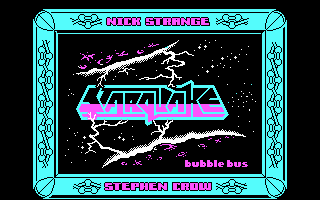
He created a vast subterranean map out of 512 distinct screens arranged in a 16 by 32 grid. Originally built for 8-bit home micros, it came to PC hardware in 1988 via publisher ShareData, Inc. The result was a surprisingly fast side-view action game for IBM-compatible machines.
You control BLOB, short for Bio-Logically Operated Being. Your mission is simple to state but brutal to execute. The planet core is failing, and you must descend into the deep underworld to rebuild the reactor core before time runs out.
Surviving the hostile underground of Starquake
BLOB lacks a standard jump button. To gain height, you create temporary energy ledges right under your feet. These ledges break down after a few brief seconds, so vertical climbing demands quick rhythm and careful energy management.
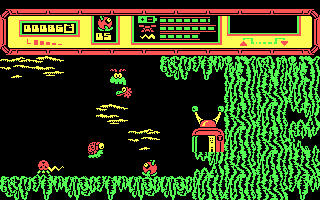
Your robot carries a basic zapper weapon, but combat is mostly about survival while hunting for necessary quest objects. To fix the reactor, you must collect specific core components scattered across the maze. You can carry a maximum of four items at once, which creates constant inventory management challenges.
To succeed on your run, you need to master several core mechanics:
- Temporary Platforms: Build quick energy ledges under your feet to reach upper ledges before the energy runs out.
- Cheops Pyramids: Trade useless inventory items at these stations to get the exact core parts or keys you need.
- Teleport Booths: Enter four-letter codes found around the cavern map to warp across long distances instantly.
- Hover Pads: Mount flying platforms at docking bays to cross massive vertical shafts rapidly.
The core parts required to fix the reactor change every single time you start a new game. That random element forces you to search the map anew rather than relying on a memorized route.
Where the cavern exploration gets punishing
The environment wants you dead immediately. Primitive alien hazards constantly spawn right out of thin air. Shooting these creatures only clears the screen for a brief moment before new ones appear to drain your energy bar.
Navigating the map is notoriously disorienting. With 512 identical-looking screens and no built-in minimap, it is absurdly easy to lose your bearings. You will often run into dead ends or jump down floor gaps that drop you into hostile territory.
Another major frustration is item management while flying. While mounted on a hover pad, BLOB cannot pick up items lying on the ground. You must constantly dock, dismount, grab the object, and get back onto the vehicle. That tedious process leaves you completely vulnerable to infinite enemy spawns.
Why the sound and structure kept players hooked
When the original version launched on 8-bit systems, British gaming magazine Crash awarded it a 96 percent score. Readers even voted it top game for sound effects in their annual awards. The PC conversion keeps that distinct audio feel with metallic, reverberating sound effects through the system speaker.
The structural layout feels surprisingly open compared to other platformers from 1988. Games like Mega Man or Commander Keen kept players on linear paths. Here, you are dropped into a massive interconnected web where exploration order is entirely up to you.
Teleportation access codes are hidden throughout the caverns. Discovering a new code feels like a genuine victory, instantly cutting down the grueling travel time between the upper crust and the planet core.
Play Starquake free in your browser today
Decades after release, it is still a tough, frantic puzzle platformer that rewards patience, mapping, and quick reactions. If you love classic maze adventures that do not hold your hand, give it an evening of your time.
You can play Starquake online directly in your web browser with no download required. Load it up right now, figure out your platform energy timing, and see if you can repair the core before the planet shatters under your feet.