
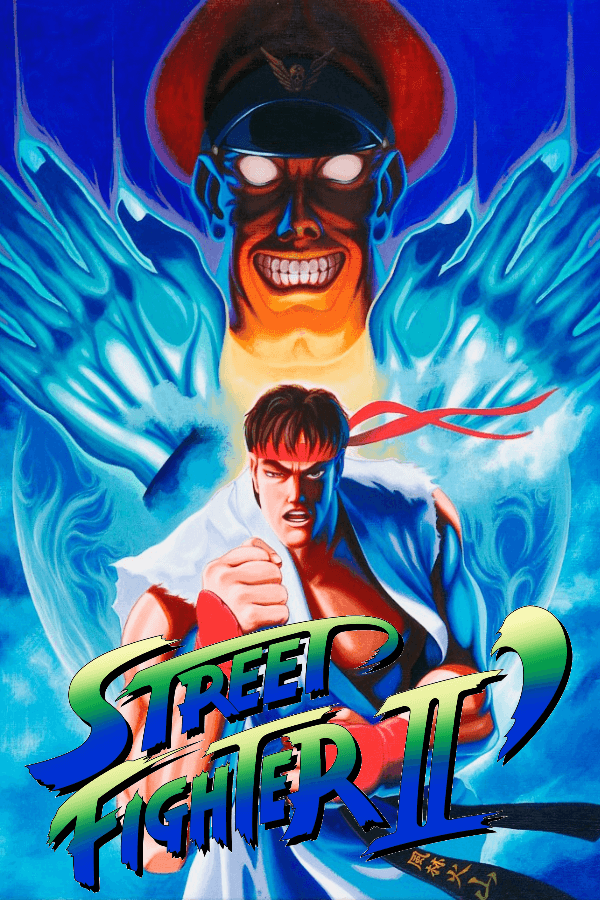

The arcade version of Street Fighter II rewrote the rules of fighting games, but its 1992 MS-DOS conversion earned a bad reputation for reducing a six-button arcade cabinet to a clumsy, single-button exercise in frustration.
Capcom's arcade titan hits standard PC hardware
When Capcom Co., Ltd. licensed its flagship arcade hit to European publisher U.S. Gold Ltd., bringing the world tournament to home computers seemed like an easy victory. Porting studio Creative Materials Ltd. faced the brutal task of taking a game built for specialized arcade hardware and squeezing it into standard IBM PC rigs running under DOS. The result was distributed in North America on floppy disks by Hi-Tech Expressions, but early adopters quickly realized this was a rough translation.
Arcade cabinets featured six buttons, three for punches and three for kicks, spaced in crisp rows. Typical PC setups in 1992 had standard joysticks with one or two buttons, or whatever standard AT keyboard layout was plugged into the back. To make combat work, the developers mapped all six basic attacks to a single button, forcing players to hold or tap depending on whether they wanted a light, medium, or heavy hit. Trying to execute Ryu's Hadoken or Dhalsim's Yoga Fire with a single button and sloppy diagonal register on a standard PC joystick felt like typing with oven mitts on.
Two buttons, wrong colors, and broken fighting logic
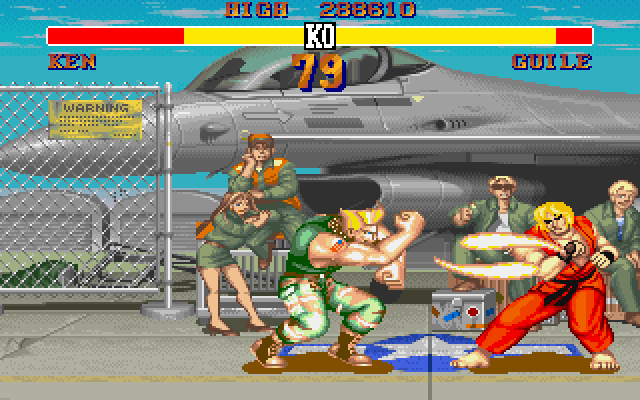
Booting up the game gives you access to the classic roster of eight original world warriors, followed by the four boss opponents: Balrog, Vega, Sagat, and M. Bison. The fundamental structure of this action title remains intact on paper, but the actual mechanics break down the moment the bell rings. Character balance is entirely absent, primarily because normal attack priorities and collision hitboxes were completely scrambled during the conversion.
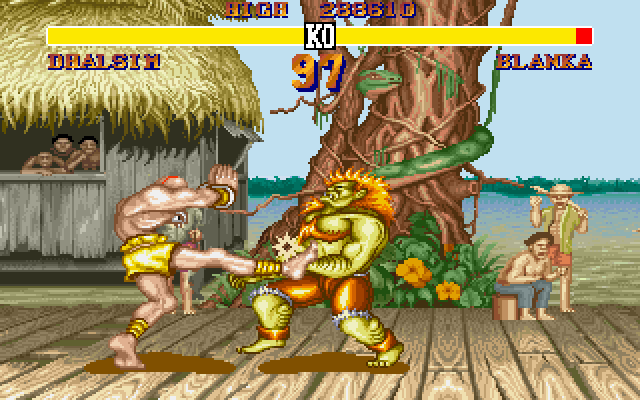
Dhalsim is notoriously broken in this build. His low slide attack stretches across the entire screen, and his standard limb extensions regularly override almost every move in the game. If you choose Dhalsim, you can lock down opponent after opponent simply by repeating long-range attacks from the safety of the far corner. Other characters suffer from severe sprite mistakes, most famously Ryu and Ken, who throw recolored versions of Dhalsim's Yoga Fire flame graphics instead of their proper dragon-headed fireballs.
The control schemes on standard PC controllers make high-level play practically impossible for standard matches:
- One-button joysticks require holding the fire button down while moving the stick to select attack strengths.
- Two-button controllers assign punch to one button and kick to the other, but force you to rely on awkward directional modifier inputs to alter hit power.
- Keyboard controls struggle with key rollover limits, causing diagonal jump inputs or special command circles to drop inputs mid-fight.
Sound Blaster silence and five looping tracks
Audio is where the MS-DOS port unravels completely. Capcom's arcade board housed dedicated sound chips that played distinct stage themes for every fighter, complete with crisp speech samples for every special move. The PC conversion includes a grand total of five music tracks and twenty-nine sound effects across the entire disk image. Stage themes do not change between countries; instead, the main title tune simply loops continuously while you fight across international backgrounds.
Even if you had a Sound Blaster board running alongside your PC speaker in 1992, famous vocal calls were simply cut to save disk space. The port became so known for its missing assets that a homebrew clone called SFLIU began circulating among enthusiast circles just to restore basic PC speaker sound effects, including Ryu actually shouting his move names. Between missing tracks, long load screens between rounds, and high hardware demands for 1992 systems, players were often left baffled by the overall presentation.
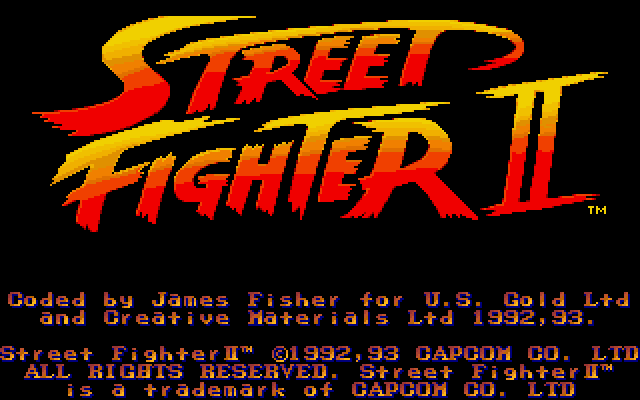
What survives when you fire up the MS-DOS port today
Retrospective scores reflect how poorly this version landed at the time, with German magazine PC Player awarding it 39%, PC Gamer UK giving it 38%, and Aktueller Software Markt dropping down to 33%. Viewing it purely as a competitive fighter reveals a deeply broken mess, yet as a piece of technical history, it offers a fascinating look at how home computer developers scrambled to adapt complex arcade hardware before PC architecture standardized around CD-ROMs and 3D accelerators.
You can play Street Fighter II online directly in your browser without dealing with vintage DOS configuration files or uncooperative controllers. While the core fighting systems here are wildly unbalanced and heavily downgraded, experiencing this Street Fighter II MS-DOS game offers a weird look back at PC gaming's wild west era. Launch Street Fighter II free in your browser right now, pick Dhalsim to slide your way through the tournament, and see firsthand how the world's biggest fighting game survived its roughest computer port.