
The Elder Scrolls: Arena
aka Arena · The Elder Scrolls Chapter One: Arena · The Elder Scrolls Chapter One: The Arena
Streaming build
Checking storage…77 MB
Preload in background
Before it was a massive open-world fantasy, The Elder Scrolls: Arena began life as a team combat simulator where gladiators fought their way across Tamriel's local arenas. When RPG systems took over development, Bethesda created a vast, procedurally generated wilderness that could kill you before you even reached the daylight.
How mouse gestures and procedural generation defined The Elder Scrolls: Arena
Every long-running RPG series starts with a choice that haunts its design for years, and for this game, it was scale over bespoke detail. To save Emperor Uriel Septim VII from his dimensional prison, you must gather eight fragments of the Staff of Chaos scattered across Tamriel. That quest sounds simple enough until you step out of the starting dungeon and realize the world around you stretched on almost endlessly through random terrain algorithms.
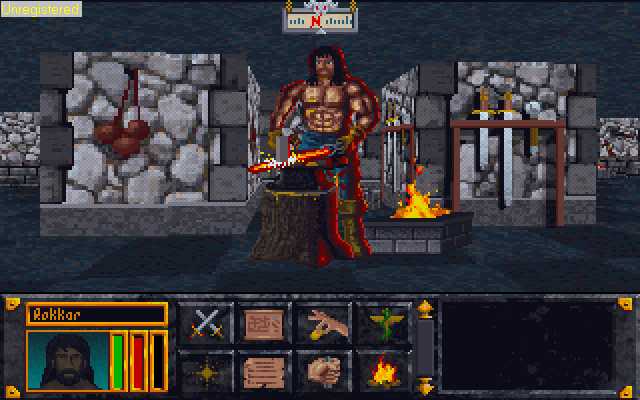
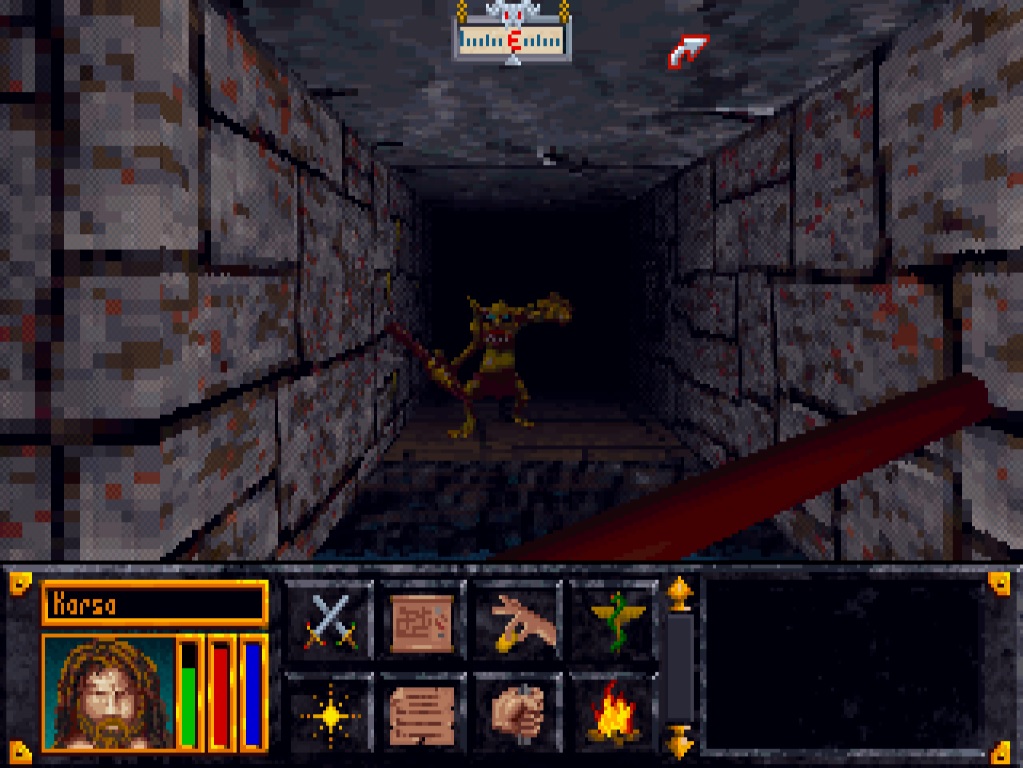
combat took a fundamentally different approach than the grid-based dungeon crawlers of its time. Instead of hitting a function key to swing a blade, you click and drag your mouse across the screen to direct attacks. Left-to-right strokes yield wide slashes, dragging straight up thrusts forward, and pulled-back movements deliver overhead chops. When you fight goblins or skeleton warriors in narrow corridors, this system feels surprisingly natural once your hands learn the rhythm.
The trade-off for this physical combat feel lies in the sheer repetition of the landscape. While you can walk endlessly in any direction through procedural wilderness, reaching a neighbouring town on foot is practically impossible. The engine generates new terrain perpetually, meaning the fast-travel map is mandatory for actual progression. It created a world that felt unfathomably large on disk, yet strangely hollow when explored on foot.
Escaping the starting cell is the game's hardest challenge
If you launch this role-playing game expecting a gentle tutorial, the opening dungeon in Imperial City will shock you. You wake up in a damp sewer cell with basic gear, and within three paces, the first sewer goblin can easily tear your fresh character to shreds. Early player complaints frequently target this massive initial difficulty wall, where a single bad spawn destroys twenty minutes of character creation.
Surviving the opening hours relies on mastering the spell creation system and managing gear condition closely. The game lets you assemble custom spells by tweaking parameters like damage range, target radius, and spell points cost. Playing as a pure fighter is an uphill battle, but a hybrid spellcaster can craft a low-cost healing or fire spell that makes early survival manageable.
- Custom spell crafting lets players adjust area-of-effect and scaling damage parameters.
- Dynamic weather and full day and night cycles affect visibility and enemy spawns.
- Fast travel across 400 towns, villages, and city-states mapped across nine Tamriel provinces.
- Real-time first-person melee powered by mouse direction drags.
When Bethesda Softworks LLC released the title back in 1994, the sheer demand on hardware was brutal. The raycasting 3D engine handled ambient lighting, shifting atmospheric weather, and sprite scaling simultaneously. On a basic 386 PC, the framerate struggled, though hearing environmental sound effects through a Roland MT-32 or Sound Blaster card added real tension to underground crawls.
Why critics in 1994 were split over Tamriel's endless towns
Critical reaction at launch revealed a deep divide over whether infinite land outweighed designed, tailored spaces. Journalist Scorpia praised the directional mouse fighting in Computer Gaming World as a natural step forward for first-person action, but pointed out that interchangeable towns and copy-paste dungeons eventually made exploration feel mechanical. PC Zone scored it at 62 percent, writing that the cities felt dull, while French magazine Joystick handed out a 91 percent score.
Despite those mixed reactions, Computer Gaming World awarded it their Role-Playing Game of the Year award for 1994. Early sales were initially slow because software bugs and steep system requirements kept buyers cautious, but strong word-of-mouth eventually carried it to over 120,000 copies sold. The late release on CD-ROM added digitized voice acting to story cutscenes, giving the main quest a cinematic punch that floppy disk users missed.
The technical ambition behind it was real, even if the dungeon layouts get formulaic. Key bindings feel clunky today without custom remapping, and navigating multi-level dungeons like Fang Lair requires endless map checks. Yet the foundation for an entire open-world philosophy was built right here in this Bethesda Softworks LLC release.
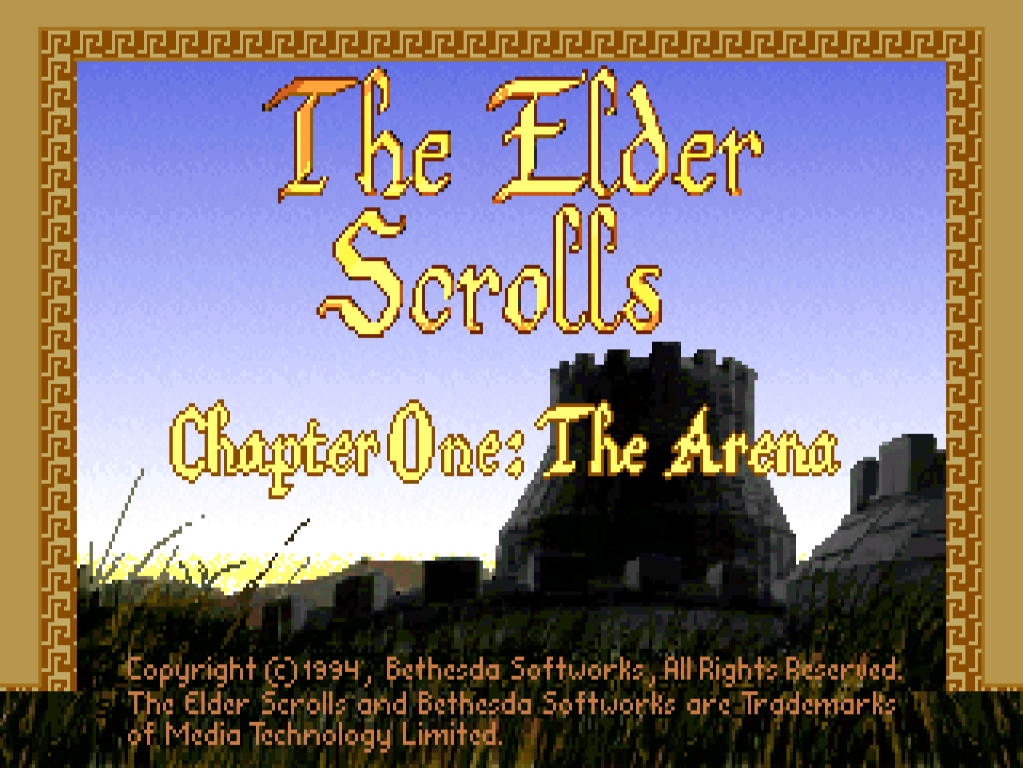
You can play The Elder Scrolls: Arena online right now
The original The Elder Scrolls: Arena set a standard for open-world freedom that few titles in the mid-nineties dared to attempt. While its procedurally generated dungeons grow repetitive and the controls take patience to master, its spell creation and directional melee fighting still offer something unique to modern players. Anyone interested in the origins of Western action RPGs should sample where the world of Tamriel began.
You can run this full The Elder Scrolls: Arena MS-DOS game straight in your browser today with no downloads or setup files required. If you want to experience The Elder Scrolls: Arena free in your browser, just launch it below, map your directional attacks to a mouse rhythm you like, and save your gold for a decent healing spell before tackling the Imperial sewers. The easiest way to get your bearings is to click fast travel as soon as you reach the surface, or you will end up wandering procedural wilderness forever.
How The Elder Scrolls: Arena is played — the keys the game listens to, grouped by what they do.
- Movement
- Action
- Weapons & items
- Interface
- Other
Highlighted keys are mapped — hover or tap one to see what it does.
Game performance speed can be adjusted by changing CPU cycles in DOSBox configuration. Sound FX and Music must be configured via the setup program.
Players' controls
Touch and gamepad controls
The on-screen keyboard and gamepad mapping the browser player uses on a phone, a tablet or a controller, as opposed to the real keys above. $PRO members make their own in the player and share them here; anyone can pick one to play with.
Make your own touch controlsPRO
- 1Open the editorSign in below, then pick what to make. The game starts with the editor open over it.
- 2Place your keysAdd keys and drag them where your thumbs rest, or map a controller's buttons. Test plays the game with them; Save keeps them, and you play with them from then on.
- 3Share themShare them right after saving in the game, or name and share them here. Players vote, and the best become this game's controls for everyone.
Go PROSee how it worksSign in+20 XP for sharing · +50 XP if yours become the game's own
- The game's own controlsKeyboardGamepadWhat every player starts with.In use
3 screenshots
From the archive
No gameplay video yet
No gameplay video for The Elder Scrolls: Arena yet. Sign in to add one.
No reviews yet
Tell the community what you think of The Elder Scrolls: Arena. Reviews are public and tied to your username.
No archived manuals for The Elder Scrolls: Arena yet
No manuals archived for this title yet. Sign in to upload the first scan.
Cheat codes, console commands and memory pokes for The Elder Scrolls: Arena — each one verified and attributed.
Sign in to submitNo cheats yet for this title
Know a working cheat, poke or trainer? Add it with the button above. Moderators check every entry before it goes live.
No archived soundtrack for The Elder Scrolls: Arena yet
No soundtrack archived for this title yet. Sign in to upload the first rip.
No save states for The Elder Scrolls: Arena yet
No save states for this title yet. Sign in to share one.
Discussions
Sign in to post- Threads0
- Total posts0
- Online now6
Community · The Elder Scrolls: Arena
Who's contributing, and what's new
- Reviews0
- Threads0
- Uploadsapproved0
- Contributors0
Recent activity