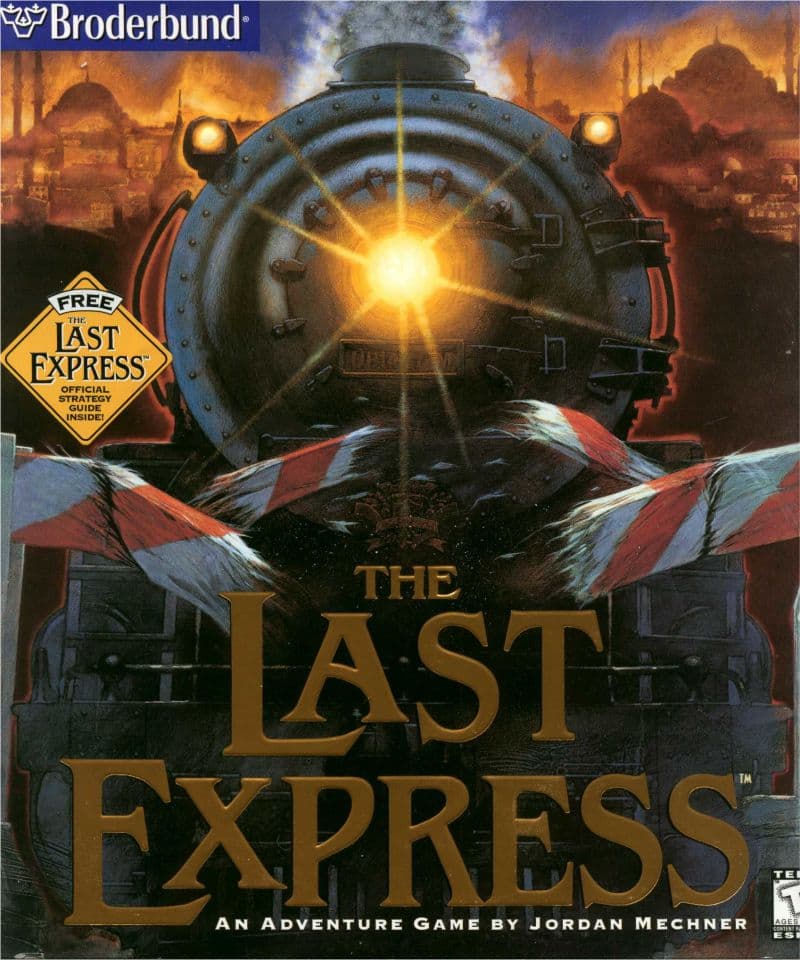
When you board The Last Express, the clock starts ticking in real time, turning a luxurious train ride into a paranoid scramble to hide bodies, intercept telegrams, and stop a war.
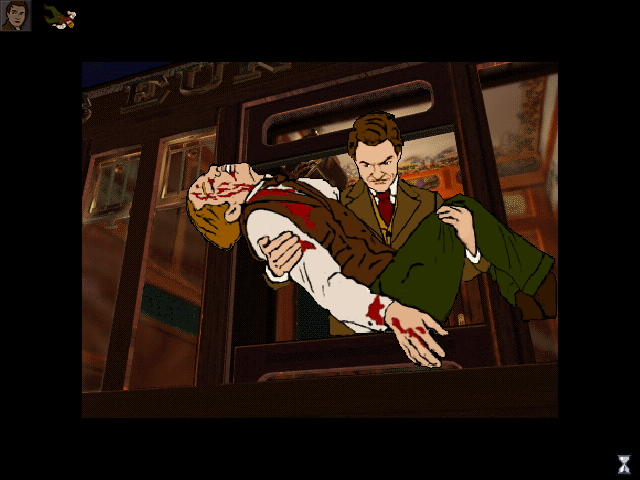
You play as Robert Cath, an American doctor on the run who sneaks onto the Orient Express in July 1914. Your friend Tyler Whitney sent an urgent telegram asking for help, but when you drop into his compartment through the window, you find his bloody corpse on the floor. Within minutes, you have to drag his body out of sight, change into his suit, and assume his identity before the conductor knocks on the door.
Most graphic adventure games in 1997 let you stand around in a hallway for twenty minutes while you read inventory descriptions. Here, every passenger on the train moves according to their own timetable. If you wait too long to search a cabin, its owner comes back and catches you red-handed. The 16-bit sound design plays a huge role in keeping track of people, as footfalls, door hinges, and hushed chatter echo down the narrow corridors on a Sound Blaster 16 card.
Audio is handled with incredible care, featuring full multi-lingual voice acting with native speakers performing in French, German, Russian, and Serbian. You overhear political arguments over dinner, secret meetings in the salon car, and French police asking questions at the border. The real-time ticking clock means you cannot see every conversation in a single playthrough, forcing you to choose who to trail and which doors to eavesdrop on.
Creator Jordan Mechner, famous for creating Prince of Persia, spent five years and over five million dollars bringing this project to life at his San Francisco studio, Smoking Car Productions. Publisher Brøderbund released the final title, which used a patented digital rotoscoping process. Live actors were filmed on 16mm film against blue screens over twenty-two days, converted into black-and-white line art by custom software, and colored by hand into an Art Nouveau style.
The visual style divided critics immediately upon release. Period reviewers praised the historical flavor and artistic look, but some prominent writers complained about the stepped frame rate of the character animations. Instead of smooth video playback, characters shift through static poses every few seconds like a animated graphic novel. Once your eyes adjust, that frame rate creates a strange tension, capturing sharp expressions without slowing down the engine.
The story spans six major legs of the journey across Europe, splitting the narrative into distinct chronological chapters:

The cast of thirty passengers carries a web of conflicting agendas. You end up trading barters with German arms dealer August Schmidt, dodging Serbian nationalist Milos Jovanovic, and watching Russian anarchist Vassili. Key items like a passenger list, matches, a decorative scarf, a mysterious poem, and a golden egg known as The Firebird constantly pass between hands. Solving puzzles requires learning when a cabin key goes unattended or when a guard leaves his post.
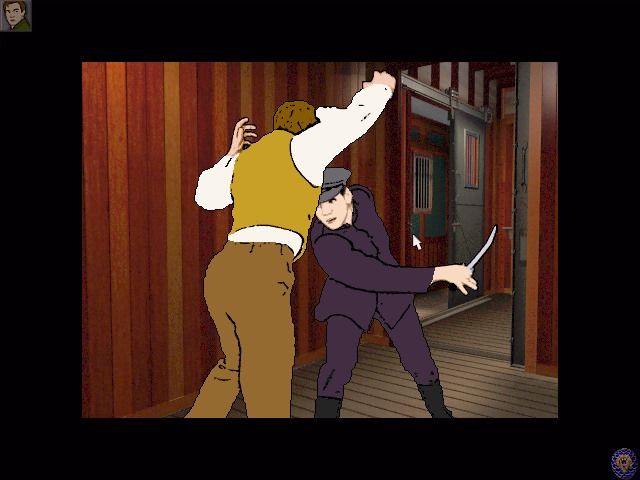
That freedom comes at a cost, and The Last Express can be ruthlessly punitive. Miss a vital conversation during the leg to Vienna, and you might find yourself in an unwinnable situation hours later. Action sequences also hit without warning. Fights rely on quick mouse clicks with tiny windows for success, leading to sudden knife wounds or getting thrown from the train if you hesitate.
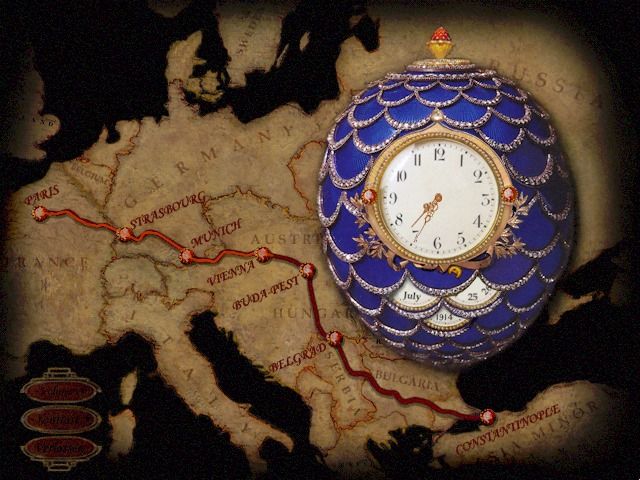
The mechanical saving grace is the egg-shaped timeline interface. Rather than making you reload old saves, the game lets you rewind time to any minute on the clock to fix past mistakes. Even with the rewind system, late-game puzzles like the mechanical lock on the Firebird egg represent a sharp spike in difficulty. The logical leaps required near the end stand in stark contrast to the quiet detective work of the early hours.
Despite critical acclaim, including an Editor's Choice from PC Gamer and Best Story of 1997 from GameSpot, the game sank at retail. It sold fewer than 100,000 copies, failing to recoup its massive budget. Brøderbund's marketing team resigned weeks before the game hit store shelves, leaving the release almost entirely unpromoted. A planned PlayStation version was canceled, and the studio folded shortly after.
While the quick-time events feel clumsy today, the central mystery carries the finest script written for adventure games. The historical setting feels grounded, the writing is sharp, and the train itself comes across like a real space full of actual passengers. If you enjoy period thrillers or historical fiction, the original DOS version of The Last Express still works brilliantly as an experiment in real-time storytelling.
You can play The Last Express online free in your browser right now, with no setup required. Modern players often expect a standard point-and-click inventory test, but remember to keep your ears open in the dining car and watch the timeline clock closely if you want to reach Constantinople in one piece.
When you board The Last Express, the clock starts ticking in real time, turning a luxurious train ride into a paranoid scramble to hide bodies, intercept telegrams, and stop a war.
You play as Robert Cath, an American doctor on the run who sneaks onto the Orient Express in July 1914. Your friend Tyler Whitney sent an urgent telegram asking for help, but when you drop into his compartment through the window, you find his bloody corpse on the floor. Within minutes, you have to drag his body out of sight, change into his suit, and assume his identity before the conductor knocks on the door.
Most graphic adventure games in 1997 let you stand around in a hallway for twenty minutes while you read inventory descriptions. Here, every passenger on the train moves according to their own timetable. If you wait too long to search a cabin, its owner comes back and catches you red-handed. The 16-bit sound design plays a huge role in keeping track of people, as footfalls, door hinges, and hushed chatter echo down the narrow corridors on a Sound Blaster 16 card.
Audio is handled with incredible care, featuring full multi-lingual voice acting with native speakers performing in French, German, Russian, and Serbian. You overhear political arguments over dinner, secret meetings in the salon car, and French police asking questions at the border. The real-time ticking clock means you cannot see every conversation in a single playthrough, forcing you to choose who to trail and which doors to eavesdrop on.

Creator Jordan Mechner, famous for creating Prince of Persia, spent five years and over five million dollars bringing this project to life at his San Francisco studio, Smoking Car Productions. Publisher Brøderbund released the final title, which used a patented digital rotoscoping process. Live actors were filmed on 16mm film against blue screens over twenty-two days, converted into black-and-white line art by custom software, and colored by hand into an Art Nouveau style.
The visual style divided critics immediately upon release. Period reviewers praised the historical flavor and artistic look, but some prominent writers complained about the stepped frame rate of the character animations. Instead of smooth video playback, characters shift through static poses every few seconds like a animated graphic novel. Once your eyes adjust, that frame rate creates a strange tension, capturing sharp expressions without slowing down the engine.
The story spans six major legs of the journey across Europe, splitting the narrative into distinct chronological chapters:

The cast of thirty passengers carries a web of conflicting agendas. You end up trading barters with German arms dealer August Schmidt, dodging Serbian nationalist Milos Jovanovic, and watching Russian anarchist Vassili. Key items like a passenger list, matches, a decorative scarf, a mysterious poem, and a golden egg known as The Firebird constantly pass between hands. Solving puzzles requires learning when a cabin key goes unattended or when a guard leaves his post.
That freedom comes at a cost, and The Last Express can be ruthlessly punitive. Miss a vital conversation during the leg to Vienna, and you might find yourself in an unwinnable situation hours later. Action sequences also hit without warning. Fights rely on quick mouse clicks with tiny windows for success, leading to sudden knife wounds or getting thrown from the train if you hesitate.
The mechanical saving grace is the egg-shaped timeline interface. Rather than making you reload old saves, the game lets you rewind time to any minute on the clock to fix past mistakes. Even with the rewind system, late-game puzzles like the mechanical lock on the Firebird egg represent a sharp spike in difficulty. The logical leaps required near the end stand in stark contrast to the quiet detective work of the early hours.

Despite critical acclaim, including an Editor's Choice from PC Gamer and Best Story of 1997 from GameSpot, the game sank at retail. It sold fewer than 100,000 copies, failing to recoup its massive budget. Brøderbund's marketing team resigned weeks before the game hit store shelves, leaving the release almost entirely unpromoted. A planned PlayStation version was canceled, and the studio folded shortly after.
While the quick-time events feel clumsy today, the central mystery carries the finest script written for adventure games. The historical setting feels grounded, the writing is sharp, and the train itself comes across like a real space full of actual passengers. If you enjoy period thrillers or historical fiction, the original DOS version of The Last Express still works brilliantly as an experiment in real-time storytelling.
You can play The Last Express online free in your browser right now, with no setup required. Modern players often expect a standard point-and-click inventory test, but remember to keep your ears open in the dining car and watch the timeline clock closely if you want to reach Constantinople in one piece.
How The Last Express is played — the keys the game listens to, grouped by what they do.
Highlighted keys are mapped — hover or tap one to see what it does.
Played entirely via mouse control. Keyboard shortcuts are not documented in available manual sources.
The on-screen keyboard and gamepad mapping the browser player uses on a phone, a tablet or a controller, as opposed to the real keys above. $PRO members make their own in the player and share them here; anyone can pick one to play with.
Cheat codes, console commands and memory pokes for The Last Express — each one verified and attributed.
Sign in to submitHow The Last Express is played — the keys the game listens to, grouped by what they do.
Highlighted keys are mapped — hover or tap one to see what it does.
Played entirely via mouse control. Keyboard shortcuts are not documented in available manual sources.
The on-screen keyboard and gamepad mapping the browser player uses on a phone, a tablet or a controller, as opposed to the real keys above. $PRO members make their own in the player and share them here; anyone can pick one to play with.
Cheat codes, console commands and memory pokes for The Last Express — each one verified and attributed.
Sign in to submit