
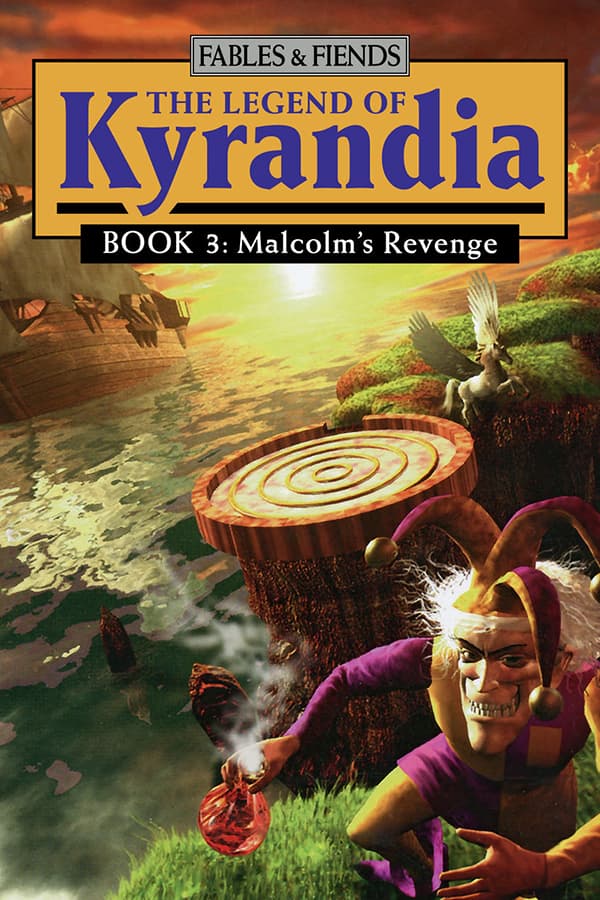
Getting blasted out of a stone curse by a random lightning strike is a rough start to a quest, but playing as the villain in The Legend of Kyrandia: Book Three - Malcolm's Revenge makes for an uncommonly bitter point-and-click journey.
Cruel puzzles meet a laugh track in The Legend of Kyrandia: Book Three - Malcolm's Revenge
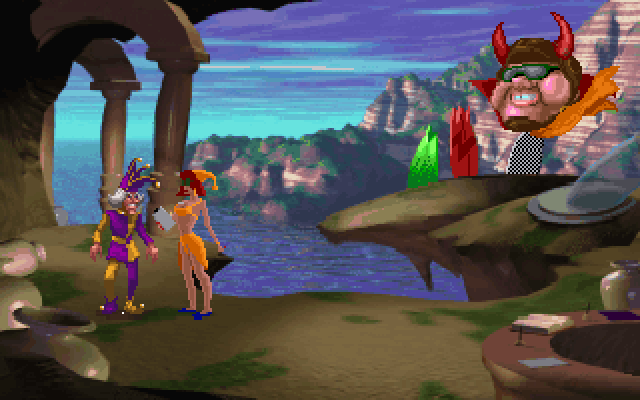
You begin in the royal junkyard with no magical powers left, a bad attitude, and two floating spectral advisors named Gunther and Stewart whispering in your ear. Gunther represents Malcolm's worst impulses, while Stewart tries to nudge you toward playing nice. The opening challenge asks you to escape the dump by brewing a teleportation potion out of garbage, a puzzle that immediately demonstrates how far this third installment strays from standard fantasy heroics.
The tone leans heavily into sit-com territory, complete with a canned audience reaction that plays whenever Malcolm cracks a joke or stumbles into absurd puzzle logic. Pixel Pacas found the humor fell flat and criticized the "laugh track that is prompted to play at completely inane moments," a sentiment shared across retro forums today. However, writer Gordon Aplin at Metzomagic.com found the crusty protagonist endearing, noting he knew he would like the "irascible, old grouch" from the second Malcolm pulled himself out of the rubbish.
It creates an atmosphere unlike any other adventure game on MS-DOS. Where previous games asked you to save the realm, Malcolm just wants payback against King Brandon and Kallak, only to find himself dragged into proving he never actually murdered the former King and Queen in the first place.
Playing the bad guy turns the traditional point-and-click logic upside down
Navigating the environment relies on standard point-and-click mechanics, but your social interactions add a distinct twist. At any moment, you can toggle Malcolm's mood meter between "Nice", "Normal", and "Lying" before speaking to people. Convincing characters to hand over critical quest items often hinges on picking the correct level of deceit, forcing you to think like a petty scoundrel rather than an honorable knight.
The journey takes you across wildly diverse chapters, pulling you far away from the forest paths of the original game. You travel from the junkyard to the Isle of Cats, board a pirate ship, navigate the Ends of the Earth in Limbo, crawl through the UnderWorld, and eventually seek out the Cave of Wonder. Every region demands absurd item combinations, like piecing together disguises from random debris just to bypass guards.
That mechanical friction splits opinions down the middle. Red Sector Shutdown gave the title a 7/10 score, calling the narrative "pretty well written, if a bit simple," while a harsher GameFAQs user review described the game as "stunningly, frighteningly bad" for combining every unfair trick in early adventure design. If you enjoy testing lateral logic against outright spiteful puzzle design, trying out The Legend of Kyrandia: Book Three - Malcolm's Revenge MS-DOS game offers a fascinating look at the edge cases of 1990s puzzle structure.
A tiny inventory and constant backtracking hold back The Legend of Kyrandia: Book Three - Malcolm's Revenge
The most frustrating flaw in the game design is its restrictive inventory capacity. You are constantly forced to drop critical items on the ground, creating temporary stashes on specific screens and walking back and forth across large areas to retrieve them when a puzzle unexpectedly demands them later. Adventure Classic Gaming appreciated the "simple and intuitive" interface, but pointed out that the small inventory meant "I frequently find myself caching items and returning to the cache."
This layout friction is structural, as the puzzle chains regularly demand multiple large items that simply cannot fit in your pockets at once. Here is how a typical late-game puzzle loop breaks down when inventory space runs out:
- Find three disparate ingredients scattered across several distant screens.
- Drop your current tools on the ground to clear enough hand slots to pick up the ingredients.
- Combine two items at a specific location, only to realize you left the third piece behind.
- Trudge back through four static screens to fetch the dropped tool and complete the interaction.
Because death or unrecoverable soft-locks lurk around subtle bad decisions, managing your inventory stashes becomes a stressful chore rather than a clean system. Modern retrospective reviewers frequently single out these cruel design choices as the element that aged poorest.
Westwood pushed CD-ROM hardware with pre-rendered art and VQA video
On a technological level, this 1994 release showed off what high-budget CD-ROM production could look like. Developed by Westwood Studios and published by Virgin Interactive Entertainment, the title abandoned purely hand-drawn backgrounds in favor of 3D pre-rendered scenery. The development team implemented a custom video encoding format known as .VQA (Vector Quantized Animation) to stream smooth full-motion cutscenes straight off the disc.
The CD format also enabled full digitized voice acting across the entire adventure, employing over 30 individual voice actors. Combined with a dynamic, reactive soundtrack composed by Frank Klepacki, the game sounded miles ahead of standard Sound Blaster FM synthesis setup, delivering full orchestral flourishes and crisp speech that set high production standards for PC releases of the era. Written and directed by Rick Gush with programming by Michael Grayford and Michael Legg, the production was sleek, even if retail sales were somewhat muted as Westwood diverted internal resources toward building Command & Conquer around the same time.
Fire up The Legend of Kyrandia: Book Three - Malcolm's Revenge free in your browser today
The artificial laugh track and cramped inventory stashes can test your patience, but Malcolm is about as cynical a lead character as nineties point-and-click history ever produced. The narrative payoff of clearing a villain's name through sheer stubborn deceit makes the trial-and-error puzzles worth wrestling with, especially for players who appreciate Westwood's crisp pre-rendered aesthetic and dynamic Frank Klepacki audio.
You can play The Legend of Kyrandia: Book Three - Malcolm's Revenge free in your browser right now with no setup needed. First-time players often assume that being mean to everyone with the "Lying" dialogue switch will ruin their playthrough, but embracing Malcolm's obnoxious side is usually the exact key to untangling its weirdest puzzles. Load it up, keep a mental note of where you leave your extra inventory items on the screen, and see how long you survive the junkyard.