
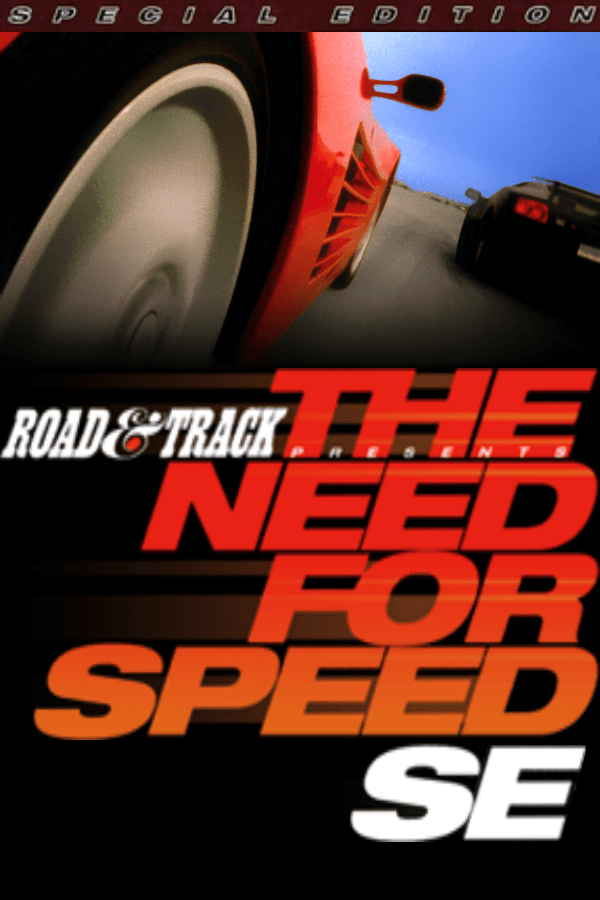
Before custom bodykits and street racing crews took over the franchise, The Need for Speed caught PC gamers off guard in 1995 by treating exotic sports cars like heavy, expensive machinery that would punish anyone who missed a brake point.
Most computer racers in the mid-nineties asked very little of your keyboard. You held down the up arrow, tapped left or right to slide around hairpin turns, and rarely worried about weight transfer or tire friction. This game did something completely different by bringing in editors from Road & Track magazine to dial in car physics, engine audio, and realistic performance specifications. If you enter a hairpin turn in a Dodge Viper RT/10 without tapping the brakes first, the back end swings out, the tires scrub against the pavement, and you end up nose-first in a timber guardrail.
The car lineup felt like an enthusiast's dream garage. You could pick between top-tier supercars like the Ferrari 512TR, Lamborghini Diablo VT, and Porsche 911 Carrera, or explore Japanese performance cars like the Mazda RX-7, Acura NSX, and Toyota Supra Turbo alongside the Chevrolet Corvette. Each dashboard was recreated with interior photos and digital gauges that matched the real vehicle. EA even included full-motion video clips, voiceover commentary, and photographic profiles for every car in the showroom menus, treating the vehicles with a level of mechanical respect that felt fresh for a PC game.
That commitment to realism meant that handling felt considerably stiffer than in later arcade-style entries. Reviewers at the time noticed that mastering high-speed corners required learning gear ratios and braking zones rather than relying on drift mechanics. If you push a rear-wheel-drive car too hard through a chicane, the engine audio changes pitch as the rear tires lose traction, giving you a brief fraction of a second to correct your steering before spinning off the asphalt.
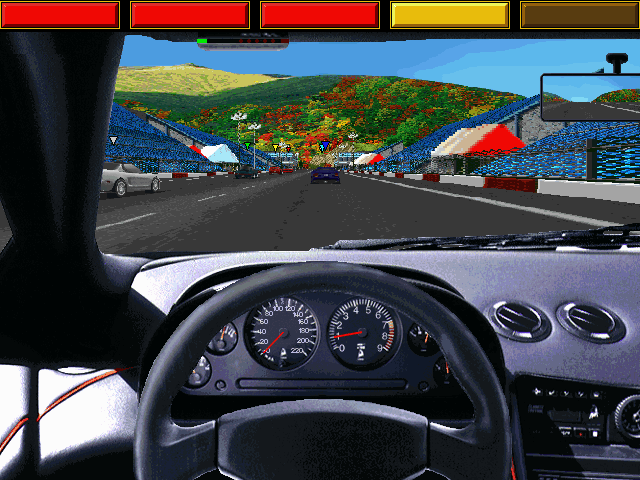
While closed circuits were standard fare for mid-nineties driving titles, the point-to-point road stages changed the rhythm of every race. Flying down a multi-lane highway meant dodging oncoming civilian traffic while keeping an eye out for speed traps. The moment you crossed a radar trigger at triple-digit speeds, a police cruiser pulled out from the shoulder, siren wailing, intent on boxing you into the highway divider.
Getting pulled over twice in a single point-to-point stage meant a full arrest and an instant loss for the race. That threat gave every stretch of open asphalt a distinct layer of tension. The game split its track selection across two primary environment types:
To see everything the track designers built, you had to clear the Tournament mode. Winning the championship trophy earned you a spot on the secret Lost Vegas track and unlocked a fictional bonus vehicle, the Warrior PTO E/2. Players who lacked the patience to fight through high-speed tournament brackets quickly discovered they could type cheat codes into the main menu to unlock the bonus car immediately.
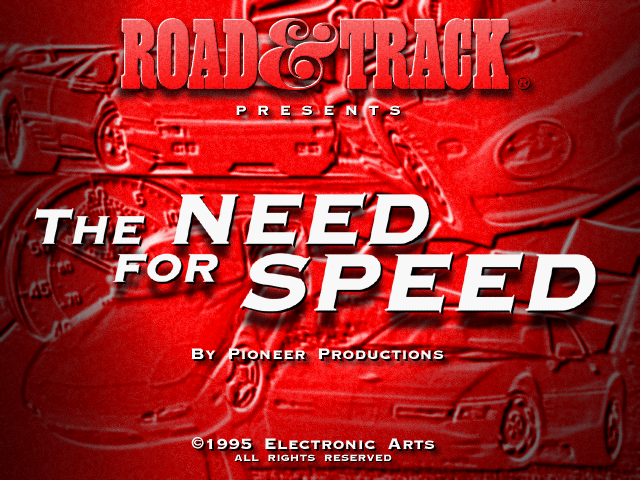
Looking at the original release today reveals a title caught between two eras of PC hardware. When Electronic Arts brought the game over from its original 3DO home, the recommended system requirements pushed mid-nineties hardware to its limit. Running high-resolution graphics smoothly on an Intel 486 or early Pentium processor was a real challenge, and players who did not tweak their CPU cycle settings in modern DOSBox environments often run into unstable frame rates or overly sensitive steering response.
The audio presentation was where the engineering showed. Pioneer Productions recorded actual engine notes alongside Road & Track staff, capturing distinct exhaust notes and manual gear-shift clunks for every model. On sound hardware of the era like the Sound Blaster 16, Roland MIDI modules, or the Gravis UltraSound, the engine growls sounded massive compared to the flat synthesized hums found in competing arcade ports. Add in support for head-to-head multiplayer over a serial null-modem cable or dial-up modem, and the game felt years ahead of standard single-player racers.
At launch, publications like Coming Soon Magazine praised the detailed vehicle visuals and environmental polish, declaring it a new graphical standard for the genre. Hardcore PC flight and racing simulator purists noted that options were relatively simple compared to dedicated sim titles like IndyCar Racing, but for anyone who wanted to experience the fantasy of driving exotic cars on open highways, the balance hit the mark.
You can play The Need for Speed online right here in your web browser without hunting down vintage computer hardware or fiddling with command-line config files. The stiff steering controls and unforgiving collision physics take a few laps to get used to, but the weight of the cars and the tension of open-highway cop chases still work today.
If you want to experience where the long-running series started, fire up a Head to Head match on the Coastal track, pick a Ferrari 512TR, and see if you can outrun the police radar traps without slamming into oncoming traffic.
Before custom bodykits and street racing crews took over the franchise, The Need for Speed caught PC gamers off guard in 1995 by treating exotic sports cars like heavy, expensive machinery that would punish anyone who missed a brake point.
Most computer racers in the mid-nineties asked very little of your keyboard. You held down the up arrow, tapped left or right to slide around hairpin turns, and rarely worried about weight transfer or tire friction. This game did something completely different by bringing in editors from Road & Track magazine to dial in car physics, engine audio, and realistic performance specifications. If you enter a hairpin turn in a Dodge Viper RT/10 without tapping the brakes first, the back end swings out, the tires scrub against the pavement, and you end up nose-first in a timber guardrail.
The car lineup felt like an enthusiast's dream garage. You could pick between top-tier supercars like the Ferrari 512TR, Lamborghini Diablo VT, and Porsche 911 Carrera, or explore Japanese performance cars like the Mazda RX-7, Acura NSX, and Toyota Supra Turbo alongside the Chevrolet Corvette. Each dashboard was recreated with interior photos and digital gauges that matched the real vehicle. EA even included full-motion video clips, voiceover commentary, and photographic profiles for every car in the showroom menus, treating the vehicles with a level of mechanical respect that felt fresh for a PC game.
That commitment to realism meant that handling felt considerably stiffer than in later arcade-style entries. Reviewers at the time noticed that mastering high-speed corners required learning gear ratios and braking zones rather than relying on drift mechanics. If you push a rear-wheel-drive car too hard through a chicane, the engine audio changes pitch as the rear tires lose traction, giving you a brief fraction of a second to correct your steering before spinning off the asphalt.

While closed circuits were standard fare for mid-nineties driving titles, the point-to-point road stages changed the rhythm of every race. Flying down a multi-lane highway meant dodging oncoming civilian traffic while keeping an eye out for speed traps. The moment you crossed a radar trigger at triple-digit speeds, a police cruiser pulled out from the shoulder, siren wailing, intent on boxing you into the highway divider.
Getting pulled over twice in a single point-to-point stage meant a full arrest and an instant loss for the race. That threat gave every stretch of open asphalt a distinct layer of tension. The game split its track selection across two primary environment types:
To see everything the track designers built, you had to clear the Tournament mode. Winning the championship trophy earned you a spot on the secret Lost Vegas track and unlocked a fictional bonus vehicle, the Warrior PTO E/2. Players who lacked the patience to fight through high-speed tournament brackets quickly discovered they could type cheat codes into the main menu to unlock the bonus car immediately.

Looking at the original release today reveals a title caught between two eras of PC hardware. When Electronic Arts brought the game over from its original 3DO home, the recommended system requirements pushed mid-nineties hardware to its limit. Running high-resolution graphics smoothly on an Intel 486 or early Pentium processor was a real challenge, and players who did not tweak their CPU cycle settings in modern DOSBox environments often run into unstable frame rates or overly sensitive steering response.
The audio presentation was where the engineering showed. Pioneer Productions recorded actual engine notes alongside Road & Track staff, capturing distinct exhaust notes and manual gear-shift clunks for every model. On sound hardware of the era like the Sound Blaster 16, Roland MIDI modules, or the Gravis UltraSound, the engine growls sounded massive compared to the flat synthesized hums found in competing arcade ports. Add in support for head-to-head multiplayer over a serial null-modem cable or dial-up modem, and the game felt years ahead of standard single-player racers.
At launch, publications like Coming Soon Magazine praised the detailed vehicle visuals and environmental polish, declaring it a new graphical standard for the genre. Hardcore PC flight and racing simulator purists noted that options were relatively simple compared to dedicated sim titles like IndyCar Racing, but for anyone who wanted to experience the fantasy of driving exotic cars on open highways, the balance hit the mark.
You can play The Need for Speed online right here in your web browser without hunting down vintage computer hardware or fiddling with command-line config files. The stiff steering controls and unforgiving collision physics take a few laps to get used to, but the weight of the cars and the tension of open-highway cop chases still work today.
If you want to experience where the long-running series started, fire up a Head to Head match on the Coastal track, pick a Ferrari 512TR, and see if you can outrun the police radar traps without slamming into oncoming traffic.
How The Need for Speed is played — the keys the game listens to, grouped by what they do.
Highlighted keys are mapped — hover or tap one to see what it does.
Controls can be customized or changed to mouse/joystick in the Controls Setup menu. Hold Tab while navigating menus if an uncalibrated joystick causes erratic input.
The on-screen keyboard and gamepad mapping the browser player uses on a phone, a tablet or a controller, as opposed to the real keys above. $PRO members make their own in the player and share them here; anyone can pick one to play with.
Cheat codes, console commands and memory pokes for The Need for Speed — each one verified and attributed.
Sign in to submitHow The Need for Speed is played — the keys the game listens to, grouped by what they do.
Highlighted keys are mapped — hover or tap one to see what it does.
Controls can be customized or changed to mouse/joystick in the Controls Setup menu. Hold Tab while navigating menus if an uncalibrated joystick causes erratic input.
The on-screen keyboard and gamepad mapping the browser player uses on a phone, a tablet or a controller, as opposed to the real keys above. $PRO members make their own in the player and share them here; anyone can pick one to play with.
Cheat codes, console commands and memory pokes for The Need for Speed — each one verified and attributed.
Sign in to submit