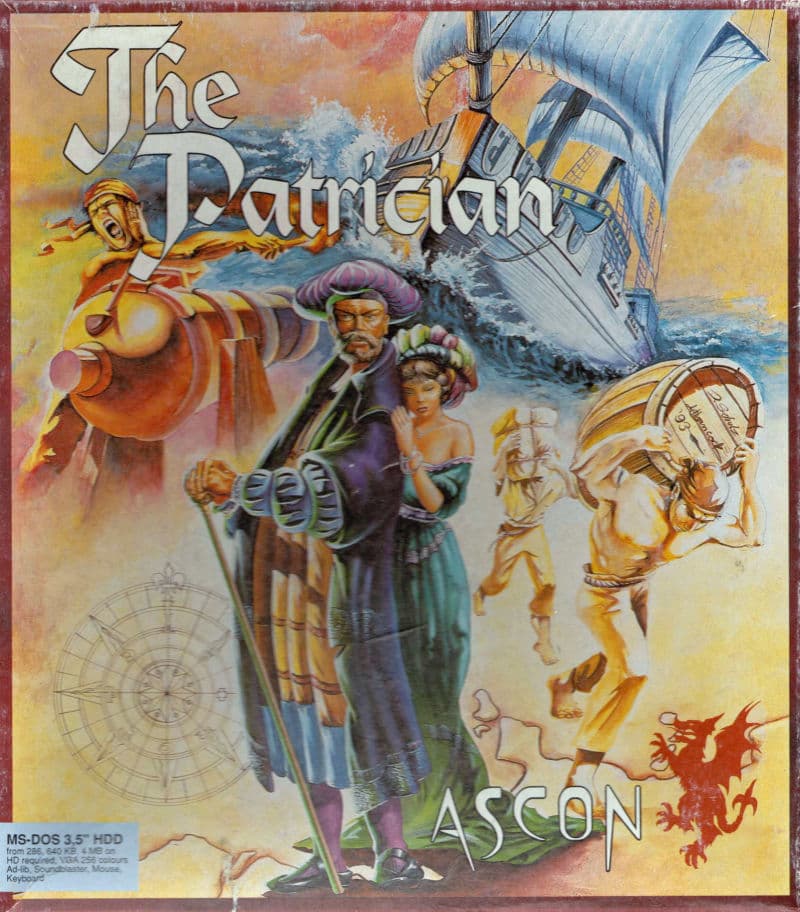
The Patrician
aka Der Patrizier · Die Pfeffersäcke
Streaming build
Checking storage…275 MB
Preload in background
In The Patrician, you start as a low-ranking trader in medieval Northern Europe with a single ship, a small purse of gold, and the absurd ambition of getting elected Ältermann of the entire Hanseatic League.
Buying low in Lübeck and selling high in Stettin
The moment The Patrician clicks is when you stop looking at the map as a collection of quaint Baltic ports and start reading it as a living spreadsheets machine. You buy cheap herring and timber in your home port, check the wind directions, and set sail for cities that are starving for supplies. Every port city in the North and Baltic Seas operates on a dynamic supply and demand engine where dumping ten boatloads of grain in Stettin will instantly collapse local market prices and leave you stranded with unsold inventory.
Your goal goes beyond simply filling a cargo hold with iron ore or wool. Money buys capital, real estate, and political weight, which you need to move up the social ladder in your chosen home town. To advance from a simple merchant to Lord Mayor, and ultimately to Ältermann, you have to manage public perception as carefully as your profit margins. You drop gold at the local church to keep the clergy happy, throw lavish public feasts for the citizens, and soak in the public baths to network with local town bosses.
When legal trading feels too slow, you can lean into darker methods. You can outfit your fleet at the blacksmith and shipyard, construct armed convoys to hunt down sea raiders, or turn pirate yourself to pillage rival trade lanes. For players looking to outsmart real opponents, the inclusion of four-player hotseat multiplayer turned ship management into a bitter race for regional dominance.
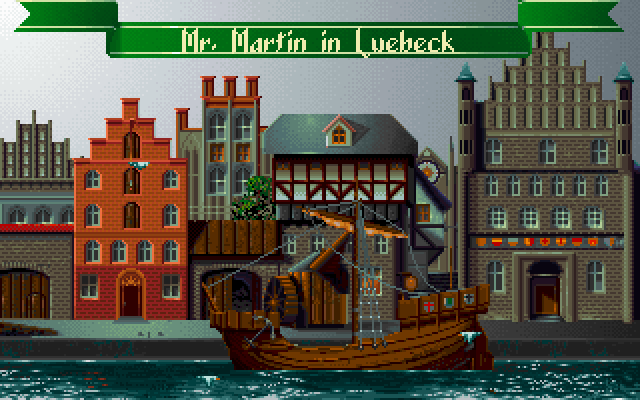
Scanned watercolor art meets dry economic realism
Visually, developer Triptychon Software took a unusual route for an MS-DOS release in 1992. Artist Michael Grohe created physical watercolor paintings of medieval townscapes, public halls, and harbor yards, which were digitized and retouched into 16-color VGA screens. Programmers Bernd Ludewig and Thomas Schlötel paired those backdrops with simple menu windows and background music composed by Jörg Doepper, creating an aesthetic that felt distinct from standard computer simulations of the era.
Yet behind those painted backdrops lies a uncompromising simulation that divided contemporary reviewers. German gaming outlets awarded high scores for the depth of its market mechanics, but foreign reviewers were far less forgiving. Writing for Computer Gaming World in 1993, one reviewer famously complained that the game's long-term appeal was restricted to bank managers and chartered accountants, noting that every city felt virtually identical under the hood despite the regional price variations.
That criticism is not entirely unfair. While you can construct production buildings, build rental houses, and fund municipal works like schools or mints, the core routine rarely changes once you find an optimal shipping route. The difficulty comes less from rival traders and more from information overload. You are constantly managing vessel maintenance, pub recruitment, municipal loans, and auction house bids across dozens of locations simultaneously.
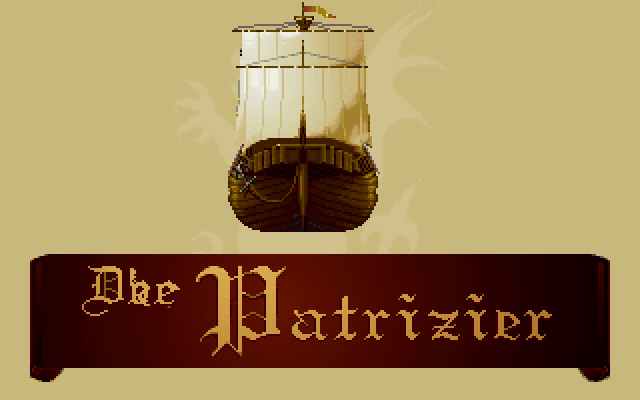
Navigating copy protection and four vessel classes
Anyone who bought the original boxed copy published by Ascon GmbH remembers the physical copy protection. Long before digital rights management took over PC gaming, startup meant flipping through the manual or spinning a code wheel to answer prompt questions before your ships could leave port. Missing that step meant your trading empire was sunk before it even launched.
Once past the code check, your fleet relies on balancing four distinct ship classes, each serving a different tactical purpose in your maritime empire:
- The Kraier: Fast and nimble, making it ideal for high-value cargo runs and quick emergency supplies.
- The Cog: The workhorse of the Hanseatic fleet, offering generous cargo capacity for bulk goods like salt and grain.
- The Hulk: A heavy sea vessel designed to carry maximum cargo across longer sea routes.
- Armed Escorts: Outfitted warships equipped with weapons bought from local blacksmiths to defend convoys from pirates.
Combat itself remains basic. Naval skirmishes lack tactical depth, turning ship battles into straightforward tests of raw firepower and hull strength rather than nautical maneuvering. Still, managing to sink a notorious pirate captain or escorting a high-paying traveler safely through a storm brings a sudden wave of relief after hours of calculating profit margins on timber shipping.
Why you should play The Patrician free in your browser today
While later sequels expanded on fleet automation and polished the visual representation of individual ports, the original release stays focused on its core strategy. It offers a pure historical sandbox driven entirely by numbers, regional supply lines, and political ambition. If you enjoy deep economic simulations found across the broader strategy / tactics space, balancing the books in Lübeck rewards your patience.
You can play The Patrician online right now. There is no need to dig up an original copy-protection wheel, search for MS-DOS boot disks, or tinker with autoexec files. The entire game is playable free in your browser, running straight off the original PC files. Fire up your first trading run, grab a loan at the bank, build your initial Cog, and see if you have the business sense to become Ältermann.
How The Patrician is played — the keys the game listens to, grouped by what they do.
- Interface
- Left click — Select and interact
Highlighted keys are mapped — hover or tap one to see what it does.
Players' controls
Touch and gamepad controls
The on-screen keyboard and gamepad mapping the browser player uses on a phone, a tablet or a controller, as opposed to the real keys above. $PRO members make their own in the player and share them here; anyone can pick one to play with.
Make your own touch controlsPRO
- 1Open the editorSign in below, then pick what to make. The game starts with the editor open over it.
- 2Place your keysAdd keys and drag them where your thumbs rest, or map a controller's buttons. Test plays the game with them; Save keeps them, and you play with them from then on.
- 3Share themShare them right after saving in the game, or name and share them here. Players vote, and the best become this game's controls for everyone.
Go PROSee how it worksSign in+20 XP for sharing · +50 XP if yours become the game's own
- The game's own controlsKeyboardGamepadWhat every player starts with.In use
2 screenshots
From the archive
No gameplay video yet
No gameplay video for The Patrician yet. Sign in to add one.
No reviews yet
Tell the community what you think of The Patrician. Reviews are public and tied to your username.
No archived manuals for The Patrician yet
No manuals archived for this title yet. Sign in to upload the first scan.
Cheat codes, console commands and memory pokes for The Patrician — each one verified and attributed.
Sign in to submitNo cheats yet for this title
Know a working cheat, poke or trainer? Add it with the button above. Moderators check every entry before it goes live.
No archived soundtrack for The Patrician yet
No soundtrack archived for this title yet. Sign in to upload the first rip.
No save states for The Patrician yet
No save states for this title yet. Sign in to share one.
Discussions
Sign in to post- Threads0
- Total posts0
- Online now6
Community · The Patrician
Who's contributing, and what's new
- Reviews0
- Threads0
- Uploadsapproved0
- Contributors0
Recent activity
Nothing here yet
Reviews, discussion threads and approved uploads appear here as members add them.