
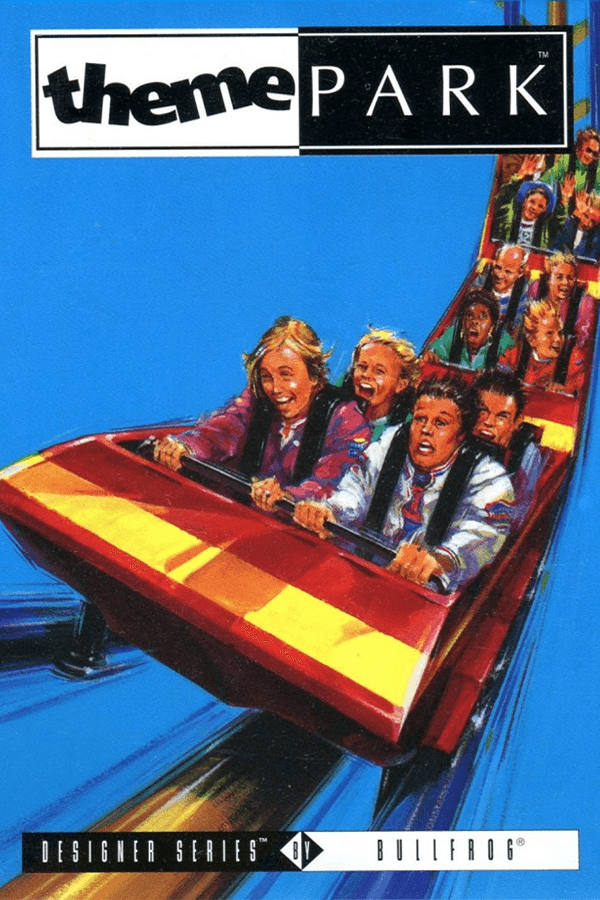

Building a massive coaster in Theme Park sounds like pure entertainment until your handymen throw down their brooms and leave the walkways covered in vomited ice cream.
You start with a blank plot of green grid in the United Kingdom and a handful of cash. Within twenty minutes, you are balancing the price of bouncy castle tickets against the salary demands of cranky mechanics. It bridges the gap between creative construction and cold financial strategy better than almost anything else from its year.
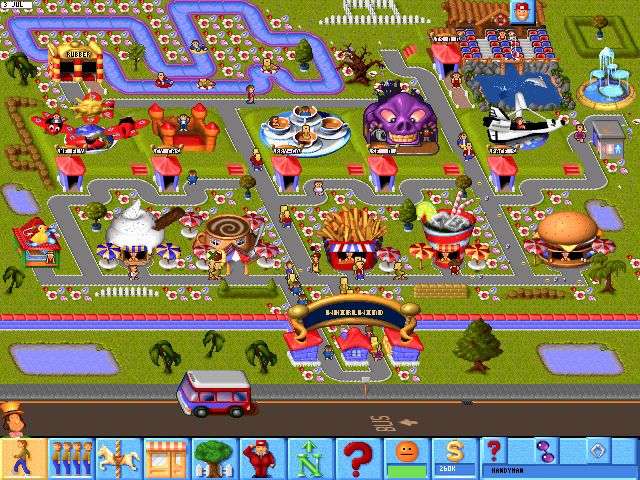
The core design breaks down into three distinct operational modes. Sandbox lets you build without worrying about bank loans or research trees. Sim introduces wages and ride development, while Full unlocks stock markets, import tariffs, and corporate buyouts of rival parks. If you enjoy strategy tactics games, the highest difficulty turns park management into a ruthless economic race.
Designing a fun layout is only half the battle. Your visitors react to everything in real time through small thought bubbles. If a queue takes too long, people walk away angry. If a roller coaster breaks down, your lines back up instantly.
The financial tuning goes surprisingly deep, especially when setting up concession stands. You can adjust the exact amount of sugar in the drinks and salt on the fries. Extra salt makes visitors thirsty, which drives them straight to the drink stalls where you charge inflated prices for soft drinks loaded with ice.
Keeping the park running requires hiring four specific types of staff members:
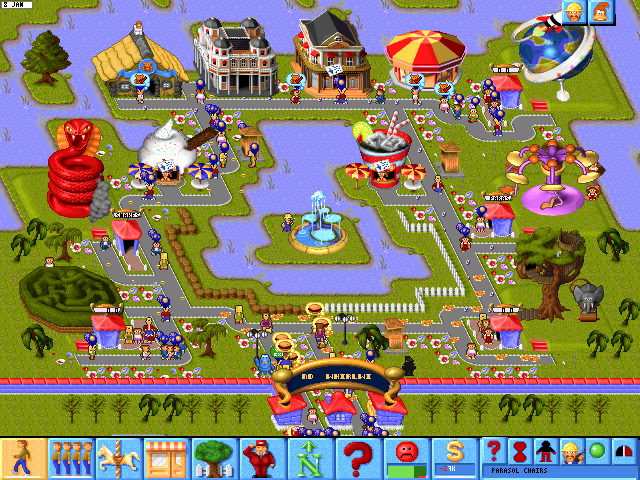
Ignore your mechanics for too long and a malfunctioning ferris wheel will catch fire and physically explode into a heap of twisted metal. Mismanage your annual salary negotiations and your staff will walk out on strike. When wages stall, delivery trucks stop bringing inventory to your burger stands, leaving hungry crowds wandering aimlessly.
The background behind the development is full of wild industry stories. Co-designed by Peter Molyneux alongside a 17-year-old Demis Hassabis, the project faced heavy skepticism early on. Publisher Electronic Arts, Inc. questioned whether a non-violent builder would sell. They actually suggested adding snipers or mounting guns onto the track rides to spice up the action.
The developers at Bullfrog Productions, Ltd. were not always thrilled with the concept either. Much of the programming team reportedly hated making a friendly manager game, even staging a brief strike because they wanted to build action games with weapons instead. Yet despite the internal friction, the final product sold roughly 15 million copies across all formats.
When PC Gamer reviewed the game in June 1994, Gary Whitta gave it a 95% score and praised its cartoon visuals and music. Edge rated it an 8/10 for its deep simulation options. However, John Cranston wrote in GameBytes that the gameplay loop grew tedious and boring, while pointing out how difficult it was to configure SVGA mode on standard systems of the time.
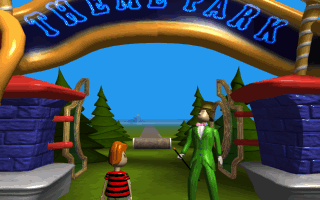
Under the hood, the engine ran in Rational Systems DOS/4GW protected mode. It featured 256-color VGA graphics in isometric perspective, alongside an optional 640x480 high-resolution mode. Flipping that resolution toggle gave you nearly five times the visible park area, but required serious PC hardware in 1994.
Sound support was top tier for its day. Sound Blaster, Roland MT-32, and General MIDI support gave every ride its own distinct musical theme and ambient chatter. If you needed a quick boost, typing horza as your nickname unlocked cheat commands. Pressing the 'c' key instantly gave you cash, while modifier combos like Shift+C unlocked every ride immediately.
Playing the original MS-DOS game on modern PCs can be tricky. Fast emulation speeds mess up the game clock, making days fly past in milliseconds. In large late-game parks, high sprite counts can cause heavy framerate drops or sudden mouse cursor freezes when toggling menus.
Despite a few clunky menus and tricky wage screens, the core construction loop is still flat-out satisfying. Fine-tuning ticket prices and watching thousands of tiny visitors flood through your turnstiles hits the exact right balance between strategy and creativity. It was early PC strategy done right, and it still eats up whole afternoons.
You can play Theme Park online free in your browser right now with no setup needed. Jump straight into the action, start placing your first paths, and see if you can keep your guests happy without blowing up the roller coasters.
Building a massive coaster in Theme Park sounds like pure entertainment until your handymen throw down their brooms and leave the walkways covered in vomited ice cream.
You start with a blank plot of green grid in the United Kingdom and a handful of cash. Within twenty minutes, you are balancing the price of bouncy castle tickets against the salary demands of cranky mechanics. It bridges the gap between creative construction and cold financial strategy better than almost anything else from its year.

The core design breaks down into three distinct operational modes. Sandbox lets you build without worrying about bank loans or research trees. Sim introduces wages and ride development, while Full unlocks stock markets, import tariffs, and corporate buyouts of rival parks. If you enjoy strategy tactics games, the highest difficulty turns park management into a ruthless economic race.
Designing a fun layout is only half the battle. Your visitors react to everything in real time through small thought bubbles. If a queue takes too long, people walk away angry. If a roller coaster breaks down, your lines back up instantly.
The financial tuning goes surprisingly deep, especially when setting up concession stands. You can adjust the exact amount of sugar in the drinks and salt on the fries. Extra salt makes visitors thirsty, which drives them straight to the drink stalls where you charge inflated prices for soft drinks loaded with ice.
Keeping the park running requires hiring four specific types of staff members:
Ignore your mechanics for too long and a malfunctioning ferris wheel will catch fire and physically explode into a heap of twisted metal. Mismanage your annual salary negotiations and your staff will walk out on strike. When wages stall, delivery trucks stop bringing inventory to your burger stands, leaving hungry crowds wandering aimlessly.

The background behind the development is full of wild industry stories. Co-designed by Peter Molyneux alongside a 17-year-old Demis Hassabis, the project faced heavy skepticism early on. Publisher Electronic Arts, Inc. questioned whether a non-violent builder would sell. They actually suggested adding snipers or mounting guns onto the track rides to spice up the action.
The developers at Bullfrog Productions, Ltd. were not always thrilled with the concept either. Much of the programming team reportedly hated making a friendly manager game, even staging a brief strike because they wanted to build action games with weapons instead. Yet despite the internal friction, the final product sold roughly 15 million copies across all formats.
When PC Gamer reviewed the game in June 1994, Gary Whitta gave it a 95% score and praised its cartoon visuals and music. Edge rated it an 8/10 for its deep simulation options. However, John Cranston wrote in GameBytes that the gameplay loop grew tedious and boring, while pointing out how difficult it was to configure SVGA mode on standard systems of the time.

Under the hood, the engine ran in Rational Systems DOS/4GW protected mode. It featured 256-color VGA graphics in isometric perspective, alongside an optional 640x480 high-resolution mode. Flipping that resolution toggle gave you nearly five times the visible park area, but required serious PC hardware in 1994.
Sound support was top tier for its day. Sound Blaster, Roland MT-32, and General MIDI support gave every ride its own distinct musical theme and ambient chatter. If you needed a quick boost, typing horza as your nickname unlocked cheat commands. Pressing the 'c' key instantly gave you cash, while modifier combos like Shift+C unlocked every ride immediately.
Playing the original MS-DOS game on modern PCs can be tricky. Fast emulation speeds mess up the game clock, making days fly past in milliseconds. In large late-game parks, high sprite counts can cause heavy framerate drops or sudden mouse cursor freezes when toggling menus.
Despite a few clunky menus and tricky wage screens, the core construction loop is still flat-out satisfying. Fine-tuning ticket prices and watching thousands of tiny visitors flood through your turnstiles hits the exact right balance between strategy and creativity. It was early PC strategy done right, and it still eats up whole afternoons.
You can play Theme Park online free in your browser right now with no setup needed. Jump straight into the action, start placing your first paths, and see if you can keep your guests happy without blowing up the roller coasters.
How Theme Park is played — the keys the game listens to, grouped by what they do.
Highlighted keys are mapped — hover or tap one to see what it does.
The game primarily relies on a mouse-controlled, icon-driven interface. Only a few F-keys are documented in the available source material.
The on-screen keyboard and gamepad mapping the browser player uses on a phone, a tablet or a controller, as opposed to the real keys above. $PRO members make their own in the player and share them here; anyone can pick one to play with.
Cheat codes, console commands and memory pokes for Theme Park — each one verified and attributed.
Sign in to submitHow Theme Park is played — the keys the game listens to, grouped by what they do.
Highlighted keys are mapped — hover or tap one to see what it does.
The game primarily relies on a mouse-controlled, icon-driven interface. Only a few F-keys are documented in the available source material.
The on-screen keyboard and gamepad mapping the browser player uses on a phone, a tablet or a controller, as opposed to the real keys above. $PRO members make their own in the player and share them here; anyone can pick one to play with.
Cheat codes, console commands and memory pokes for Theme Park — each one verified and attributed.
Sign in to submit