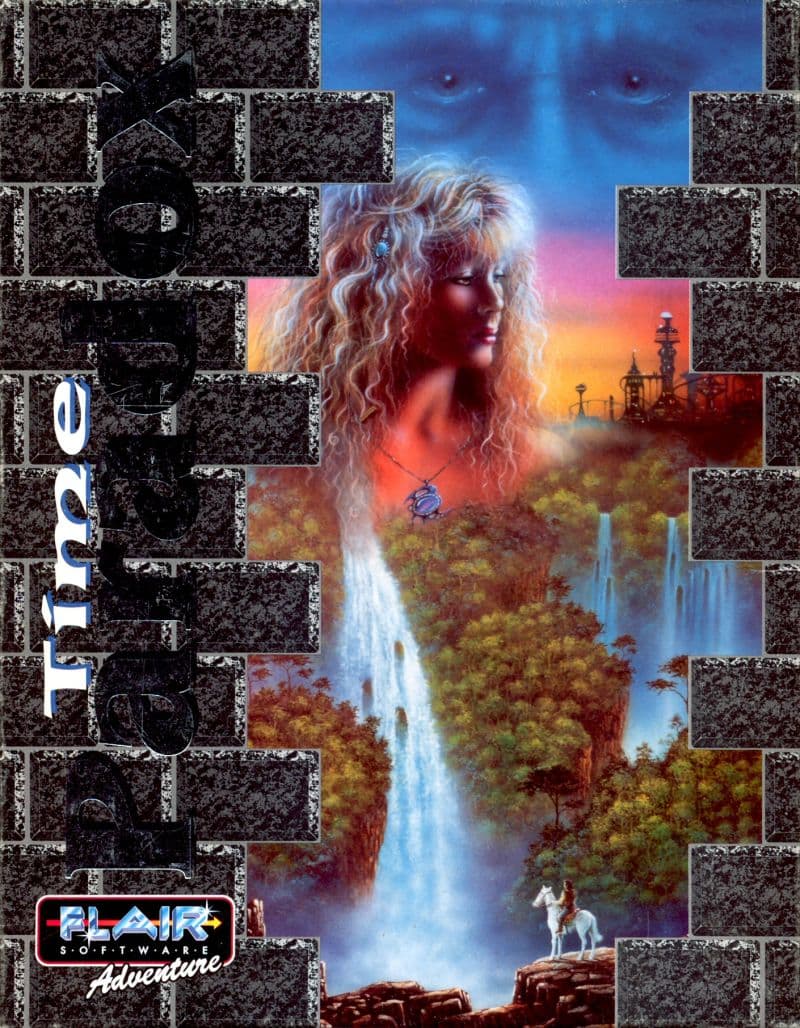
Time Paradox
If you played Time Paradox back when it landed quietly on store shelves, you probably remember spending five minutes just trying to click on an invisible pixel near a dinosaur.
What Time Paradox asks you to do with a temporal agent
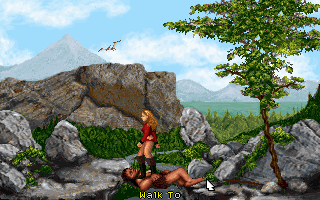
You play as Kay, a operative working for a council of futuristic Elders who decide that temporal law enforcement is best handled by sending one person back in time with a zero-budget inventory. Your mission is simple enough on paper: hunt down the rogue sorceress Morgana Le Fay, destroy her rival time machine, fix the damage she caused to history, rescue the wizard Merlin, and head home before supper. To do that, you jump between two primary historical zones, starting in prehistory among cavemen and roaming dinosaurs before hopping forward into the medieval era of stone castles and armored knights.
The core gameplay follows standard third-person mechanics for 1996 adventure games, relying on dialogue trees, item collection, and environmental interactions. You spend your first hour picking up whatever is not nailed down, including absurd anachronisms like a heavy metal oil barrel left sitting in the middle of a prehistoric landscape. Puzzle solving eventually forces you to mix magic potions and figure out which item unlocks the next dialog path, leading up to an ending where Merlin zaps Morgana into submission so Kay can return to the future.
From digitized FMV ambition to a slow walk in prehistory
The history behind how British developer Flair Software Ltd. built the project explains a lot about why the final release feels so odd. Back in 1993, the studio announced the title under the working name Genesis, pitching it as a Full Motion Video adventure with digitized actors intended for the Commodore Amiga and Amiga CD32. Development dragged on for years, taking between three and six years total as the market shifted under their feet.
By the time the game finally shipped in 1996 exclusively in Europe, the team had completely abandoned the digitized FMV plans and scraped the Amiga ports entirely. What reached store shelves was a traditional point-and-click Time Paradox MS-DOS game rendered in a hand-drawn cartoon style. That long transition left the design feeling out of step with its contemporaries, stuck somewhere between early nineties mechanical quirks and mid-nineties visual styles.
The puzzle design in Time Paradox tests your patience more than your logic
Navigating the screens is easily the most frustrating part of the experience. Kay moves across each area at an agonizingly slow walking speed, turn-based animation steps included, which turns simple backtracking into a genuine test of willpower. If you forget an item three screens back, you have to sit and watch Kay amble across multiple rooms just to retrieve it.
Finding those items in the first place is no easy task either due to poorly marked active areas. Interactive hotspots often lack proper visual cues, leaving you to pixel-hunt across static backdrops while guessing where scene exits actually sit. Puzzles lean heavily on trial and error, requiring you to combine obscure inventory pieces or exhaust every single branch in a dialogue tree just to trigger the next event sequence.
- Tracking down active hotspots along obscure screen edges with no visual indicators
- Watching Kay walk across expansive static backgrounds at a sluggish pace
- Selecting the correct sequence of potion ingredients to advance medieval questlines
- Navigating setup screens to manually configure audio hardware before launch
How hardware setup and invisible hotspots wrecked its 1996 launch
When gaming magazines reviewed the title upon release, the reception was brutally cold across Europe. German magazine PC Player handed down a crushing 1 out of 5 stars, while Polish publication Secret Service gave it a 2/10. Critics pointed out that the narrative felt banal, the writing lacked punch, and the cartoon visuals looked outdated next to the high-resolution SVGA releases of the same year. Retrospective reviewers at Adventure-Archiv were slightly kinder with a 57% score, praising the logical structure of certain puzzles while pointing out the weak acoustic design.

The sound setup itself was a mixed bag. On one hand, the developers included native support for the Sound Blaster AWE synth (EMU8000), giving the musical score decent hardware backing if you owned the right card. On the other hand, the audio execution suffered from jarring popping sounds during spoken lines, and the intro cinematic inexplicably relied on text subtitles despite full English voice acting being present throughout the main game.
Technical annoyances extended to the executable setup itself. Every time you booted the game on original hardware, it forced you to navigate a configuration utility to manually select language options and sound drivers all over again. A notorious bug also caused the mouse cursor to lock up completely right after saving your progress, forcing players to exercise extreme caution whenever they updated their save files.
Give this forgotten piece of DOS history a spin today
Despite its flaws and harsh contemporary reviews, Flair Software built a weirdly distinct temporal rescue mission here. If you enjoy mid-nineties European adventures and want to see how a studio pivoted from early FMV trends into classic hand-drawn art, it sits as an odd slice of DOS history worth checking out. You can read more about its development history on Wikipedia if you want to see how it fit into Flair's software catalog.
You can play Time Paradox online right now, running Time Paradox free in your browser without needing to track down vintage hardware or battle configuration files. Jump straight into Kay's temporal quest, bypass the old hardware setup headache entirely, and see for yourself if you have the patience to guide our slow-walking heroine past Morgana's traps.