
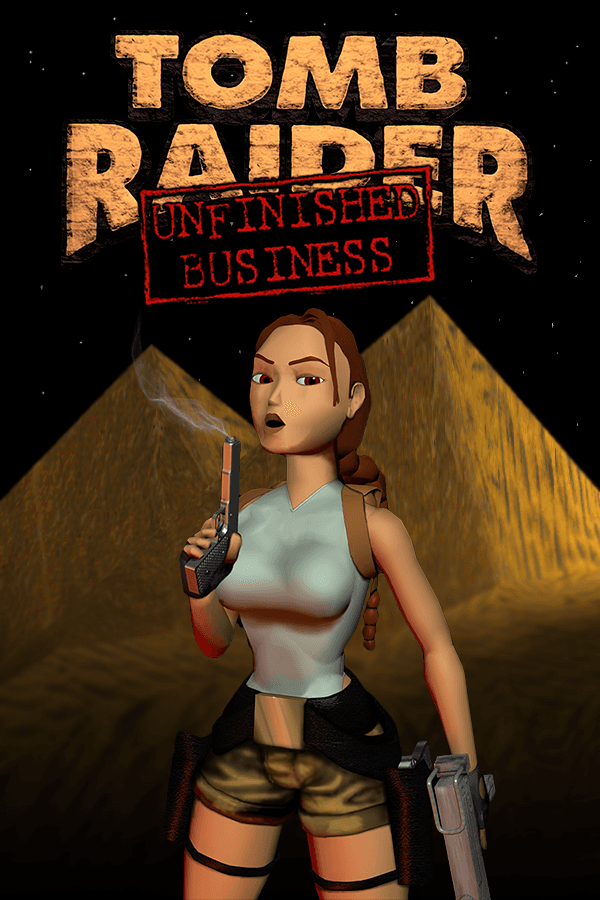
In Tomb Raider Gold, you jump back into Lara Croft's dual-pistol shoes to survive four punishing expansion levels built specifically for players who had already mastered the original release. It pairs the complete fifteen-level base adventure across Peru, Greece, Egypt, and Atlantis with brutal new missions that test every drop of your grid-based platforming patience.
Grid movement turns every jump into a spatial calculation
The moment Tomb Raider Gold clicks is when you stop trying to steer Lara like a modern character and start measuring the environment in invisible floor tiles. Built on a custom 3D grid engine originally designed by Core Design Ltd. for 32-bit hardware and DOS, the game treats world space as a strict digital chessboard. Every running jump requires exactly one full square of runway to clear a two-block gap, which means your hands automatically learn the rhythm: tap backward to execute a precise backstep, hold forward, and mash the jump button so Lara leaps the exact instant her boots touch the edge of the ledge.
That rigid mechanics design is what makes the platforming so satisfying when it works, and so unforgiving when you miscalculate by an inch. Puzzles in the base game rely on pulling heavy wall levers, shoving stone blocks into socket tiles, and sprinting through timed door runs while dodging swinging blades or floor spikes. When you drop from a high ledge into an open room, positional audio through Sound Blaster sound cards lets you hear the heavy footfalls of a bear or a raptor before the camera even swings around to reveal them. The dynamic score composed by Nathan McCree sits quietly in the background until a mummy or panther lunges from the shadows, suddenly bursting into frantic brass and strings.
Combat relies on line-of-sight target locking rather than precise aiming. Lara automatically aims her dual pistols at the nearest target, leaving you free to side-flip through the air, leap over charging wolves, and backflip away from Atlantean mutants. You manage a clean arsenal across the campaign, starting with infinite pistol ammunition before picking up shotguns, dual magnums, and fast-firing dual Uzis. Ammo for those heavy guns is limited, meaning you save the high-calibre firepower for giant boss encounters like the famous T-Rex in the valley or the skinless horrors near the Scion climax.
Four bonus levels show how brutal expansion packs used to be
The extra content in this release splits four standalone missions into two distinct mini-campaigns, designed by Philip Campbell with fresh level textures produced by Rebecca Shearin. Instead of easing you into the action with warm-up corridors, these bonus chapters operate on the assumption that you already know every trick in Lara's movement kit. The expansion picks up the difficulty where the end of the base game left off, placing tight jumps over lava pits immediately inside starting doorways and throwing aggressive mutant swarms at you with very few health packs to spare.
- Return to Egypt sends Lara back to Khamoon to explore a temple dedicated to Bast, filled with tight corridors and stealthy panthers.
- Temple of the Cat ramps up the platforming demands with multi-tiered indoor vertical puzzles and deceptive trap doors.
- Atlantean Stronghold drops you right into the aftermath of the original finale, forcing you to fight through heavy concentrations of flying mutants.
- The Hive finishes the saga with tight corridors packed with hatching monster eggs and complex block-pushing sequences.
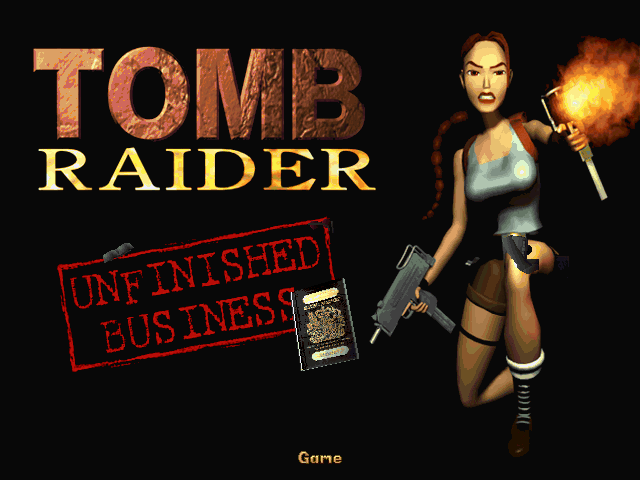
Because these levels were made for veteran players, ammo conservation becomes a constant headache. In "Unfinished Business," sliding down a steep ramp puts you in the middle of a room crammed with mutant eggs that hatch the second you hit the floor. If you waste your Uzi clips on early guards, you end up doing a frantic backflip dance around three screaming monsters while trying to chip away at their health using basic pistols. It is loud, exhausting, and punishing in a way that modern expansions rarely dare to be.
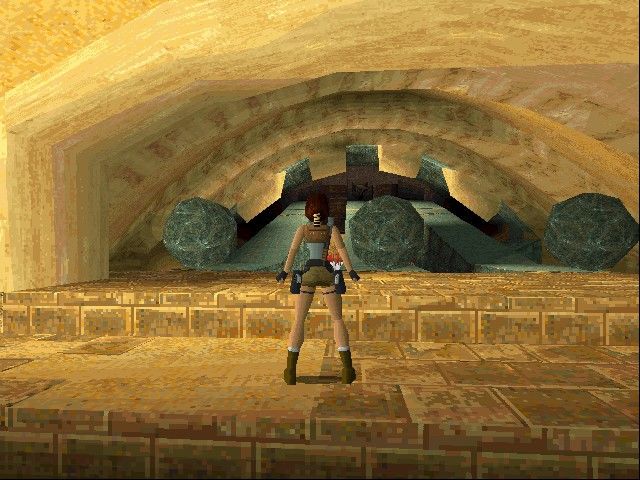
What holds up in Tomb Raider Gold and where the controls fight back
When published by Eidos, Inc. in 1998, critical reception ran the entire spectrum. British gaming magazine Arcade handed out a full 100% score, praising the smooth high-resolution rendering made possible by hardware-accelerated 3DFX Glide support on PC setups. German outlet GameStar sat at a more grounded 82%, while GameGenie dropped its score down to 60%, citing frustration with the persistent camera clipping and stiff keyboard navigation. That divide remains accurate today: if you accept the tank control scheme, the game reveals an amazingly clever set of spatial puzzles, but if you fight the controls, Lara will spend most of her evening plummeting down dark crevices.
The DOS files reveal plenty of interesting quirks behind the scenes. Dedicated fans digging through the directory files found unused texture variants for enemy models, leftover test objects, and untextured 3D arm meshes left behind in the build. The release also retained every bit of original red blood during creature attacks, skipping any censorship edits that hit certain console ports. If you got hopelessly stuck on a timing run or ran completely out of small medipacks, typing the original movement sequence cheat code (stepping forward, stepping backward, turning three times in a circle, and executing a jump) either awarded every weapon or skipped the current level entirely.
What holds up best is the confidence of the environment layout. There are no lingering objective markers or side quests cluttering your screen; you get a room, a locked door, three distant ledges, and your own memory of jump distances. The secret pickups scattered throughout hard-to-reach niches reward players who look closely at unusual texture seams or hidden ceiling holes. On the flip side, the camera occasionally wedges itself behind a stone pillar during tight fights, leaving you blind while a crocodile takes massive bites out of your health bar.
How to tackle Tomb Raider Gold online today
This expansion gives anyone who loves classic 3D action platformers late-nineties level design pushed to its absolute limits. While the difficulty of the Atlantean levels will test your reflexes, mastering the grid-based jump timing makes every successful room exit feel like a victory. If you missed these extra four chapters on release or never had the 3DFX card required to run them cleanly, you ought to boot them up right now.
You can play Tomb Raider Gold online free in your browser right now, with no setup required. The most common mistake modern players make when trying this classic MS-DOS game for the first time is attempting to leap while running straight at a ledge at full speed. Instead, remember to walk right up to the drop-off, tap backward once to take a perfect one-block step rearward, and hold down the forward and jump keys together to execute a flawless, pixel-perfect leap across the gap every single time.