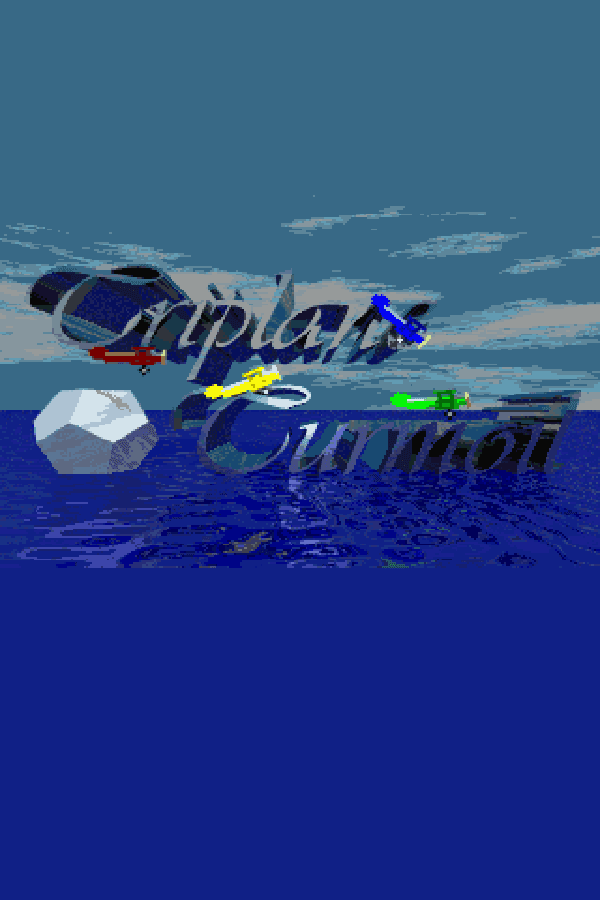
Triplane Turmoil
Checking…
In Triplane Turmoil, dogfighting is less about refined aerial tactics and more about surviving the split second when four planes squeeze into the same patch of sky with machine guns blazing.
Flying sideways in Triplane Turmoil is a constant battle against gravity
The core design pulls directly from the side-scrolling flight model popularized by Sopwith, translating aerial combat into a strict two-dimensional plane. You pitch your aircraft up and down, pull off a quick 180-degree roll to turn back on an attacker, and squeeze the trigger on nose-mounted machine guns that fire through interrupter gear. When ground targets need clearing, you drop heavy bombs from your fuselage and watch the parabolic arc carry them into enemy structures.
Every maneuver demands attention because momentum and gravity never take a break. Pull up too sharply without enough airspeed and your engine stalls, sending your triplane plummeting toward the dirt. If you survive a exchange with an enemy fighter, you are immediately forced to manage your fuel and ammunition levels, which means making a safe landing on your home strip to resupply.
Landing safely is notorious for ruining good runs. Touching down requires leveling off perfectly and dropping your throttle; hit the tarmac slightly too fast or at a steep angle, and your aircraft bursts into smoke, handing you a instant mission failure. The default keyboard controls map roll, pitch, and weapons across awkward clusters, leading many players to plug in a joystick or rebind every key before taking off.
Four feuding air forces and a brutal single-player wall
The game sets its conflict in a satirical World War I scenario where four nations compete for total control of the skies. Alongside traditional powers, the roster introduces a humorous regional twist:
- England, utilizing agile fighters built for dogfighting.
- Germany, packing heavy firepower across coastal airbases.
- Japan, relying on fast maneuvers to bypass ground defenses.
- Finland, taking center stage as a major air power in the alternate historical conflict.
Each faction features its own single-player campaign containing five distinct missions, including German sorties over the "Coast Islands." However, playing through these campaigns alone quickly turns into an exercise in trial and error. The computer-controlled bombers do not miss, tracking your position with terrifying precision while carpet-bombing your base.
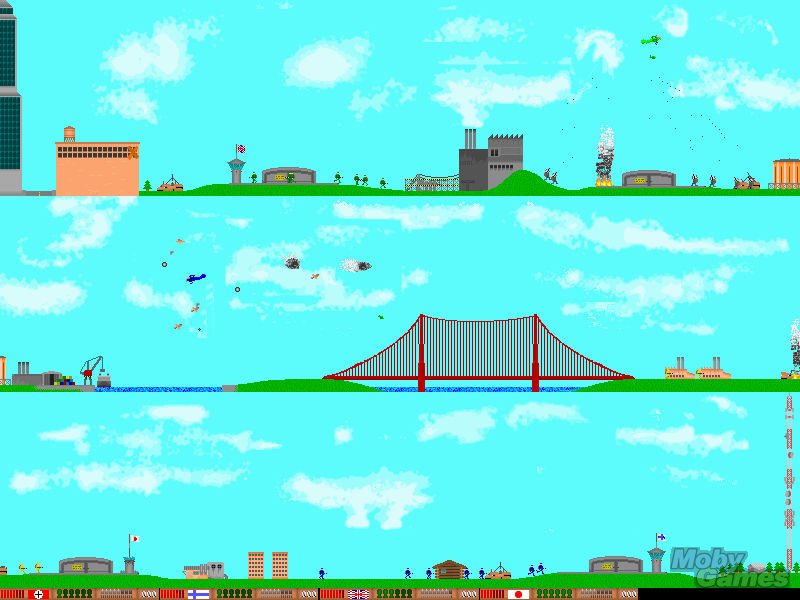
What makes the solo campaigns so harsh is the zero-tolerance victory conditions. If a single allied building or installation on your home strip gets destroyed by an incoming bombing run, the mission immediately fails. Reviewers at Home of the Underdogs famously described this strict setup as a try-and-fail merry-go-round, as one misplaced bomb from an AI wingman resets your progress in seconds.
Split-screen multi-pilot mayhem stole the show
While the single-player campaign pushes players to the brink of frustration, the local four-player dogfights offer pure arcade combat. Four players can squeeze around one keyboard or plug in extra gamepads, dividing the 320x200 viewport into horizontal split-screen viewports. If you lack four human opponents, AI bots can fill the empty cockpits to maintain four-way combat.
The multiplayer mode turns the rigid rules of the campaign into open chaos. Players can form mid-match alliances, cross-bomb each other's airfields, or engage in low-altitude chicken matches over the central tree line. Hearing the Sound Blaster card crunch out heavy explosion audio alongside the engine hum turned every four-way dogfight into a loud, frantic mess on mid-nineties hardware.
When four planes fight over the same landing strip, friendly fire becomes an constant hazard. Dropping a heavy bomb on an opponent who is refuel-docked on the tarmac is a cruel but effective way to swing the score in your favor, assuming you do not accidentally clip their hangar on your exit pitch.
From Finnish shareware to open source
Created by the Finnish developer team Dodekaedron Software Creations, Inc., the project was originally built by Markku Rankala, Teemu J. Takanen, and Henrikki Merikallio, with contributions from Risto Puhakka, Antti Lehtoranta, and Mikko Kinnunen. Released initially as shareware, the developers self-published the full package before re-releasing version 1.02 as freeware in 1998 under their own banner as publisher.
In 2009, Dodekaedron took the extra step of releasing the game's original source code and art assets under the GPLv3 license. That move allowed fan developers to maintain the codebase, resulting in modern SDL ports known as Triplane Classic. This open transition kept the physics and dogfighting intact long after original MS-DOS machines disappeared from home desks.
Looking back at the 1996 landscape, this action game stood apart from standard flight simulators by discarding complex cockpits in favor of instant 2D combat. Where contemporary flight simulators required thick manuals and complex key commands, Dodekaedron offered raw velocity and immediate explosions.
How to take to the skies without configuration headaches
If you play the single-player campaign expecting a gentle flight path, you will hit a wall within three missions; the AI accuracy is simply too unforgiving for casual flight. But as an arcade aerial brawler played against friends, the momentum, risky landing runs, and tight pitch turns hold up completely. Anyone who enjoys classic side-scrolling combat will find plenty of reasons to spin up a four-way match today.
You can play Triplane Turmoil free in your browser right now on this page, running natively inside your modern display with zero installation needed. Jump straight into the cockpit, line up your machine guns over the runway, and see if you can land your triplane without crashing into your own hangar.
How Triplane Turmoil is played — the keys the game listens to, grouped by what they do.
- Movement
- Action
- Weapons & items
Highlighted keys are mapped — hover or tap one to see what it does.
Controls can be customized inside the game menus by selecting a pilot entry. The game also supports analog flight sticks and joysticks.
Players' controls
Touch and gamepad controls
The on-screen keyboard and gamepad mapping the browser player uses on a phone, a tablet or a controller, as opposed to the real keys above. $PRO members make their own in the player and share them here; anyone can pick one to play with.
Make your own touch controlsPRO
- 1Open the editorSign in below, then pick what to make. The game starts with the editor open over it.
- 2Place your keysAdd keys and drag them where your thumbs rest, or map a controller's buttons. Test plays the game with them; Save keeps them, and you play with them from then on.
- 3Share themShare them right after saving in the game, or name and share them here. Players vote, and the best become this game's controls for everyone.
Go PROSee how it worksSign in+20 XP for sharing · +50 XP if yours become the game's own
- The game's own controlsKeyboardGamepadWhat every player starts with.In use
2 screenshots
From the archive
No gameplay video yet
No gameplay video for Triplane Turmoil yet. Sign in to add one.
No reviews yet
Tell the community what you think of Triplane Turmoil. Reviews are public and tied to your username.
No archived manuals for Triplane Turmoil yet
No manuals archived for this title yet. Sign in to upload the first scan.
Cheat codes, console commands and memory pokes for Triplane Turmoil — each one verified and attributed.
Sign in to submitNo cheats yet for this title
Know a working cheat, poke or trainer? Add it with the button above. Moderators check every entry before it goes live.
No archived soundtrack for Triplane Turmoil yet
No soundtrack archived for this title yet. Sign in to upload the first rip.
No save states for Triplane Turmoil yet
No save states for this title yet. Sign in to share one.
Discussions
Sign in to post- Threads0
- Total posts0
- Online now6
Community · Triplane Turmoil
Who's contributing, and what's new
- Reviews0
- Threads0
- Uploadsapproved0
- Contributors0
Recent activity
Nothing here yet
Reviews, discussion threads and approved uploads appear here as members add them.