
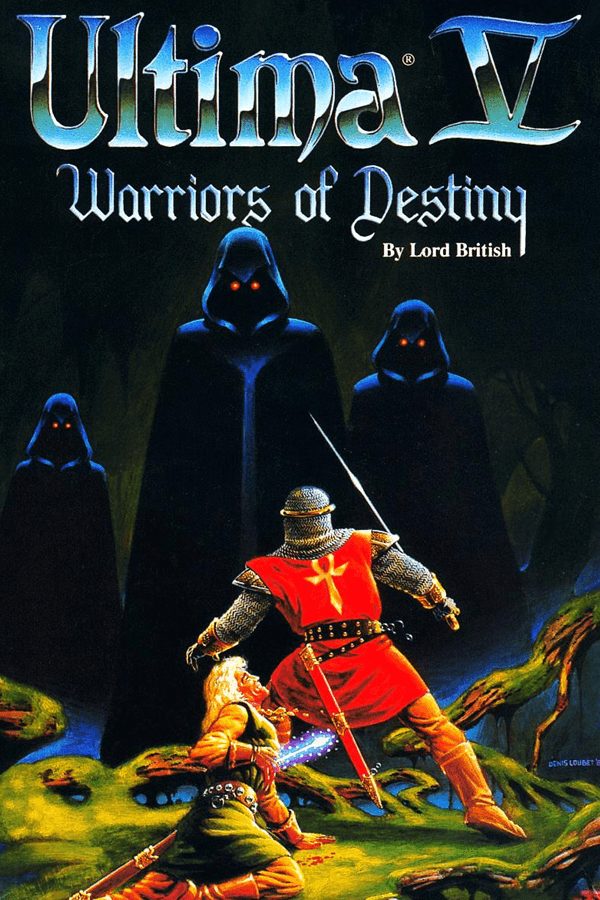

Playing Ultima V: Warriors of Destiny means facing a world where virtue is enforced by sword point and local shopkeepers lock their doors at sundown. Summoned back to Britannia, you must rescue the missing King Lord British and stop the tyrant Blackthorn before his corrupt order destroys the realm.
When virtue becomes a weapon in Britannia
Most games from 1988 treated good and evil as simple switches. This campaign turns that idea upside down immediately. Blackthorn takes the eight virtues that you established in the previous game and turns them into oppressive laws. If you do not give half your income to charity, you are executed.
Behind the tyrant lurk the three Shadowlords, creatures born from dark principles who taint the land. To defeat them and rescue the missing king, you cannot just butcher everything on the map. You have to learn who to trust, track down hidden spell reagents, and solve puzzles that require actual observation instead of clicking every item in sight.
The story forces you to think about the consequences of your actions. Very few games use a narrative system where doing the right thing costs you resources, time, or your hard-earned party members.
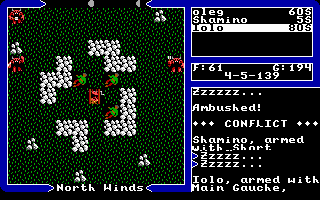
Interacting with a living world on an MS-DOS PC
Designer Richard Garriott expanded the tile engine built for the previous entry to make the map respond to player choices. Townspeople do not sit in one spot forever like human signposts. They walk to work, sit down to eat, visit the tavern, and go home to lock their doors when darkness falls.
The keyboard controls take time to master, but they give you direct agency over the world. You can push heavy blocks to solve dungeon layouts, pick locks on guarded doors, or board a skiff to navigate shallow waters. If you find a magic carpet, you can glide right over swamp tiles that would otherwise poison your entire party.
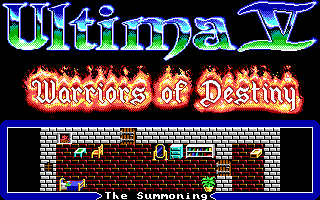
The interactivity extends to small details that actually hide major quest items. In Lord British's private chamber, sitting down at the harpsichord and playing the correct notes to the song "Stones" opens a hidden wall. Inside sits a vital item and a magic carpet, rewards reserved for players who pay attention to clues in town dialogue.
Tactical combat grids and first-person dungeons
Movement on the main world map uses an overhead top-down view. When an enemy unit touches your party, the display shifts to a separate turn-based tactical grid. Characters can move and strike diagonally, which adds real strategy when funneling giant spiders into narrow chokepoints.
Dungeons drop the top-down perspective entirely for a 1st-person view. You navigate pitch-black corridors with a rosette compass, mapping out corridors step by step while managing light sources. It creates genuine anxiety when your last torch sputters out three floors below the surface.
When the title hit stores, Computer+Video Games praised its deep character interaction and strategic combat, though they noted the visual tile set looked dated next to slicker releases like Dungeon Master. The sound on a standard PC speaker was also simple, consisting mainly of bleeps and clicks during spell casts.
Exploits, harsh penalties, and subterranean danger
The difficulty ramps up quickly, especially once you descend into the Underworld. Exploring those subterranean caverns requires solid preparation and plenty of supplies. Dying carries heavy statistical penalties, wiping out huge amounts of experience points and forcing long runs back from a resurrection point.
Players back then quickly found ways to balance the scales against the tough mechanics. A famous stat exploit lets you maximize your character stats without grinding for hours. By manipulating level resets through repeated deaths and camping right next to Lord British, clever players could push their stats up to 30-30-30 while preserving their character growth.
The developer team at ORIGIN Systems, Inc. created this massive world during a difficult period for the studio. They originally targetted the Apple II as the main machine, but financial pressure forced them to rapidly transition into a PC-first studio. Programmer John Miles and designer Chris Roberts worked alongside Garriott to turn the ORIGIN Systems title into a deep role-playing adventure.
- Overhead top-down exploration for towns and world movement
- First-person dungeon crawling using compass directional movement
- Turn-based grid combat with diagonal melee and ranged attacks
- Real-time day and night schedules for every non-player character
- Subterranean Underworld map hidden beneath the surface of Britannia
Play Ultima V: Warriors of Destiny free in your browser right now
The game demands patience, but its mechanical depth holds up far better than most titles from its generation. The tile graphics might seem basic at first glance, but the living schedule of the towns and the open puzzle design make every search feel rewarding. Anyone who enjoys deep world systems and thoughtful combat should try it tonight.
You can play Ultima V: Warriors of Destiny free in your browser today with no setup required. When you load up this classic Ultima V: Warriors of Destiny MS-DOS game, try visiting the castle in the first few minutes to practice searching rooms and talking to NPCs. Once you learn the keyboard shortcuts and listen to the local rumors, Britannia pulls you right into its dark political fight.