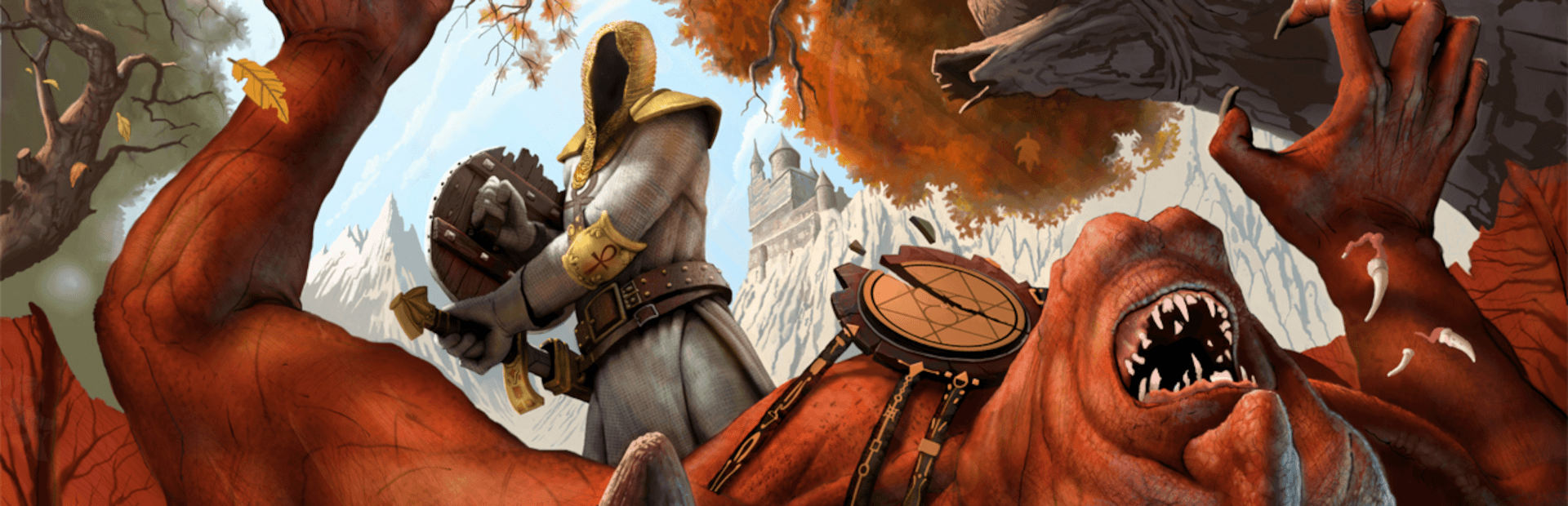
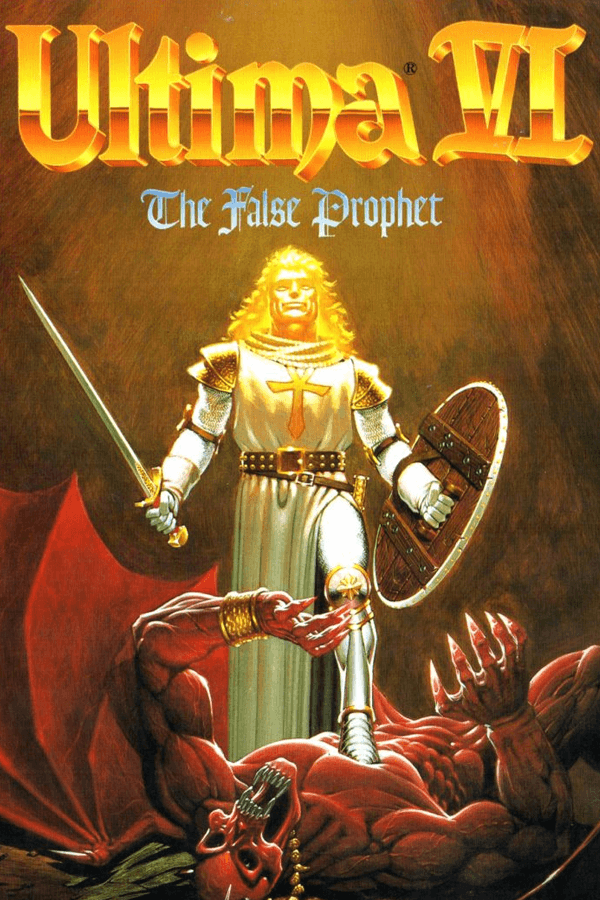

In Ultima VI: The False Prophet, you start tied to a sacrificial altar while gargoyles raise a blade over your chest. Once your friends drag you through the moongate to Castle British, you step into a massive world where you can pick up almost everything you see.
Escalating from a sacrifice to open-ended theft
You begin this role-playing game in the middle of a rescue. Companions Iolo, Shamino, and Dupre pull you back to Britannia just in time. The kingdom is under attack by gargoyles who have seized the Eight Shrines of Virtue.
The top-down perspective places your party on a single tile grid measuring 1024 by 1024 tiles. The overworld, towns, and dungeons all exist on this same connected map. You do not switch to a separate screen when entering a building or descending into a cave.
You can move, push, and pull thousands of items. If you see a key, a candle, or a plate on a table, you can put it in your pack. The puzzle design relies heavily on this object manipulation.
Early on, clever players discover an absurd trick in Castle British. You can drag a cannon out of the castle walls and position it near the villagers. Firing it lets you farm gold and plate armor from townfolk or infinitely respawning guards before you even start the main quest.
Ultima VI: The False Prophet pushed MS-DOS hardware to its limits
Created by Richard Garriott and Warren Spector, this project marked a major technical pivot for the series. It was the first main title built natively for IBM PC MS-DOS systems instead of the Apple II platform. Developer ORIGIN Systems, Inc. released the title in 1990.
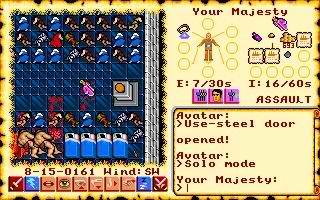
The move to PC hardware allowed for 256-color VGA graphics and point-and-click mouse controls. Musicians Todd Porter and Herman Miller wrote native MIDI scores for AdLib and Roland sound cards. The game was later ported to systems like the Amiga, Atari ST, Commodore 64, FM Towns, PC-98, Sharp X68000, and Super Nintendo.
The jump in fidelity was huge compared to older computer titles. Cities like Yew and Britain felt dense with detail. However, players who lacked a dedicated sound card in 1990 had to listen to PC speaker beeps, while others found the looping MIDI music annoying after long play sessions.
Mixing spell reagents and managing inventory space
To survive turn-based combat and exploration, you need to collect gear and magical items across both Britannia and the subterranean Gargoyle realm. Preparing for long trips requires careful planning.
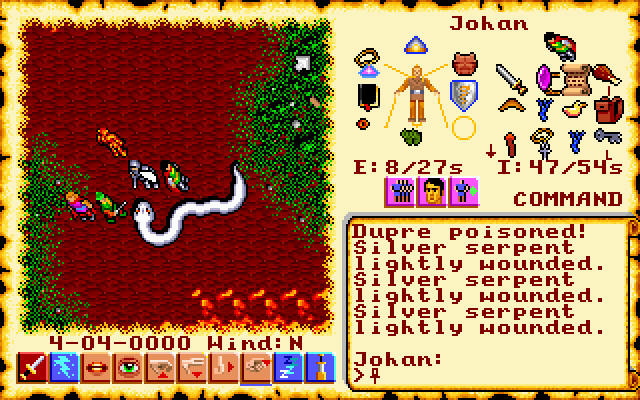
Magic requires specific reagents rather than simple spell points. To cast basic spells like Unlock, you must combine reagents in your pouch before incanting. Managing supplies becomes just as vital as carrying sturdy weapons.
- Swords, bows, and heavy plate armor for fighting giant rats, bunnies, and aggressive gargoyles
- Reagents including mandrake root, nightshade, sulfurous ash, blood moss, and black pearls
- Map pieces hidden across shrines and distant towns that reveal the full world map
Collecting the scattered treasure map pieces forms one of the central quests. Many players complain that this hunt feels like tedious busy work. If you already know secret locations or puzzle solutions from a previous run, you can skip large portions of the fetch quest entirely.
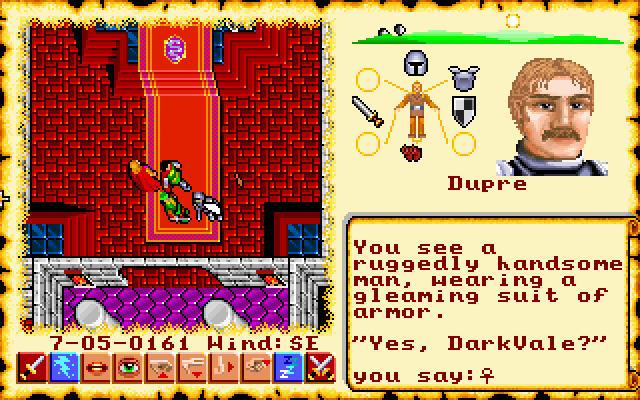
Clunky menus and half-screen inventory windows test your patience
The inventory management is where the turn-based design shows its age. The user interface occupies roughly half of the screen with fixed button panels and character portraits. Navigating through eight party members to find a specific key or food item takes far too many clicks.
Despite the clunky interface, the story writing holds up surprisingly well. You eventually discover that the gargoyles are not mindless monsters. They are fighting for their own survival after ancient forces threatened their home.
To establish peace between humans and gargoyles, you must learn their language, vocabulary, and culture. Achieving victory requires understanding your enemy rather than simply slaughtering their leader. That narrative turn pushes the whole adventure far beyond standard fantasy tropes.
Why you should play Ultima VI: The False Prophet free in your browser today
This classic MS-DOS game succeeds because it trusts the player to explore an interactive world without hand-holding. While the inventory screens can feel cramped, the open-ended world and deep dialogue options make it one of the strongest releases from ORIGIN Systems, Inc. that any RPG fan should try.
You can play Ultima VI: The False Prophet online, free in your browser right now with nothing to install. Fire up the DOS version, drag that castle cannon out to test the object physics, and experience one of PC gaming's most flexible worlds firsthand.