
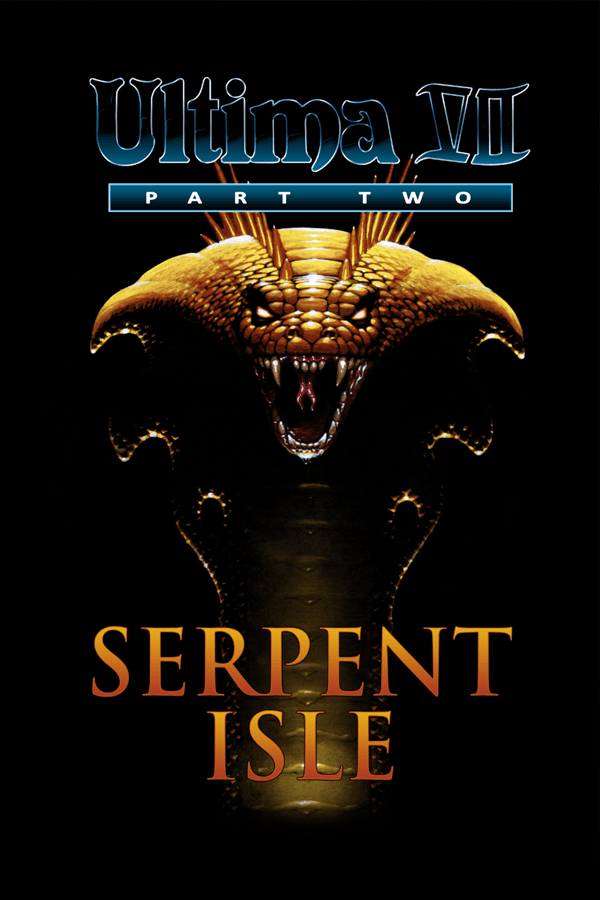

In Ultima VII: Part Two - Serpent Isle + The Silver Seed, playing as the Avatar means following the villain Batlin into a cold, alien domain that strips away your hard-won equipment, drops you into a tightly scripted plot, and forces you to rebuild your party from scratch.
The game opens eighteen months after the events of The Black Gate. Batlin has fled Britannia, taking Iolo's wife Gwenno with him, and Lord British dispatches you alongside Iolo, Shamino, and Dupre to track him down across the ocean on the Serpent Isle. Shortly after landing, a magical storm swaps your high-level gear for strange local artifacts, forcing you to explore cities like Monitor, Fawn, and Moonshade with virtually nothing to your name. Unlike the open sandbox of its predecessor, this 1993 MS-DOS game directs your path through strict story milestones across a continent torn between the opposing forces of Order, Chaos, and Balance.
That structured direction means the story lands with far more bite than previous titles. Narrative writers Raymond Benson, Bill Armintrout, and Sheri Hobbs packed the script with mature political intrigue, fanatic cults, and personal betrayals. Because you are outside Britannia, your companions no longer lecture you about the Virtues or abandon the group if you decide to pocket items or execute hostile NPCs. However, that focus comes at the expense of player freedom. If you happen to complete sub-quests out of order or enter key areas prematurely, script flags can break completely, soft-locking your campaign and forcing a reload from an earlier save file.
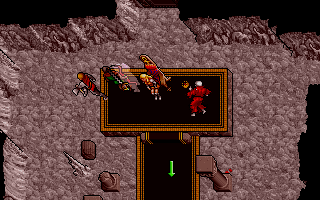
Gameplay relies on the world-interaction engine that made this era of ORIGIN Systems, Inc. releases famous. You interact with the world from a diagonal-down isometric view, clicking directly on levers, doors, and loose objects scattered around rooms. Puzzles demand careful observation, from matching switches in subterranean dungeons like Furnace to solving the Knight's Test inside the monster-infested caves of Monitor. In that trial, the game strips your inventory away entirely, forcing you to tackle gumps and goblins armed with whatever weapons you can forage off the cavern floor.
That physical interactability creates plenty of unexpected moments. Consuming wild magic mushrooms alters your character's state and causes the Avatar's sprite to levitate off the ground. On the less heroic side of survival, force-feeding Dupre tub after tub of butter until his stomach gives out and he vomits on screen became an infamous running joke among players. Outside of gag mechanics, keeping your party fed is a constant chore. Your companions complain bitterly whenever their stomachs rumble, meaning a chunk of your backpack space stays permanently filled with cheese, bread, and meat.
Inventory management in the base engine was notoriously messy, relying on dragging tiny, overlapping graphics inside nested backpacks. Released as an official expansion disk in 1993, The Silver Seed directly tackled those handling frustrations. It introduces a standalone Keyring item that automatically swallows dozens of individual loose keys, freeing up precious inventory slots and eliminating the need to search through bags every time you encounter a locked door in Issik's Maze or DeathWatch Keep.
The expansion's narrative integrates directly into the central campaign through an ancient amulet that teleports your party back in time to retrieve the titular seed. This side journey features five distinct quests where you navigate Aram-Dol's Lair and the Fiend's Lair to defeat powerful bosses like Aram-Dol and secure high-end equipment such as the Magebane sword. Because the expansion rewards you with powerful artifacts and massive experience gains, completing these trials early makes the remaining main story encounters on Serpent Isle significantly easier to manage.
Under heavy release pressure from publisher Electronic Arts, producer Warren Spector and directors Richard Garriott and Bill Armintrout had to make tough choices toward the end of development. Entire sections of the late-game map were streamlined, and planned story branches involving the Banes of Chaos were cut or condensed into fast-paced linear sequences. The underlying technical upgrades held firm, introducing hotkey shortcuts for quick casting and key interactions alongside digitized audio effects for spoken dialogue and ambient monster roars.
Sound support setup in the MS-DOS installation configuration allowed players to choose between standard AdLib synthesis, punchy Sound Blaster digital audio, or rich MIDI orchestrations via the Roland MT-32 card. Dedicated players who wanted to experiment with the world mechanics could type command-line parameters like serpent pass or serpent manimal to unlock the internal F2 cheat menu, offering direct item spawning, teleportation, and flag manipulation to bypass broken quests.
This entry is the darkest, most atmospheric chapter in the entire series. The strict quest progression and easy-to-break story triggers will frustrate anyone expecting an open-world sandbox, but the quality of the world building, high-resolution dialogue portraits, and clever puzzle design stay exceptionally strong. If you enjoy deep fantasy role-playing with an emphasis on narrative over combat, this chapter shows MS-DOS computer gaming at its absolute peak.
You can play Ultima VII: Part Two - Serpent Isle + The Silver Seed free in your browser today without worrying about old memory managers or mounting disc images. Experience this classic ORIGIN Systems, Inc. release directly on this page, gather your party in Monitor, and set out to restore balance across the broken lands.
In Ultima VII: Part Two - Serpent Isle + The Silver Seed, playing as the Avatar means following the villain Batlin into a cold, alien domain that strips away your hard-won equipment, drops you into a tightly scripted plot, and forces you to rebuild your party from scratch.
The game opens eighteen months after the events of The Black Gate. Batlin has fled Britannia, taking Iolo's wife Gwenno with him, and Lord British dispatches you alongside Iolo, Shamino, and Dupre to track him down across the ocean on the Serpent Isle. Shortly after landing, a magical storm swaps your high-level gear for strange local artifacts, forcing you to explore cities like Monitor, Fawn, and Moonshade with virtually nothing to your name. Unlike the open sandbox of its predecessor, this 1993 MS-DOS game directs your path through strict story milestones across a continent torn between the opposing forces of Order, Chaos, and Balance.
That structured direction means the story lands with far more bite than previous titles. Narrative writers Raymond Benson, Bill Armintrout, and Sheri Hobbs packed the script with mature political intrigue, fanatic cults, and personal betrayals. Because you are outside Britannia, your companions no longer lecture you about the Virtues or abandon the group if you decide to pocket items or execute hostile NPCs. However, that focus comes at the expense of player freedom. If you happen to complete sub-quests out of order or enter key areas prematurely, script flags can break completely, soft-locking your campaign and forcing a reload from an earlier save file.
Gameplay relies on the world-interaction engine that made this era of ORIGIN Systems, Inc. releases famous. You interact with the world from a diagonal-down isometric view, clicking directly on levers, doors, and loose objects scattered around rooms. Puzzles demand careful observation, from matching switches in subterranean dungeons like Furnace to solving the Knight's Test inside the monster-infested caves of Monitor. In that trial, the game strips your inventory away entirely, forcing you to tackle gumps and goblins armed with whatever weapons you can forage off the cavern floor.
That physical interactability creates plenty of unexpected moments. Consuming wild magic mushrooms alters your character's state and causes the Avatar's sprite to levitate off the ground. On the less heroic side of survival, force-feeding Dupre tub after tub of butter until his stomach gives out and he vomits on screen became an infamous running joke among players. Outside of gag mechanics, keeping your party fed is a constant chore. Your companions complain bitterly whenever their stomachs rumble, meaning a chunk of your backpack space stays permanently filled with cheese, bread, and meat.
Inventory management in the base engine was notoriously messy, relying on dragging tiny, overlapping graphics inside nested backpacks. Released as an official expansion disk in 1993, The Silver Seed directly tackled those handling frustrations. It introduces a standalone Keyring item that automatically swallows dozens of individual loose keys, freeing up precious inventory slots and eliminating the need to search through bags every time you encounter a locked door in Issik's Maze or DeathWatch Keep.
The expansion's narrative integrates directly into the central campaign through an ancient amulet that teleports your party back in time to retrieve the titular seed. This side journey features five distinct quests where you navigate Aram-Dol's Lair and the Fiend's Lair to defeat powerful bosses like Aram-Dol and secure high-end equipment such as the Magebane sword. Because the expansion rewards you with powerful artifacts and massive experience gains, completing these trials early makes the remaining main story encounters on Serpent Isle significantly easier to manage.
Under heavy release pressure from publisher Electronic Arts, producer Warren Spector and directors Richard Garriott and Bill Armintrout had to make tough choices toward the end of development. Entire sections of the late-game map were streamlined, and planned story branches involving the Banes of Chaos were cut or condensed into fast-paced linear sequences. The underlying technical upgrades held firm, introducing hotkey shortcuts for quick casting and key interactions alongside digitized audio effects for spoken dialogue and ambient monster roars.
Sound support setup in the MS-DOS installation configuration allowed players to choose between standard AdLib synthesis, punchy Sound Blaster digital audio, or rich MIDI orchestrations via the Roland MT-32 card. Dedicated players who wanted to experiment with the world mechanics could type command-line parameters like serpent pass or serpent manimal to unlock the internal F2 cheat menu, offering direct item spawning, teleportation, and flag manipulation to bypass broken quests.
This entry is the darkest, most atmospheric chapter in the entire series. The strict quest progression and easy-to-break story triggers will frustrate anyone expecting an open-world sandbox, but the quality of the world building, high-resolution dialogue portraits, and clever puzzle design stay exceptionally strong. If you enjoy deep fantasy role-playing with an emphasis on narrative over combat, this chapter shows MS-DOS computer gaming at its absolute peak.
You can play Ultima VII: Part Two - Serpent Isle + The Silver Seed free in your browser today without worrying about old memory managers or mounting disc images. Experience this classic ORIGIN Systems, Inc. release directly on this page, gather your party in Monitor, and set out to restore balance across the broken lands.
How Ultima VII: Part Two - Serpent Isle + The Silver Seed is played — the keys the game listens to, grouped by what they do.
Highlighted keys are mapped — hover or tap one to see what it does.
Audio and card configuration is handled via INSTALL.EXE. Mouse handedness can be swapped in-game using the H key toggle.
The on-screen keyboard and gamepad mapping the browser player uses on a phone, a tablet or a controller, as opposed to the real keys above. $PRO members make their own in the player and share them here; anyone can pick one to play with.
Cheat codes, console commands and memory pokes for Ultima VII: Part Two - Serpent Isle + The Silver Seed — each one verified and attributed.
Sign in to submitHow Ultima VII: Part Two - Serpent Isle + The Silver Seed is played — the keys the game listens to, grouped by what they do.
Highlighted keys are mapped — hover or tap one to see what it does.
Audio and card configuration is handled via INSTALL.EXE. Mouse handedness can be swapped in-game using the H key toggle.
The on-screen keyboard and gamepad mapping the browser player uses on a phone, a tablet or a controller, as opposed to the real keys above. $PRO members make their own in the player and share them here; anyone can pick one to play with.
Cheat codes, console commands and memory pokes for Ultima VII: Part Two - Serpent Isle + The Silver Seed — each one verified and attributed.
Sign in to submit