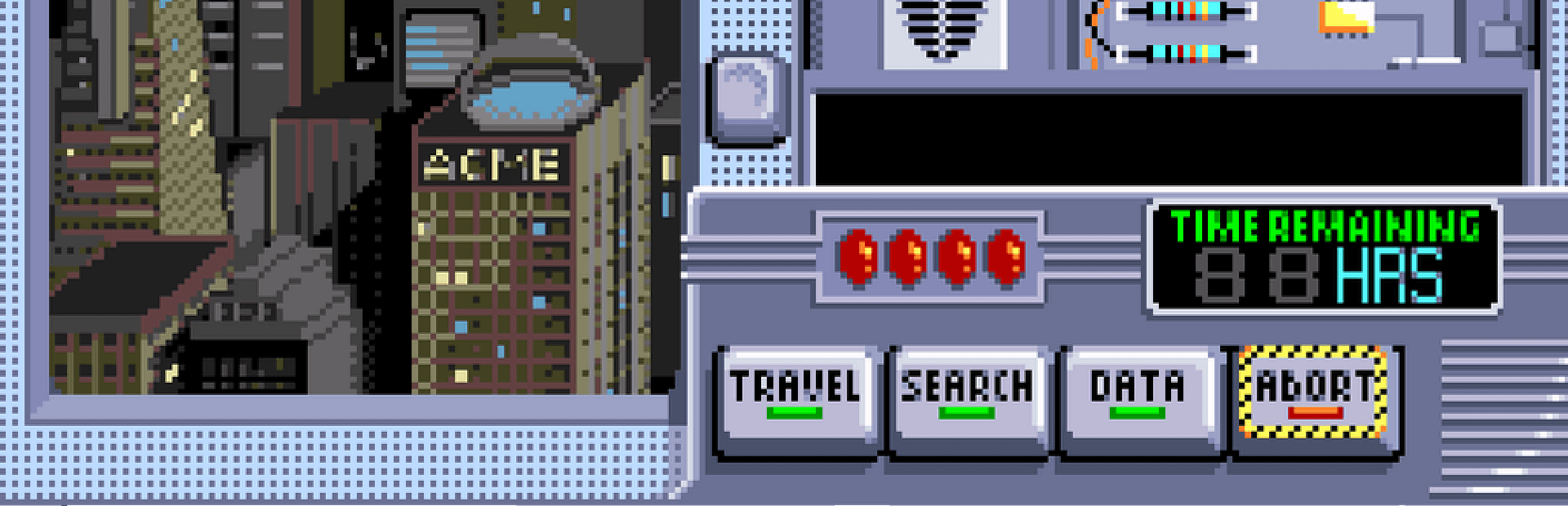

Starting up Where in Time Is Carmen Sandiego? places you behind the desk at ACME's Time Crimes Division in San Francisco, equipped with a Chronoskimmer and an assignment to hunt historical thieves across 1,500 years.
The moment you launch the 1989 MS-DOS game, you are thrown into a detective race against time. A thief like V.I.L.E. operative Minnie Series or Earl E. Bird has stolen an irreplaceable treasure from history, and your job is to track them down using menu-driven commands to interview witnesses, scan locations for physical items, and jump across time periods ranging from 400 AD to the 1950s. You might find a clue referencing a specific historical figure's favorite author or discover a physical item like a graham cracker left at the crime scene, which you then cross-reference against real-world history.
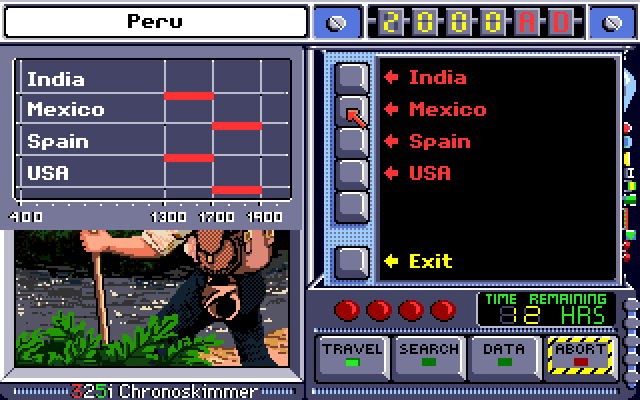
Every location you visit drains precious hours from your Chronoskimmer clock. To secure a conviction, you cannot simply corner the suspect: you must collect enough personal traits, such as eye color or favorite artist, to fill out an arrest warrant in the computer system. Once the warrant is generated, you deploy a mechanical Capture Robot to make the arrest before the clock runs out.
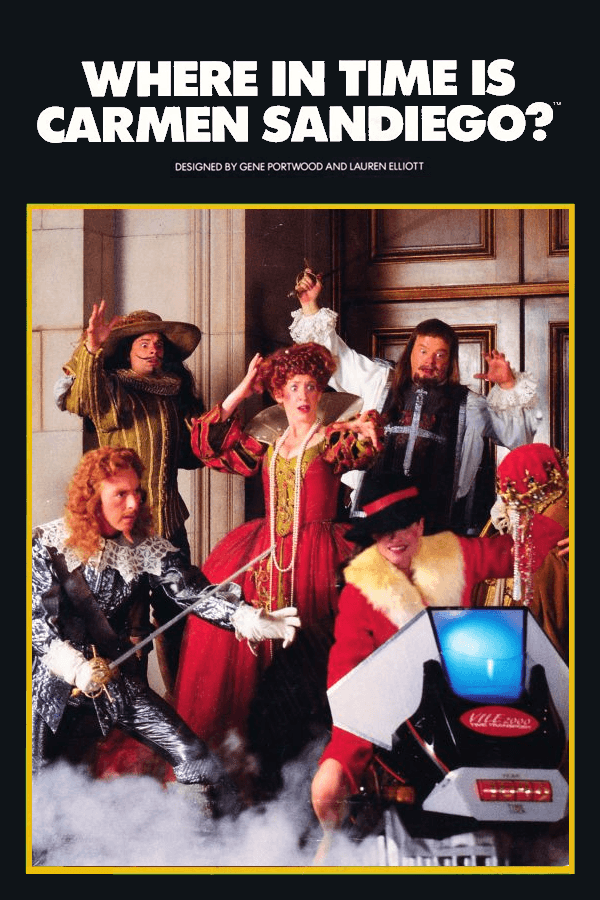
Designers Gene Portwood and Lauren Elliott took a distinct approach to game mechanics by shipping the title with a physical copy of The New American Desk Encyclopedia. The game purposely gives you raw historical clues, such as dates, art movements, or regional accomplishments, expecting you to physically open the softcover book to research the destination yourself. In 1991, Entertainment Weekly ranked the game at number 13 on its list of top games, highlighting this paper-and-digital combo as a major design innovation.
This printed reference book double-acted as effective copy protection. Without the physical encyclopedia handy, deciphering obscure clues to pick the correct time period or suspect attribute becomes almost impossible. If you typed carmen cheat at the MS-DOS command prompt before launching, you could access a developer cheat mode, but for standard players, the book was non-negotiable.
While early cases feel fresh, the core loop eventually reveals its limitations. Brøderbund Software, Inc. built a massive campaign spanning 80 full cases, but the structure relies heavily on pseudo-randomized clue assembly. Over dozens of missions, clues begin to feel like Mad Libs templates where names and dates are swapped into repetitive sentences.
Computer Gaming World praised the game on release as challenging and educational, but pushing through all 80 cases turns into a test of endurance. The artwork created by the graphic arts team, including Don Albrecht, Avril Harrison, and Michelle Bushneff, provides clean visuals across CGA, EGA, MCGA, and VGA modes, complete with fun office animations like exploding lab equipment or malfunctioning coffee machines. However, the repetitive nature of late-game clue hunting causes fatigue long before you catch Carmen herself.
Audio in the DOS release varies drastically depending on your rig setup. Running the game through a basic PC speaker yields rudimentary beeps for button presses and travel transitions. Equipping an AdLib or early Sound Blaster sound card transforms the audio layer completely, playing short musical stings tailored to the historical era you step into.
This educational title established for the first time in series lore that ACME Headquarters was officially located in San Francisco. While console ports on systems like the NES or Genesis suffered low review scores from outlets like Video Games due to harsh, chirpy sound effects, the original PC graphics and audio card options provided the definitive presentation.
The late game gets repetitive, but this historical mystery from Brøderbund Software, Inc. still rewards curiosity and quick research. It shows how late-eighties PC design made physical print media and digital game logic work side by side.
You can play Where in Time Is Carmen Sandiego? free in your browser right now, with nothing to install and no setup required. Running the game online gives you instant access to the original DOS interface and AdLib synthesized audio stings, letting you test your historical knowledge and track down V.I.L.E. thieves directly from your desktop or phone browser.
Starting up Where in Time Is Carmen Sandiego? places you behind the desk at ACME's Time Crimes Division in San Francisco, equipped with a Chronoskimmer and an assignment to hunt historical thieves across 1,500 years.
The moment you launch the 1989 MS-DOS game, you are thrown into a detective race against time. A thief like V.I.L.E. operative Minnie Series or Earl E. Bird has stolen an irreplaceable treasure from history, and your job is to track them down using menu-driven commands to interview witnesses, scan locations for physical items, and jump across time periods ranging from 400 AD to the 1950s. You might find a clue referencing a specific historical figure's favorite author or discover a physical item like a graham cracker left at the crime scene, which you then cross-reference against real-world history.
Every location you visit drains precious hours from your Chronoskimmer clock. To secure a conviction, you cannot simply corner the suspect: you must collect enough personal traits, such as eye color or favorite artist, to fill out an arrest warrant in the computer system. Once the warrant is generated, you deploy a mechanical Capture Robot to make the arrest before the clock runs out.
Designers Gene Portwood and Lauren Elliott took a distinct approach to game mechanics by shipping the title with a physical copy of The New American Desk Encyclopedia. The game purposely gives you raw historical clues, such as dates, art movements, or regional accomplishments, expecting you to physically open the softcover book to research the destination yourself. In 1991, Entertainment Weekly ranked the game at number 13 on its list of top games, highlighting this paper-and-digital combo as a major design innovation.
This printed reference book double-acted as effective copy protection. Without the physical encyclopedia handy, deciphering obscure clues to pick the correct time period or suspect attribute becomes almost impossible. If you typed carmen cheat at the MS-DOS command prompt before launching, you could access a developer cheat mode, but for standard players, the book was non-negotiable.
While early cases feel fresh, the core loop eventually reveals its limitations. Brøderbund Software, Inc. built a massive campaign spanning 80 full cases, but the structure relies heavily on pseudo-randomized clue assembly. Over dozens of missions, clues begin to feel like Mad Libs templates where names and dates are swapped into repetitive sentences.
Computer Gaming World praised the game on release as challenging and educational, but pushing through all 80 cases turns into a test of endurance. The artwork created by the graphic arts team, including Don Albrecht, Avril Harrison, and Michelle Bushneff, provides clean visuals across CGA, EGA, MCGA, and VGA modes, complete with fun office animations like exploding lab equipment or malfunctioning coffee machines. However, the repetitive nature of late-game clue hunting causes fatigue long before you catch Carmen herself.
Audio in the DOS release varies drastically depending on your rig setup. Running the game through a basic PC speaker yields rudimentary beeps for button presses and travel transitions. Equipping an AdLib or early Sound Blaster sound card transforms the audio layer completely, playing short musical stings tailored to the historical era you step into.
This educational title established for the first time in series lore that ACME Headquarters was officially located in San Francisco. While console ports on systems like the NES or Genesis suffered low review scores from outlets like Video Games due to harsh, chirpy sound effects, the original PC graphics and audio card options provided the definitive presentation.
The late game gets repetitive, but this historical mystery from Brøderbund Software, Inc. still rewards curiosity and quick research. It shows how late-eighties PC design made physical print media and digital game logic work side by side.
You can play Where in Time Is Carmen Sandiego? free in your browser right now, with nothing to install and no setup required. Running the game online gives you instant access to the original DOS interface and AdLib synthesized audio stings, letting you test your historical knowledge and track down V.I.L.E. thieves directly from your desktop or phone browser.
How Where in Time Is Carmen Sandiego? is played — the keys the game listens to, grouped by what they do.
Highlighted keys are mapped — hover or tap one to see what it does.
The control key map from provided research notes is incomplete; full key mappings were not fully retrieved from MS-DOS documentation.
The on-screen keyboard and gamepad mapping the browser player uses on a phone, a tablet or a controller, as opposed to the real keys above. $PRO members make their own in the player and share them here; anyone can pick one to play with.
Cheat codes, console commands and memory pokes for Where in Time Is Carmen Sandiego? — each one verified and attributed.
Sign in to submitHow Where in Time Is Carmen Sandiego? is played — the keys the game listens to, grouped by what they do.
Highlighted keys are mapped — hover or tap one to see what it does.
The control key map from provided research notes is incomplete; full key mappings were not fully retrieved from MS-DOS documentation.
The on-screen keyboard and gamepad mapping the browser player uses on a phone, a tablet or a controller, as opposed to the real keys above. $PRO members make their own in the player and share them here; anyone can pick one to play with.
Cheat codes, console commands and memory pokes for Where in Time Is Carmen Sandiego? — each one verified and attributed.
Sign in to submit