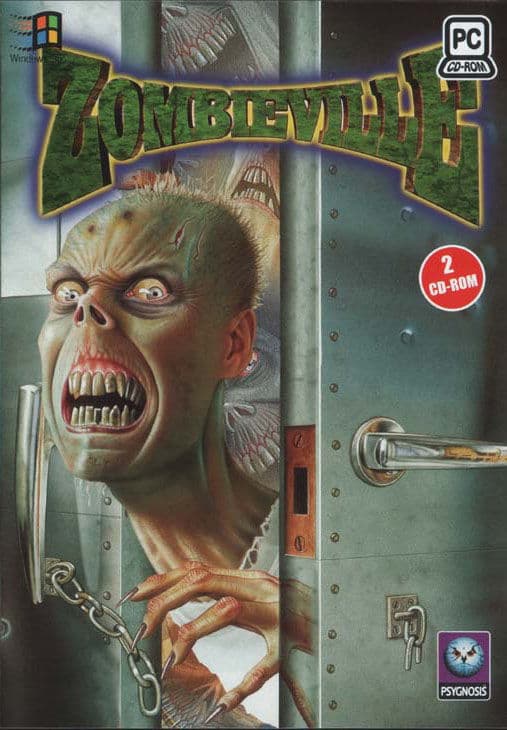
If you picked up Zombieville back in 1997 expecting a smooth cinematic survival horror title, you likely hit a wall before reaching the town limits. Driven by pre-rendered backdrops, bizarre dialogue traps, and a catastrophic distribution mistake, this odd MS-DOS release became a legend for all the wrong reasons.
Zombieville turns pre-rendered horror into an exercise in patience
By the late nineties, adventure titles were rapidly shifting away from classical point-and-click interfaces to ride the wave of third-person survival horror. Developers wanted fixed camera angles, dramatic lighting, and action heavy enough to keep players nervous. Developer Psygnosis Limited attempted to answer that trend by dropping player character Matt Black right into a nightmare scenario, voiced by comedian Greg Proops. Matt is an inquisitive reporter riding toward the town of Downforth in search of a breaking story, only to have his car obliterated by gunfire coming from the nearby Bedlam military base.
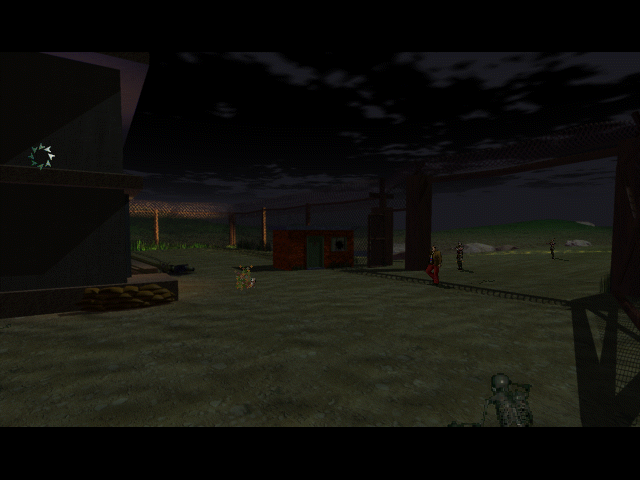
Forced to trek onward by foot, Matt stumbles onto an outbreak of living corpses emerging directly from the shifting earth. What follows is a mix of inventory collection, direct combat, and heavy conversation with local survivors. You wander through fixed pre-rendered screens spanning a rundown gas station, a lonely farm, a local bar, and the sprawling military complex itself. Moving between these views requires balancing your limited ammunition with sharp visual observation, constantly scanning background textures for key items like a discarded Humvee key.
Surviving Downforth takes bad puzzle logic and worse dialogue
While the atmosphere leans on creepy isolated locations, the moment-to-moment play demands extreme caution. Inventory management matters, but the true hazard in Downforth rarely comes from physical combat. Instead, the dialogue mechanics present an absurd minefield where basic trial-and-error quickly turns deadly.
When you encounter non-playable characters across the town, the game opens branching chat options that seem straightforward at first glance. Select the wrong response, however, and the consequences escalate instantly. You will encounter several recurring problems while attempting to navigate these encounters:
- Dialogue choices that trigger sudden, unavoidable player deaths without warning.
- Surviving human NPCs spontaneously mutating into hostile zombies mid-sentence due to conversation logic flags.
- Scripting bugs that lock up the dialogue box entirely, forcing a hard system restart.
- Hidden item dependencies where missing a single object early on soft-locks later conversations.
Before release, French gaming magazine Joystick highlighted the project in July 1997, writing that "le look du jeu est assez excitant" while drawing comparisons to Capcom's recent survival horror work. Once players got their hands on the finished product, that stylistic promise unravelled behind sluggish response times and brittle puzzle structures.
Dialogue glitches and missing CDs doomed Zombieville
The technical problems went far deeper than clumsy puzzle design. Published in Europe by Dice Multi Media Europe B.V. and brought to North America via Diamond Star, the commercial release suffered from a disastrous distribution mix-up. The North American version accidentally shipped on a single CD-ROM instead of the intended two-disc set. Players who bought that box found themselves stranded mid-game, utterly unable to progress once the missing second disc was called for by the engine.
Even for European players holding both discs, the code offered erratic performance. Frame rates fluctuated wildly across identical scenes, and system hangs were common. Modern teardowns by research communities like The Cutting Room Floor revealed that the CD files were stuffed with unused character animations that never trigger in normal play. Early promotional press material also shows that key characters, including the local bartender and the gas station attendant, originally had completely different visual models and story roles before being hastily reworked late in production.
Good voice acting cannot save a broken game
Looking back at reviews from the era reveals a universally brutal consensus. Retrospective critics were no kinder, with Slovakian site RetroGamer.biz pinning the title with a bottom-tier 9% rating while slating its game-breaking glitches and nonsensical instant-death chat branches. The game sits at an aggregate critic score of just 27% on MobyGames, cementing its position among the most notoriously broken releases of 1997.
Is there anything worth seeing in this disaster? Strangely, yes. Greg Proops brings genuine effort to his voice work as Matt Black, delivering dry snark that gives the protagonist a distinct personality. The pre-rendered environment art holds a dirty, industrial mood, and the ambient audio design builds genuine tension when the frame rate is behaving. Yet as an entry in the late-nineties action genre, it remains deeply frustrating to play as originally shipped.
Fire up the Zombieville MS-DOS game right in your browser
You can experience this strange piece of PC history for yourself without tracking down rare physical discs or fighting with old system configurations. It is entirely possible to play Zombieville online directly through emulator wrapper tech, letting you explore the town of Downforth firsthand.
If you want to sample this obscure Zombieville MS-DOS game, you can run Zombieville free in your browser right on this page. Nothing beats testing those notorious dialogue trees yourself, so launch the session, keep a close eye on your ammo counter, and try not to talk your way into an instant game over screen.