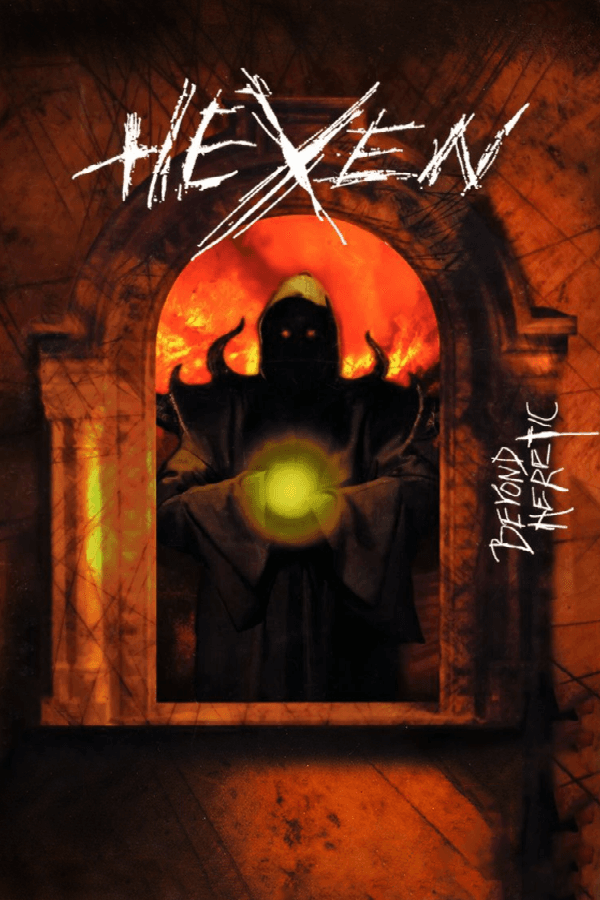

In Hexen: Beyond Heretic, Raven Software took the frantic combat of their earlier shooter and buried it under interconnected level hubs, obscure gear switches, and three distinct character classes.
Before you take a single step into the murky world of Cronos, Hexen: Beyond Heretic asks you to make a choice that changes how the rest of the game plays. You choose between Baratus the Fighter, Parias the Cleric, or Daedolon the Mage. The Fighter starts with Spiked Gauntlets and relies on sheer physical power, moving faster and absorbing hits that would crush the others. The Mage plays like a classic spellcaster, firing weak Wand bolts until he finds high-tier weapons like the Bloodscourge. The Cleric sits comfortably in the middle, swinging his Mace and later tearing through crowds with the Serpent Staff or the devastating Wraithverge.
That choice alters how you tackle every corridor. Play as the Fighter and you are forced to run right up to two-headed Ettins or fire-spitting Afrits to punch them in the face. Play as the Mage and you spend early levels backpedaling across narrow stone bridges while managing your mana pools. Inventory items like Flechettes adapt to your class as well. The Fighter drops them as timed explosive bomblets, while the Cleric converts them into clouds of lingering poison gas. The choice gives this action game real replay value, even if the early punch-heavy Fighter levels can feel like a chore.
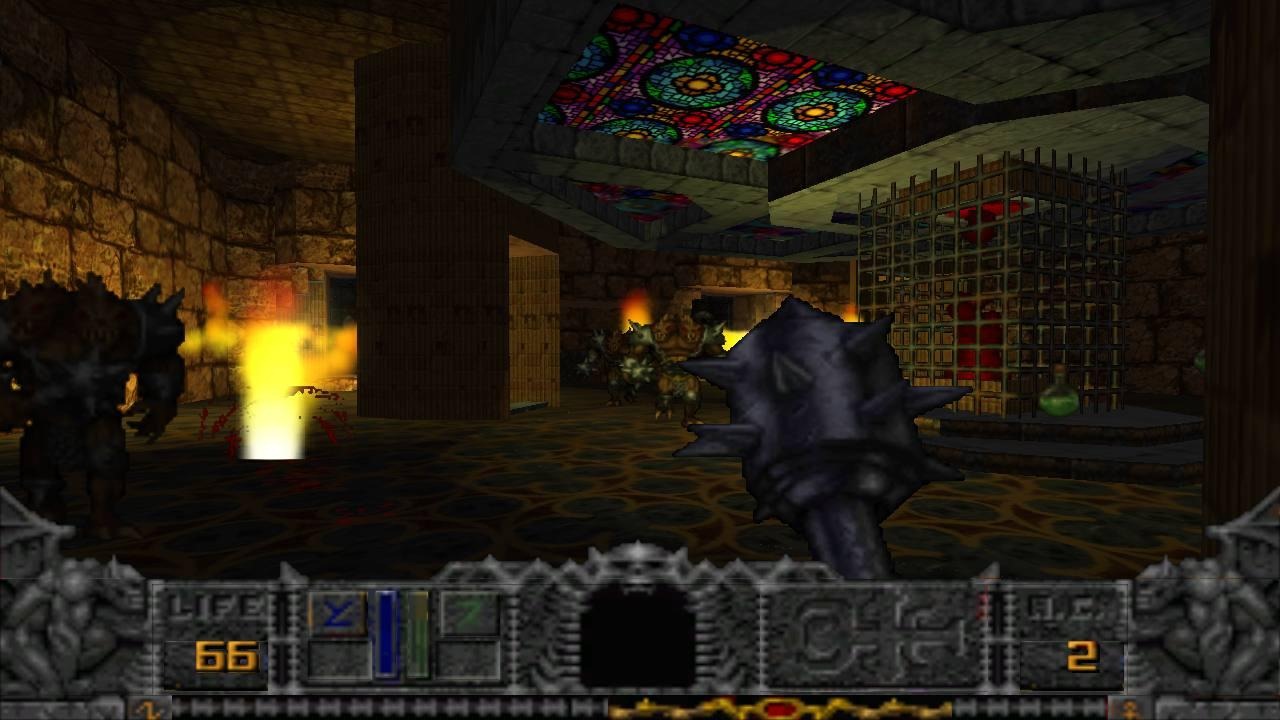
Instead of clearing a level and stepping through an exit door, this 1995 release relies on a central hub structure. In the first main area, Seven Portals, you clear a room on one map, press a stone switch, and read a vague message on screen about a door opening on an entirely different level. You step through a portal, hunt down the newly unlocked doorway, pull another lever, and backtrack all the way to the start. The non-linear map layout felt fresh next to traditional episode shooters, but it comes with a distinct penalty.
When you do not know where that distant switch moved a stone pillar, the game devolves into walking back and forth through emptied marble halls. You wander aimlessly past decorative vases and trees, double-checking every wall for a hidden alcove you missed. Sealed doors guarded by shielded Centaurs require continuous travel between spoke maps to unlock Korax's stronghold. If you dislike switch hunting across massive, interconnected maps, this design decision will test your patience quickly.
Raven Software built the game on a heavily upgraded version of the original Doom engine, running on NeXTSTEP workstations during development. Directors Brian and Steve Raffel, with producer John Romero and technical advice from John Carmack, pushed the hardware beyond simple flat walls. They introduced Action Code Scripting, which allowed maps to trigger earthquakes, open sliding polyobject doors that rotate on an axis, and activate complex atmospheric traps without hardcoded engine hacks.
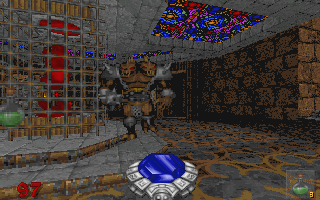
The visual upgrades extended to vertical looking, active jumping, and breakable scenery. You can shoot decorative pottery or chop down trees to find Quartz Flasks and Banishment Devices. The audio side took full advantage of period hardware, offering support for Sound Blaster 16, Gravis UltraSound, General MIDI, and native Red Book CD audio playback composed by Kevin Schilder. Hearing environmental thunder crackling through a Sound Blaster card alongside ambient MIDI tunes gave the dark fantasy setting a dense acoustic atmosphere.
Players who found the puzzle navigation or shield-bearing Centaurs infuriating turned to a memorable collection of built-in cheat codes. The developers included standard cheat commands alongside a few jokes meant to catch fans off guard. Here are some of the classic console inputs:
In a funny bit of developer trolling, typing memory codes from their previous title inside the demo build would instantly backfire. Typing the god mode code QUICKEN three times in a row instantly killed your character, while entering RAMBO stripped away all your weapons and left you bare-handed. It was a clever jab at players trying to carry over muscle memory without reading the updated manual.
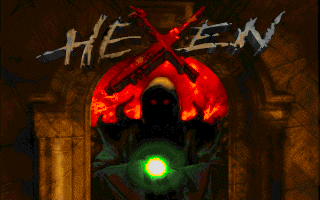
The combat mechanics in this Raven Software title published by id Software, Inc. hold up surprisingly well today. Casting late-game spells like the Cleric's Wraithverge, which releases screaming spirits to hunt down Chaos Serpents, remains plain satisfying. What clearly fails is the missing auto-run toggle in original control schemes and the endless, unguided puzzle hunting. Modern players often expect quest markers or highlighted objectives, but here you must read environmental clues and remember map layouts on your own.
You can play Hexen: Beyond Heretic online, free in your browser, with nothing to install and no setup required. If you want to experience a Hexen: Beyond Heretic MS-DOS game directly, launching it right now lets you pick the Mage, type in a pig transformation code, or conquer the Seven Portals without tracking down original DOS boot disks. Fire up the Mage class first, save your Quartz Flasks for boss general encounters, and keep a close eye on stone walls whenever a floor switch makes a grinding sound in the distance.
In Hexen: Beyond Heretic, Raven Software took the frantic combat of their earlier shooter and buried it under interconnected level hubs, obscure gear switches, and three distinct character classes.
Before you take a single step into the murky world of Cronos, Hexen: Beyond Heretic asks you to make a choice that changes how the rest of the game plays. You choose between Baratus the Fighter, Parias the Cleric, or Daedolon the Mage. The Fighter starts with Spiked Gauntlets and relies on sheer physical power, moving faster and absorbing hits that would crush the others. The Mage plays like a classic spellcaster, firing weak Wand bolts until he finds high-tier weapons like the Bloodscourge. The Cleric sits comfortably in the middle, swinging his Mace and later tearing through crowds with the Serpent Staff or the devastating Wraithverge.
That choice alters how you tackle every corridor. Play as the Fighter and you are forced to run right up to two-headed Ettins or fire-spitting Afrits to punch them in the face. Play as the Mage and you spend early levels backpedaling across narrow stone bridges while managing your mana pools. Inventory items like Flechettes adapt to your class as well. The Fighter drops them as timed explosive bomblets, while the Cleric converts them into clouds of lingering poison gas. The choice gives this action game real replay value, even if the early punch-heavy Fighter levels can feel like a chore.

Instead of clearing a level and stepping through an exit door, this 1995 release relies on a central hub structure. In the first main area, Seven Portals, you clear a room on one map, press a stone switch, and read a vague message on screen about a door opening on an entirely different level. You step through a portal, hunt down the newly unlocked doorway, pull another lever, and backtrack all the way to the start. The non-linear map layout felt fresh next to traditional episode shooters, but it comes with a distinct penalty.
When you do not know where that distant switch moved a stone pillar, the game devolves into walking back and forth through emptied marble halls. You wander aimlessly past decorative vases and trees, double-checking every wall for a hidden alcove you missed. Sealed doors guarded by shielded Centaurs require continuous travel between spoke maps to unlock Korax's stronghold. If you dislike switch hunting across massive, interconnected maps, this design decision will test your patience quickly.
Raven Software built the game on a heavily upgraded version of the original Doom engine, running on NeXTSTEP workstations during development. Directors Brian and Steve Raffel, with producer John Romero and technical advice from John Carmack, pushed the hardware beyond simple flat walls. They introduced Action Code Scripting, which allowed maps to trigger earthquakes, open sliding polyobject doors that rotate on an axis, and activate complex atmospheric traps without hardcoded engine hacks.

The visual upgrades extended to vertical looking, active jumping, and breakable scenery. You can shoot decorative pottery or chop down trees to find Quartz Flasks and Banishment Devices. The audio side took full advantage of period hardware, offering support for Sound Blaster 16, Gravis UltraSound, General MIDI, and native Red Book CD audio playback composed by Kevin Schilder. Hearing environmental thunder crackling through a Sound Blaster card alongside ambient MIDI tunes gave the dark fantasy setting a dense acoustic atmosphere.
Players who found the puzzle navigation or shield-bearing Centaurs infuriating turned to a memorable collection of built-in cheat codes. The developers included standard cheat commands alongside a few jokes meant to catch fans off guard. Here are some of the classic console inputs:
In a funny bit of developer trolling, typing memory codes from their previous title inside the demo build would instantly backfire. Typing the god mode code QUICKEN three times in a row instantly killed your character, while entering RAMBO stripped away all your weapons and left you bare-handed. It was a clever jab at players trying to carry over muscle memory without reading the updated manual.

The combat mechanics in this Raven Software title published by id Software, Inc. hold up surprisingly well today. Casting late-game spells like the Cleric's Wraithverge, which releases screaming spirits to hunt down Chaos Serpents, remains plain satisfying. What clearly fails is the missing auto-run toggle in original control schemes and the endless, unguided puzzle hunting. Modern players often expect quest markers or highlighted objectives, but here you must read environmental clues and remember map layouts on your own.
You can play Hexen: Beyond Heretic online, free in your browser, with nothing to install and no setup required. If you want to experience a Hexen: Beyond Heretic MS-DOS game directly, launching it right now lets you pick the Mage, type in a pig transformation code, or conquer the Seven Portals without tracking down original DOS boot disks. Fire up the Mage class first, save your Quartz Flasks for boss general encounters, and keep a close eye on stone walls whenever a floor switch makes a grinding sound in the distance.
How Hexen: Beyond Heretic is played — the keys the game listens to, grouped by what they do.
Highlighted keys are mapped — hover or tap one to see what it does.
Set up for modern play: W A S D move, the mouse turns (this engine has no mouse look, so moving the mouse forward walks), left click fires. The arrow keys still turn. Ctrl and Alt are left free because the browser uses them (Ctrl + W closes the tab).
The on-screen keyboard and gamepad mapping the browser player uses on a phone, a tablet or a controller, as opposed to the real keys above. $PRO members make their own in the player and share them here; anyone can pick one to play with.
Cheat codes, console commands and memory pokes for Hexen: Beyond Heretic — each one verified and attributed.
Sign in to submitHow Hexen: Beyond Heretic is played — the keys the game listens to, grouped by what they do.
Highlighted keys are mapped — hover or tap one to see what it does.
Set up for modern play: W A S D move, the mouse turns (this engine has no mouse look, so moving the mouse forward walks), left click fires. The arrow keys still turn. Ctrl and Alt are left free because the browser uses them (Ctrl + W closes the tab).
The on-screen keyboard and gamepad mapping the browser player uses on a phone, a tablet or a controller, as opposed to the real keys above. $PRO members make their own in the player and share them here; anyone can pick one to play with.
Cheat codes, console commands and memory pokes for Hexen: Beyond Heretic — each one verified and attributed.
Sign in to submit