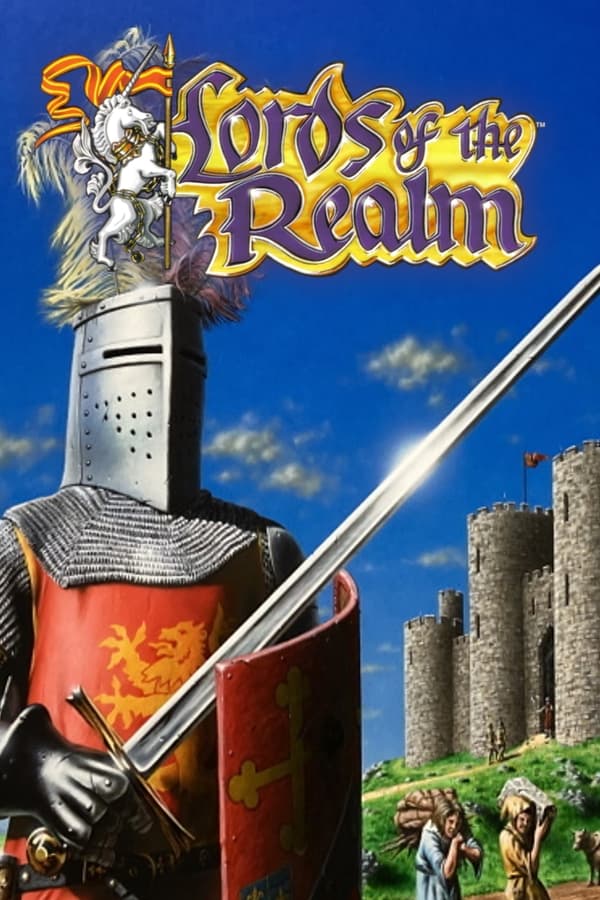

Lords of the Realm
Streaming build
Checking storage…65 MB
Preload in background
In Lords of the Realm, winning the crown of 1268 England requires balancing crop rotations and sheep herds just as carefully as siege engines and archers.
When feudal management actually clicks
The moment you stop treating your peasantry like infinite cannon fodder is the moment the game opens up. Early on, it is tempting to draft every able-bodied farmer into a spear regiment, march across the county border, and pick a fight with a neighboring noble. Try that in your first autumn, though, and you will watch your remaining population starve before winter turns to spring. Food management dictates every military dream you hatch.
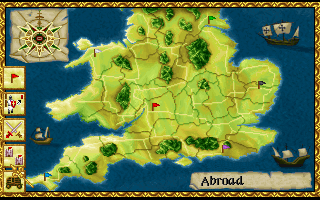
Turns advance by the season, forcing you to allocate serfs across shifting priorities. Grain fields need sowing in spring and harvesting in autumn, while livestock require steady grazing land to keep meat on the table. If you push tax rates too high or cut food rations, population happiness plummets, peasants abandon your fields, and outlaws start raiding your grain stores. Balancing that daily domestic grind against the urge to expand is where designer David Lester found the core tension of the game.
Impressions Games had spent years building strategy titles that played like dry accounting ledgers. This 1994 release changed that reputation by putting actual medieval logistics behind every choice. Assigning labor isn't an abstract statistic, but a direct trade-off between military hardware and raw survival.
The core daily duties of your peasant workforce split into a strict economic chain:
- Farming wheat fields and maintaining grain stores across planting and harvest seasons.
- Herding cattle and sheep to supplement the population's diet with meat and wool.
- Mining iron and quarrying stone to forge weapons and construct fortifications.
- Chopping wood for build projects, siege engines, and archer equipment.
- Building custom keeps, gatehouses, and moats to defend conquered counties.
- Levying peasants directly into military units to fight under your banner.
Custom castles and tactical battles in Lords of the Realm
Once your economy stabilizes, the focus shifts to territorial expansion against five competing computer lords. Defense relies on building strongholds, either by placing individual gatehouses, high walls, moats, and keeps piece by piece or by constructing presets based on the historical designs of King Edward I. A well-built castle lets a handful of archers hold off a force four times their size, provided your stone walls are tall enough to resist battering rams.
When armies meet in open fields or at castle gates, the game transitions from turn-based strategy to real-time tactical combat. You maneuver ranged units, melee infantry, and cavalry into formations while deploying siege weapons like catapults, trebuchets, battering rams, and scaling ladders. Laying siege to a heavily fortified castle requires patience, as breaching the outer walls without proper artillery usually ends with your entire frontline wiped out by defenders firing from the parapets.

Where the mechanics grate and unit pathing falters
For all its tactical ambition, the real-time battle system is where the engine shows its age. Unit pathfinding in narrow siege bottlenecks can degenerate into a chaotic melee where archers walk into sword range and battering rams get jammed in gatehouses. Controlling sprawling battles across large maps requires constant micro-management, making open-field skirmishes far less graceful than the strategic map suggests.
The original MS-DOS game was also notorious for its steep system requirements, demanding 585K of free conventional memory just to boot. DOS players spent plenty of time editing config files and tweaking memory managers before hearing a single note of Jason P. Rinaldi's medieval soundtrack. Programmed by Simon Bradbury, the underlying systems held together under those tight memory limits, but the friction of 1994 hardware was real.
Even David Lester acknowledged the game's limits, treating its commercial success as a stepping stone toward its polished 1996 sequel. Yet contemporary reviewers recognized the breakthrough; Next Generation awarded it four out of five stars, praising its diverse gameplay and player-controlled battles. Retrospective reviews from outlets like Rock Paper Shotgun noted how it turned county micromanagement into a genuine virtue rather than a chore.
How Impressions Games landed a million-seller success
When Impressions Games published the title in 1994, strategy games rarely attempted to merge grand economic management with real-time battle control under one roof. The experiment paid off massively, selling over one million copies and establishing the studio as a strategy powerhouse prior to its acquisition by Sierra On-Line in 1995. Co-designers Chris Beatrice and Christopher J. Foster crafted a visual identity that made managing stone quarries and crop cycles feel tangible rather than clinical.
Diplomacy added another layer of personality to the single-player campaign. You could send custom written messages to rival lords to forge temporary alliances or insult their tactical skill, provoking them into foolish attacks against your fortified borders. While the AI opponents had clear routines, their sudden betrayals kept long campaigns unpredictable right up until you cornered the last lord in his keep.
Claim the crown directly in your browser
If you want to test your medieval management skills today, you can play Lords of the Realm online right here on this page. There is no need to mess with old boot disks or battle with free conventional memory settings to get it running. You can launch the full campaign, set your food rations, build your first stone keep, and jump straight into tactical siege warfare in seconds.
It settles into a surprisingly relaxing strategy title once you get used to the pace of seasonal crop rotations. To hit the ground running, set your serfs to grain farming immediately in your first spring, keep taxes moderate, and build a basic wooden palisade before marching on your nearest neighbor. You can play Lords of the Realm free in your browser right now and see how medieval logistics were won.
How Lords of the Realm is played — the keys the game listens to, grouped by what they do.
- Movement
- Interface
Highlighted keys are mapped — hover or tap one to see what it does.
The game combines turn-based kingdom management with real-time tactical battles. A mouse is required for full gameplay functionality.
Players' controls
Touch and gamepad controls
The on-screen keyboard and gamepad mapping the browser player uses on a phone, a tablet or a controller, as opposed to the real keys above. $PRO members make their own in the player and share them here; anyone can pick one to play with.
Make your own touch controlsPRO
- 1Open the editorSign in below, then pick what to make. The game starts with the editor open over it.
- 2Place your keysAdd keys and drag them where your thumbs rest, or map a controller's buttons. Test plays the game with them; Save keeps them, and you play with them from then on.
- 3Share themShare them right after saving in the game, or name and share them here. Players vote, and the best become this game's controls for everyone.
Go PROSee how it worksSign in+20 XP for sharing · +50 XP if yours become the game's own
- The game's own controlsKeyboardGamepadWhat every player starts with.In use
2 screenshots
From the archive
No gameplay video yet
No gameplay video for Lords of the Realm yet. Sign in to add one.
No reviews yet
Tell the community what you think of Lords of the Realm. Reviews are public and tied to your username.
No archived manuals for Lords of the Realm yet
No manuals archived for this title yet. Sign in to upload the first scan.
Cheat codes, console commands and memory pokes for Lords of the Realm — each one verified and attributed.
Sign in to submitNo cheats yet for this title
Know a working cheat, poke or trainer? Add it with the button above. Moderators check every entry before it goes live.
No archived soundtrack for Lords of the Realm yet
No soundtrack archived for this title yet. Sign in to upload the first rip.
No save states for Lords of the Realm yet
No save states for this title yet. Sign in to share one.
Discussions
Sign in to post- Threads0
- Total posts0
- Online now6
Community · Lords of the Realm
Who's contributing, and what's new
- Reviews0
- Threads0
- Uploadsapproved0
- Contributors0
Recent activity
Nothing here yet
Reviews, discussion threads and approved uploads appear here as members add them.