
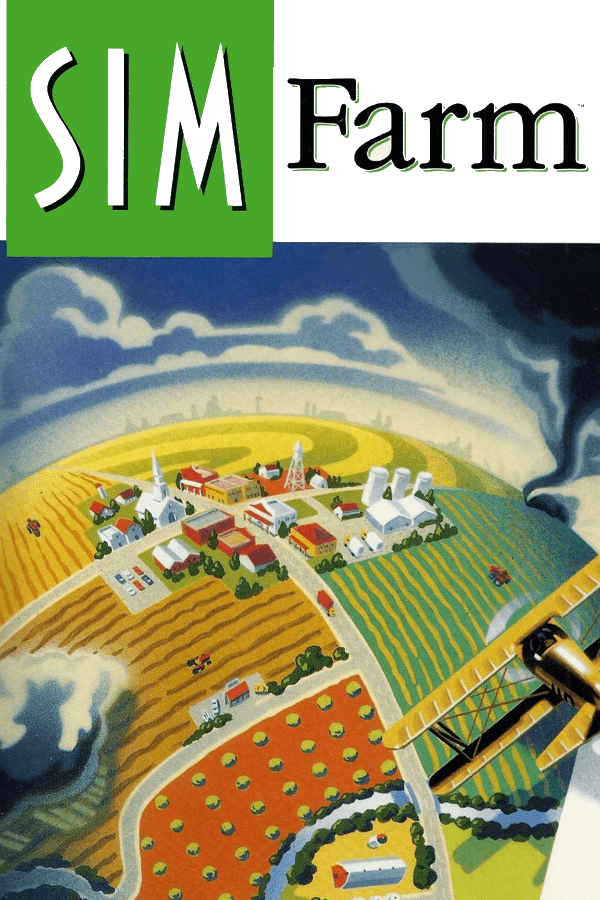

Managing a crop cycle in Sim Farm sounds simple until a dust storm wipes out your fields while your prize pigs break out of their pens.
Maxis traded suburban zoning for crop rotation
After letting players build sprawling metropolises, designer Eric Albers and producer Mike Perry turned the simulation lens toward rural agriculture. Released by Maxis Software Inc. in 1993, the title asked players to step away from high-density zoning and learn the financial reality of running a commercial farm.
Artist Jenny Martin built a clean visual layout that made field boundaries and irrigation lines easy to spot, even on standard VGA displays. On the audio side, composer Sue Kasper put together a soundtrack with driver support for AdLib, Sound Blaster, Roland MT-32, and Tandy devices. Despite supporting top hardware of the day, the cheerful MIDI tunes got on players' nerves fast, prompting many to turn the music off during late-night sessions.
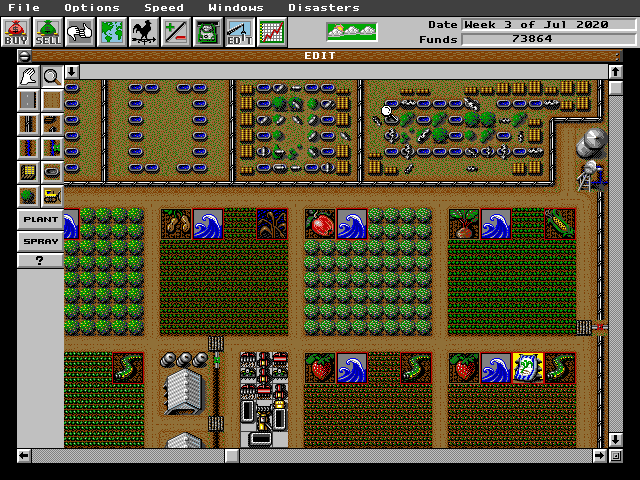
Balancing soil moisture, market crashes, and rogue livestock in Sim Farm
Your main objective involves building a commercial agricultural operation from a modest plot of land. Success requires careful spatial planning and cash management across distinct tasks:
- Selecting from 24 crop varieties, including wheat, corn, tobacco, apples, and high-profit cash crops like strawberries and oranges.
- Laying down essential structures, such as tractor sheds, barns, grain silos, and irrigation pumps.
- Raising four types of livestock, specifically cows, horses, sheep, and pigs, which need reliable food and water supplies.
- Influencing neighboring town politics to approve public projects like an airport, which unlocks crop duster planes for wide-field spraying.
- Entering prime livestock into county fair contests to earn cash prizes and blue ribbons.
Every year you turn a profit, your homestead property expands automatically at the start of the next season. Leaving fields untended brings ruin fast. Weeds take over, droughts dry out topsoil, and sudden tornadoes or dust storms can erase an entire season of investment in seconds.
Why your fields keep dying under heavy pest infestations
The core crop system models realistic agricultural demands like soil moisture, crop rotation, and reseeding. However, the game pulls no punches with its punishing difficulty balance. Pests and plant diseases spread aggressively across untended plots, forcing you to dump thousands of dollars into chemical sprays just to salvage a single harvest.
Managing those fields often feels like a grueling job. Scheduling spray routes on the timeline interface or driving tractors manually around large fields gets repetitive fast. One period review from Old PC Gaming dryly noted that "watching plants grow is only slightly more amusing than watching paint dry," while a GameFAQs contributor titled their write-up "Those seeking the simple life will get anything but that."
Livestock adds another layer of headache when poorly maintained wooden fences snap, sending runaway horses trotting across your prize fields. If severe pests or runaway expenses put you on the verge of bankruptcy, typing CORN directly during gameplay immediately adds $10,000 to your bank balance.
How the original release balances deep strategy against tedious upkeep
As an early simulation game, it sits midway between casual fun and strict operational logistics. The financial engine forces you to monitor commodity market trends closely, holding harvested grain in silos until prices peak rather than selling immediately at harvest time.
What holds up today is the depth of the agricultural model. Figuring out which crops thrive in specific climate zones provides genuine satisfaction when a harvest comes in cleanly. What fails to hold up is the micromanagement: chasing runaway pigs across pixelated fields and manually spraying individual tiles drags down the momentum. Still, for anyone interested in classic PC simulation history, this Sim Farm MS-DOS game offers a detailed look at how Maxis expanded its simulation line beyond urban centers.
You can play Sim Farm free in your browser today
If you want to test your hand at managing high-yield crops and market crashes, you can play Sim Farm online right here in your browser with nothing to install. Jump straight into the action, plant a field of high-value strawberries, and see if you can take home a blue ribbon at the county fair before a tornado hits your farm.