
The Elder Scrolls: Daggerfall
aka Daggerfall: Die Schriften der Weisen · Daggerfall: The Elder Scrolls - Chapter 2
Streaming build
Checking storage…556 MB
Preload in background
In The Elder Scrolls: Daggerfall, Emperor Uriel Septim VII drops you into a massive land mass with a missing letter to recover and a king's ghost to put to rest, right before leaving you to flounder in a cavern full of giant rats and skeletons.
From Privateer's Hold into the vastness of High Rock and Hammerfell
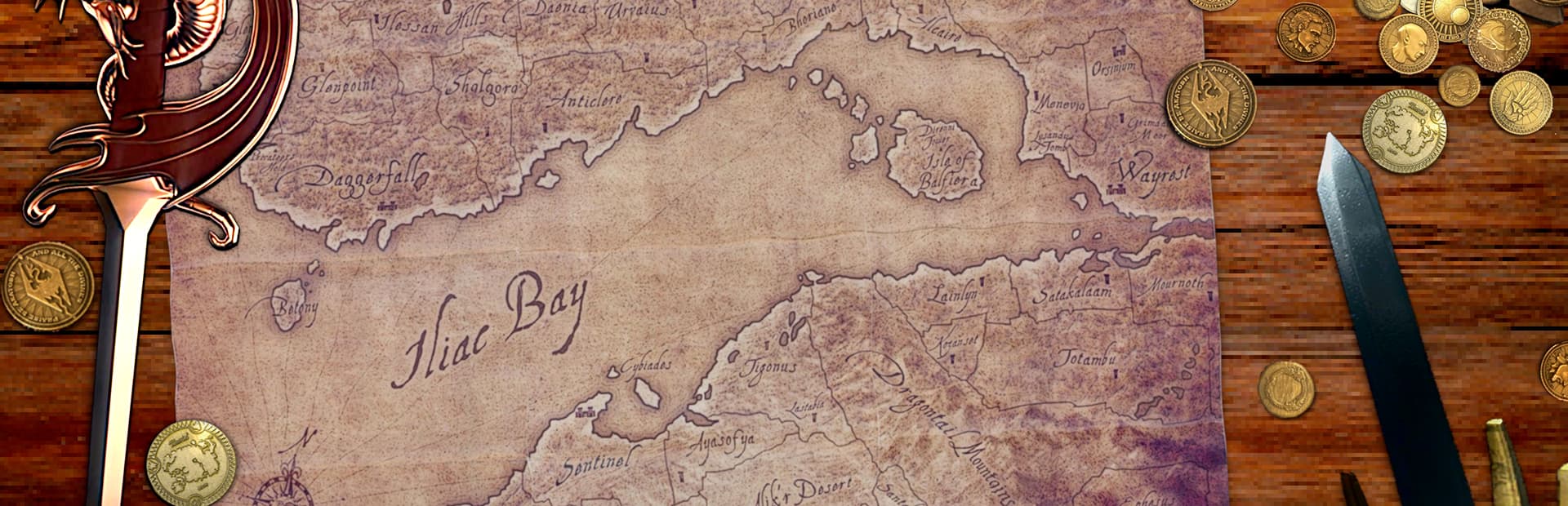
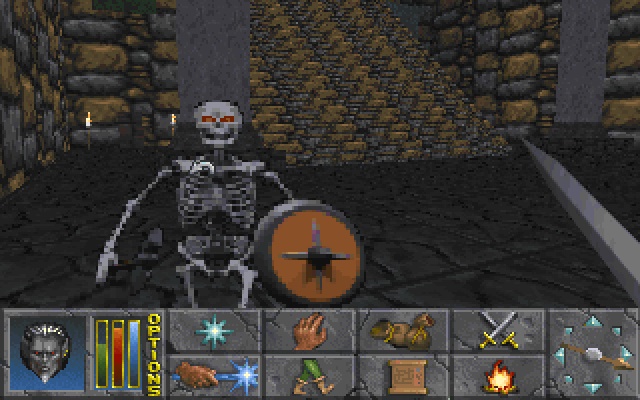
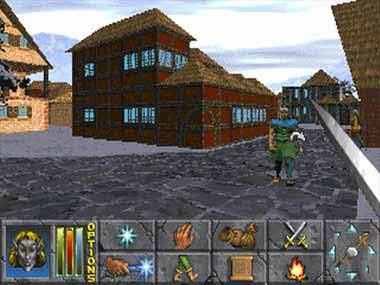
Before you get to see any of the massive world, you have to survive Privateer's Hold. The introductory dungeon sets the tone immediately by throwing archers, imp enemies, and skeletal warriors at a low-level character who is still figuring out the mouse-swinging combat system. If you manage to scramble up the stairs and step out into the blinding snow of the Iliac Bay, the scale of this role-playing game opens up with terrifying width. Over 15,000 cities, towns, and procedurally generated dungeons dot the map across the provinces of High Rock and Hammerfell.
The core story tasks you with exorcising the troubled ghost of King Lysandus of Daggerfall and tracking down a sensitive letter concerning the colossal golem Numidium and the Totem of Tiber Septim. Yet, the main quest quickly becomes just one line on a massive list of obligations. You are just as likely to get side-tracked negotiating with the local thieves guild, doing tasks for Daedric princes, or buying real estate. The sheer freedom to buy houses, purchase ocean-going ships, or accidentally contract lycanthropy makes the game world feel like a living sandbox rather than a scripted track.
Procedural scale, labyrinthine maps, and the dreaded clock
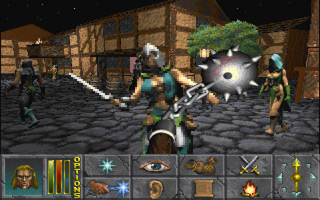
Designing an land mass of this scale in 1996 meant game designers Julian LeFay, Bruce Nesmith, and Ted Peterson had to rely heavily on algorithms to build the environment. Built on Bethesda's custom XnGine, the fully 3D first-person perspective was a massive leap from earlier grid-based crawlers, but it brought unique headaches. The dungeons generated by the engine are infamous for their chaotic layouts, where key quest targets might spawn inside secret rooms behind subtle wall switches deep in mountain keeps like Shedungent or Scourg Barrow.
Players quickly learn to dread the quest logs, which feature strict, ticking time limits. Fail to deliver a potion or miss an audience with a noble within the specified calendar days, and your reputation drops across the entire region. Combined with severe bugs in the original 1996 release that could break story progression or drop characters through geometry into an empty void, navigating the world required constant save files and a great deal of patience.
Behind the scenes of Bethesda Softworks LLC's massive gamble
The sheer ambition of the project nearly ended the studio. Bethesda Softworks LLC poured so many resources into building this vast world that the production costs nearly bankrupted the company before a corporate restructuring saved it. That financial risk paid off long-term, as the title went on to sell roughly 700,000 copies by 2000 and established the template for future entries in the franchise, such as The Elder Scrolls III: Morrowind.
The game hid its best mechanics behind unpromising side quests. Transforming into a vampire or werewolf was not advertised on the back of the box; it was a secret that radically altered your stats and gameplay if you survived a night attack. Even setting up the game in 1996 was an ordeal, requiring you to run SETUP.EXE in DOS to assign proper IRQ channels for Sound Blaster cards so the agonizing shrieks of harpies and daedra would play properly without freezing the rig.
How to play The Elder Scrolls: Daggerfall free in your browser today
While modern efforts like the open-source Daggerfall Unity project have rebuilt the engine from scratch for modern OS setups, the raw tension of the original MS-DOS build demands real patience and resourcefulness. The brutal early-game difficulty spike will crush unprepared adventurers, and the labyrinthine dungeon designs mean you will spend plenty of time staring at the wireframe map. Yet, the ability to build custom spells, brew potions, and forge your own path through political intrigue keeps it fascinating for anyone who loves deep RPG systems.
You can launch this original MS-DOS game straight from your browser window right now. The original Bethesda Softworks LLC release is available to run immediately with zero setup required. Try creating a custom spellcaster class, surviving the initial escape from Privateer's Hold, and exploring the Iliac Bay on your own terms.
How The Elder Scrolls: Daggerfall is played — the keys the game listens to, grouped by what they do.
- Movement
- Action
- Weapons & items
- Interface
- Left click — Activate / interact
- Right click — Attack / swing weapon
Highlighted keys are mapped — hover or tap one to see what it does.
Keybindings can be fully reconfigured in-game. View mode (WASD/mouse-look) can be enabled via Esc > Controls > Mouse.
Players' controls
Touch and gamepad controls
The on-screen keyboard and gamepad mapping the browser player uses on a phone, a tablet or a controller, as opposed to the real keys above. $PRO members make their own in the player and share them here; anyone can pick one to play with.
Make your own touch controlsPRO
- 1Open the editorSign in below, then pick what to make. The game starts with the editor open over it.
- 2Place your keysAdd keys and drag them where your thumbs rest, or map a controller's buttons. Test plays the game with them; Save keeps them, and you play with them from then on.
- 3Share themShare them right after saving in the game, or name and share them here. Players vote, and the best become this game's controls for everyone.
Go PROSee how it worksSign in+20 XP for sharing · +50 XP if yours become the game's own
- The game's own controlsKeyboardGamepadWhat every player starts with.In use
7 screenshots
From the archive
No gameplay video yet
No gameplay video for The Elder Scrolls: Daggerfall yet. Sign in to add one.
No reviews yet
Tell the community what you think of The Elder Scrolls: Daggerfall. Reviews are public and tied to your username.
No archived manuals for The Elder Scrolls: Daggerfall yet
No manuals archived for this title yet. Sign in to upload the first scan.
Cheat codes, console commands and memory pokes for The Elder Scrolls: Daggerfall — each one verified and attributed.
Sign in to submitNo cheats yet for this title
Know a working cheat, poke or trainer? Add it with the button above. Moderators check every entry before it goes live.
No archived soundtrack for The Elder Scrolls: Daggerfall yet
No soundtrack archived for this title yet. Sign in to upload the first rip.
No save states for The Elder Scrolls: Daggerfall yet
No save states for this title yet. Sign in to share one.
Discussions
Sign in to post- Threads0
- Total posts0
- Online now6
Community · The Elder Scrolls: Daggerfall
Who's contributing, and what's new
- Reviews0
- Threads0
- Uploadsapproved0
- Contributors0
Recent activity
Nothing here yet
Reviews, discussion threads and approved uploads appear here as members add them.