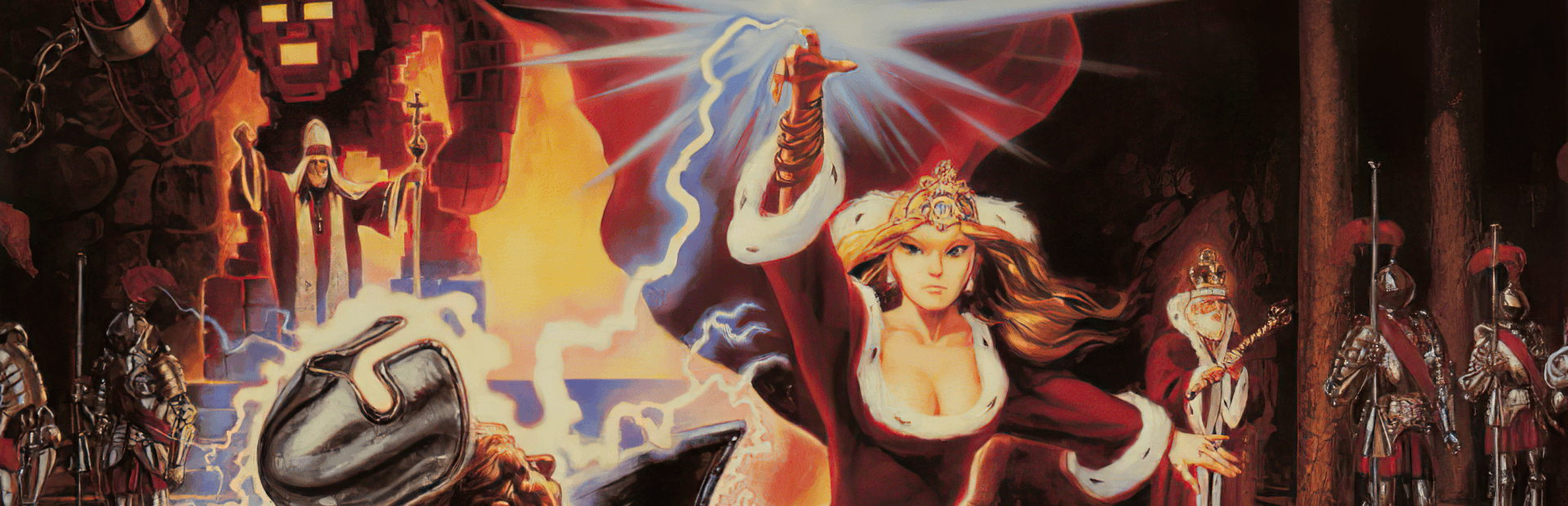
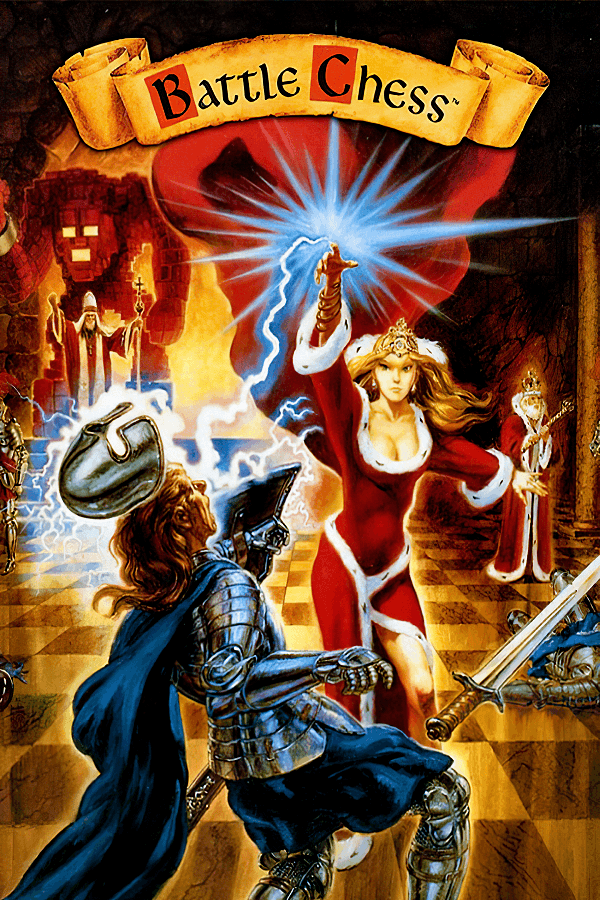
By replacing silent wooden pieces with animated fantasy warriors that crack skulls and duel with swords, Battle Chess turned the quiet calculations of standard board games into an unexpected spectator sport.
Before 1988, computer chess was largely a cold exercise in coordinate tracking. Programs like Sargon offered sharp logical opponents, but watching two green text characters swap places on a flat pixel grid rarely captured the theater of an actual tabletop match. Interplay founder Brian Fargo and designers Michael Quarles, Jayesh J. Patel, and Troy P. Worrell realized that if players were going to spend hours staring at a digital board, the pieces ought to act like they had something at stake.
Taking visual cues from the holographic Dejarik table in Star Wars and the automated chess sequence in Futureworld, the team set out to give every capture its own scripted conflict. Instead of sliding off the edge of the board, a taken piece fought for its square. Pawns wielded spears, rooks transformed into stone golems, and kings pulled out hidden weapons when cornered.
The result transformed a classic abstract contest into a hit for Interplay Productions, Inc., proving that tactical software could appeal to casual players without sacrificing underlying depth. It marked a major turning point for the company, establishing it as a standalone studio capable of self-publishing major hits after ending its early distribution deal with Electronic Arts.
When you start a match in the 3D isometric view, the classic layout takes on the feel of a tiny medieval theater. Selecting a piece triggers a lumbering walk animation across the checkered board. Pick a pawn to capture an enemy knight, and your small foot soldier trips the mounted warrior off his horse before executing him on the spot.
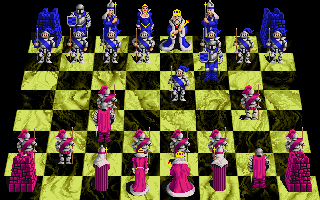
The system features 35 distinct combat animations to cover every possible piece matchup. Pop-culture references run deep throughout these encounters. A duel between two knights quickly devolves into a limb-chopping fight straight out of Monty Python and the Holy Grail, while a king taking a bishop borrows the classic gun-versus-sword trick from Indiana Jones.
Behind the theatrical violence sits a surprisingly capable engine for games from 1988. The program features an opening library of 30,000 moves and offers 10 distinct AI skill levels. Whether you set up a match against the computer or configure a two-player hotseat game, the opening phase demands sound tactical thinking regardless of the dramatic animations playing out after every move.
Creating believable animated violence on standard PC hardware presented serious technical roadblocks. Artists Todd J. Camasta and Bruce Schlickbernd had to pack detailed pixel frames into tight memory limits, all while ensuring each capture sequence remained distinct. To get digitized sound effects out of machines that lacked a dedicated sound card, the team utilized a clever software trick similar to RealSound, pushing raw digitized audio samples straight through the standard IBM internal PC speaker.
Production was not without internal comedy, giving birth to a famous industry story about corporate management. During development, an artist grew frustrated with a producer who felt compelled to alter every piece of art brought to his office. To protect the core visual design, the team added a flapping pet duck sprite to the queen's animation reel purely as bait. The producer dutifully noticed the bird, ordered the duck removed, and approved the rest of the work completely untouched.
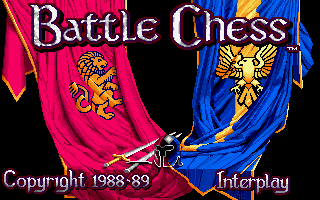
When reviewers at Computer Gaming World examined the release in early 1989, designer Ken St. Andre praised its visual flair but pointed out key omissions. He noted that the game lacked built-in chess clocks to simulate real tournament pressure and wished the manual had included a printed move listing. Even with those complaints, the unique presentation gave it a permanent spot in discussions of strategy / tactics games.
As impressive as the capture scenes are during your first few matches, the core loop runs into a pacing problem. Watching a stone rook slowly trudge across six squares to crush a pawn takes several seconds every single time it happens. In a middle-game grind where pieces drop constantly, the endless marching and fighting routines drag the tempo to a crawl.
The audio that blew minds in 1988 can also wear down your patience. While getting speech and metallic clanging out of an unamplified PC speaker was a major technical achievement at the time, the high-pitched buzz and crunchy audio output can hurt your ears over a long session. Serious players eventually turn off the sound or toggle the game out of 3D mode entirely.
That is where the included 2D overhead view becomes an essential feature rather than an afterthought. Switching to the flat board bypasses every combat routine instantly, turning the software back into a clean, fast-moving logic puzzle. If you want to study positional play or test opening theories across higher difficulty settings, the 2D mode is the only efficient way to play the MS-DOS version of Battle Chess.
Three decades later, the game works best as an amusing tactical novelty item. The underlying chess engine still provides a respectable match across its lower and mid-tier AI levels, but nobody boots this up to experience grandmaster logic. You play it to see a pawn punch a dragon or watch a bishop bonk a rook over the head with a staff.
The visual humor carries enough slapstick energy to entertain anyone who enjoys old-school pixel art, even if you will eventually flip to 2D mode once the joke wears off. It remains a fascinating snapshot of late-80s floppy disk production, bridging the gap between clinical computer board simulations and arcade spectacle.
You can play Battle Chess free in your browser right now with no setup required. Launch a match, pick an aggressive opening move to trigger an early pawn battle, and see whether the animations charm you or drive you straight to the 2D toggle button.
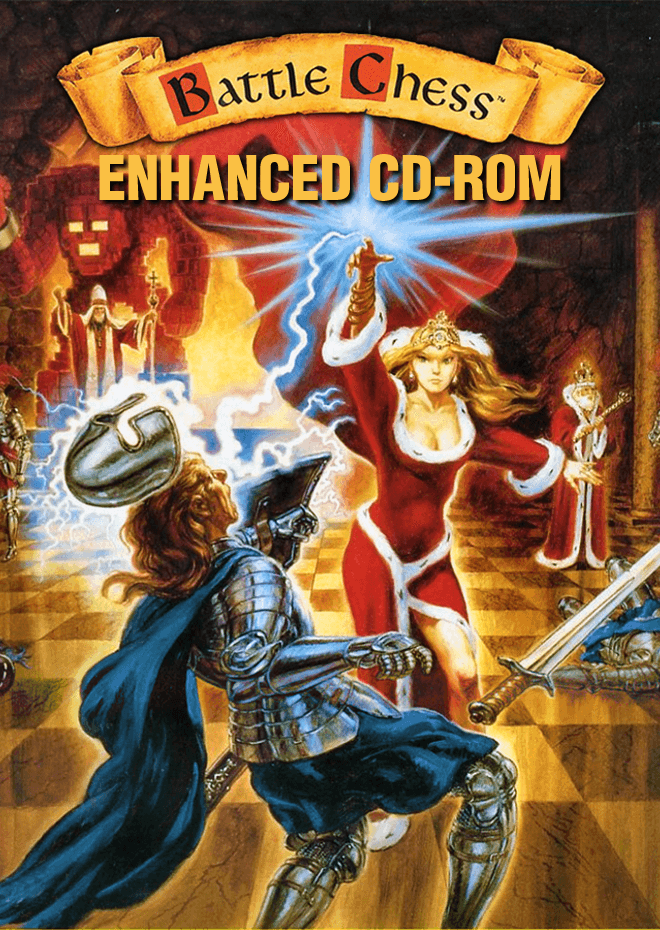
By replacing silent wooden pieces with animated fantasy warriors that crack skulls and duel with swords, Battle Chess turned the quiet calculations of standard board games into an unexpected spectator sport.
Before 1988, computer chess was largely a cold exercise in coordinate tracking. Programs like Sargon offered sharp logical opponents, but watching two green text characters swap places on a flat pixel grid rarely captured the theater of an actual tabletop match. Interplay founder Brian Fargo and designers Michael Quarles, Jayesh J. Patel, and Troy P. Worrell realized that if players were going to spend hours staring at a digital board, the pieces ought to act like they had something at stake.
Taking visual cues from the holographic Dejarik table in Star Wars and the automated chess sequence in Futureworld, the team set out to give every capture its own scripted conflict. Instead of sliding off the edge of the board, a taken piece fought for its square. Pawns wielded spears, rooks transformed into stone golems, and kings pulled out hidden weapons when cornered.
The result transformed a classic abstract contest into a hit for Interplay Productions, Inc., proving that tactical software could appeal to casual players without sacrificing underlying depth. It marked a major turning point for the company, establishing it as a standalone studio capable of self-publishing major hits after ending its early distribution deal with Electronic Arts.
When you start a match in the 3D isometric view, the classic layout takes on the feel of a tiny medieval theater. Selecting a piece triggers a lumbering walk animation across the checkered board. Pick a pawn to capture an enemy knight, and your small foot soldier trips the mounted warrior off his horse before executing him on the spot.
The system features 35 distinct combat animations to cover every possible piece matchup. Pop-culture references run deep throughout these encounters. A duel between two knights quickly devolves into a limb-chopping fight straight out of Monty Python and the Holy Grail, while a king taking a bishop borrows the classic gun-versus-sword trick from Indiana Jones.
Behind the theatrical violence sits a surprisingly capable engine for games from 1988. The program features an opening library of 30,000 moves and offers 10 distinct AI skill levels. Whether you set up a match against the computer or configure a two-player hotseat game, the opening phase demands sound tactical thinking regardless of the dramatic animations playing out after every move.
Creating believable animated violence on standard PC hardware presented serious technical roadblocks. Artists Todd J. Camasta and Bruce Schlickbernd had to pack detailed pixel frames into tight memory limits, all while ensuring each capture sequence remained distinct. To get digitized sound effects out of machines that lacked a dedicated sound card, the team utilized a clever software trick similar to RealSound, pushing raw digitized audio samples straight through the standard IBM internal PC speaker.
Production was not without internal comedy, giving birth to a famous industry story about corporate management. During development, an artist grew frustrated with a producer who felt compelled to alter every piece of art brought to his office. To protect the core visual design, the team added a flapping pet duck sprite to the queen's animation reel purely as bait. The producer dutifully noticed the bird, ordered the duck removed, and approved the rest of the work completely untouched.
When reviewers at Computer Gaming World examined the release in early 1989, designer Ken St. Andre praised its visual flair but pointed out key omissions. He noted that the game lacked built-in chess clocks to simulate real tournament pressure and wished the manual had included a printed move listing. Even with those complaints, the unique presentation gave it a permanent spot in discussions of strategy / tactics games.
As impressive as the capture scenes are during your first few matches, the core loop runs into a pacing problem. Watching a stone rook slowly trudge across six squares to crush a pawn takes several seconds every single time it happens. In a middle-game grind where pieces drop constantly, the endless marching and fighting routines drag the tempo to a crawl.
The audio that blew minds in 1988 can also wear down your patience. While getting speech and metallic clanging out of an unamplified PC speaker was a major technical achievement at the time, the high-pitched buzz and crunchy audio output can hurt your ears over a long session. Serious players eventually turn off the sound or toggle the game out of 3D mode entirely.
That is where the included 2D overhead view becomes an essential feature rather than an afterthought. Switching to the flat board bypasses every combat routine instantly, turning the software back into a clean, fast-moving logic puzzle. If you want to study positional play or test opening theories across higher difficulty settings, the 2D mode is the only efficient way to play the MS-DOS version of Battle Chess.
Three decades later, the game works best as an amusing tactical novelty item. The underlying chess engine still provides a respectable match across its lower and mid-tier AI levels, but nobody boots this up to experience grandmaster logic. You play it to see a pawn punch a dragon or watch a bishop bonk a rook over the head with a staff.
The visual humor carries enough slapstick energy to entertain anyone who enjoys old-school pixel art, even if you will eventually flip to 2D mode once the joke wears off. It remains a fascinating snapshot of late-80s floppy disk production, bridging the gap between clinical computer board simulations and arcade spectacle.
You can play Battle Chess free in your browser right now with no setup required. Launch a match, pick an aggressive opening move to trigger an early pawn battle, and see whether the animations charm you or drive you straight to the 2D toggle button.
How Battle Chess is played — the keys the game listens to, grouped by what they do.
Highlighted keys are mapped — hover or tap one to see what it does.
Keyboard-only piece movement controls are omitted as they were not detailed in the provided documentation notes.
The on-screen keyboard and gamepad mapping the browser player uses on a phone, a tablet or a controller, as opposed to the real keys above. $PRO members make their own in the player and share them here; anyone can pick one to play with.
Cheat codes, console commands and memory pokes for Battle Chess — each one verified and attributed.
Sign in to submitHow Battle Chess is played — the keys the game listens to, grouped by what they do.
Highlighted keys are mapped — hover or tap one to see what it does.
Keyboard-only piece movement controls are omitted as they were not detailed in the provided documentation notes.
The on-screen keyboard and gamepad mapping the browser player uses on a phone, a tablet or a controller, as opposed to the real keys above. $PRO members make their own in the player and share them here; anyone can pick one to play with.
Cheat codes, console commands and memory pokes for Battle Chess — each one verified and attributed.
Sign in to submit
