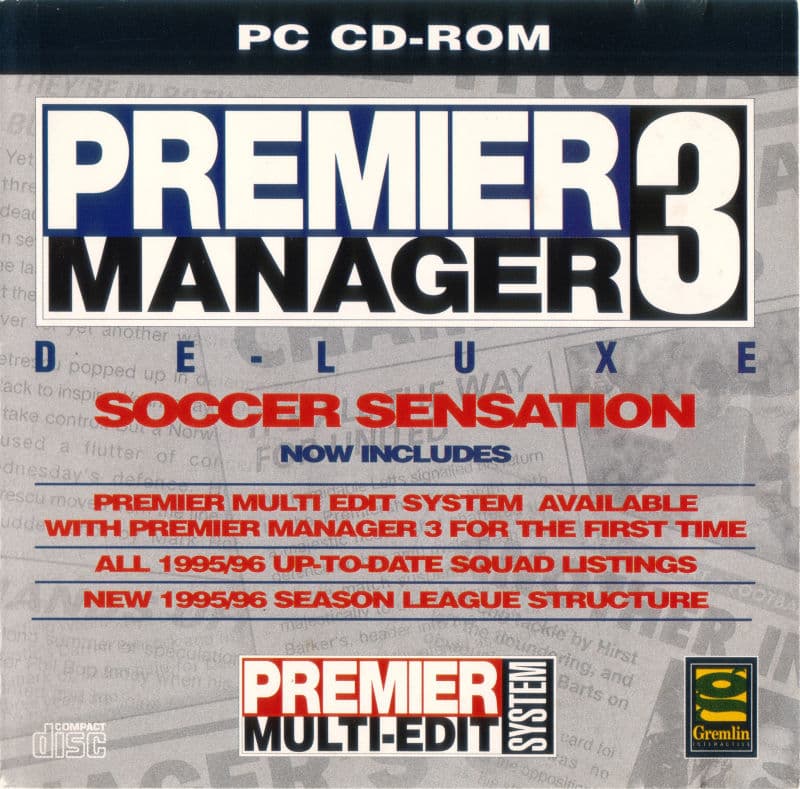
Premier Manager 3 De-Luxe
aka PM3 Deluxe
If you want to guide a non-league English club to European glory while micromanaging bank loans and stadium advertising, Premier Manager 3 De-Luxe delivers every spreadsheet detail you could ask for. Released as an expanded edition, it bundles the full managerial simulation with updated team rosters for the 1995/1996 season and an official database editor.
Gremlin Interactive built a simulation that cares as much about fax machines as tactics
Football management simulations in the mid-1990s had a specific problem to solve: how to translate the quiet work of running a football club into something fun on a PC without making players feel like accountants. Realms of Fantasy and Binary Emotions answered that challenge by giving you an office desk packed with tools. Published by Gremlin Interactive Limited, this sports management game puts you at the bottom of the English league pyramid, starting out in the Conference with the long-term goal of lifting domestic and European silverware.
Your screen shows a central operational desk. From here, you click between match preparation tabs, squad selection boards, incoming fax messages, telephone calls, stadium expansion plans, and balance sheets. You spend almost as much time negotiating perimeter advertising boards or setting up bank loans as you do picked line-ups. That split focus gives the club real weight, because taking care of stadium seats directly dictates whether you have enough funds to register a emergency transfer before the deadline.
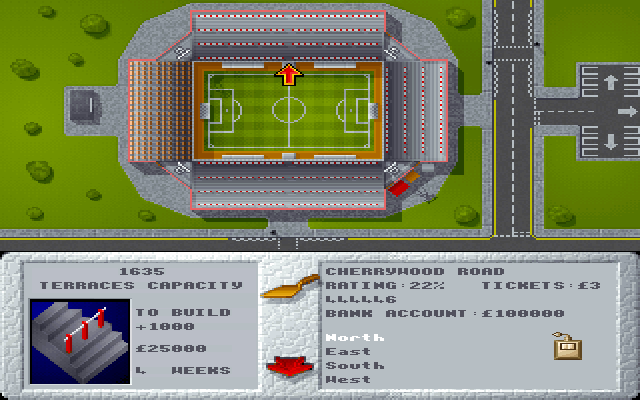
Squad management and pitch sectors in Premier Manager 3 De-Luxe
Once you step out of the boardroom and onto the training ground, the details remain granular. Rather than simply assigning players to generic positions, you place squad members into specific pitch sectors to shape your tactical formation. You are also tasked with hiring backroom staff to support your campaign, including assistant managers, specialized coaches, and scouts who assess prospective signings.
The core responsibilities you balance throughout each season include:
- Recruiting qualified backroom staff to refine training routines and scout rival talent
- Positioning squad members across detailed pitch sectors to execute specific team tactics
- Balancing club finances through advertising board sales, ticket pricing, and structural bank loans
- Fighting through multi-club bidding wars during transfer windows to secure top prospects
The transfer market becomes especially lively if you share the keyboard with a friend. The game features a turn-based hotseat multiplayer mode where two managers take turns managing their clubs on the same PC, allowing you to directly outbid each other for priority targets. Because this updated version incorporates all player transfers, relegations, and promotions for the 1995/1996 campaign, saved files from the original Premier Manager 3 are not compatible with this updated software.
The isometric match engine produces hilarious visual chaos
When match day arrives, action shifts from static text screens to a small isometric 3D pitch view. This mini-stadium view lets you watch your strategic directions play out in real time. While period magazines like Amiga Action praised the title with an 88% rating for its depth, reviewers and players alike quickly pointed out the match graphics. Player sprites move across the grass with clunky, rigid animations that look amusing during aggressive tackles.
Beyond the odd visual presentation, retrospective critics like reviewer AlanG highlighted a deeper issue: a distinct disconnection between tactical tweaks and what happens on the pitch. You can spend an hour tweaking individual sector duties, only to watch an erratic sequence of plays determine the final score regardless. The economic engine can also prove unforgiving. Players frequently complain about getting sacked for running into financial debt even after securing strong league position and winning cups on the pitch.
Yet for all its harsh financial penalties, the game offers a surprisingly gentle safety net at the very bottom. If your team finishes dead last in the bottom division, the system does not relegate you out of the playable leagues entirely. You are allowed to rebuild and try again next season, provided the board has not fired you over your bank balance first.
Customization and the Premier Multi-Edit System
The biggest addition packaged with this release is the Premier Multi-Edit System. This built-in database editor gave players total control over the internal stat files. If an opposition player felt unrealistically overpowered, or if your local real-world squad suffered from inaccurate rating points, you could open the editor and fix the numbers yourself long before official match updates existed online.
That level of community customization, paired with raw depth, kept PC owners hooked during this 1995 DOS release era. While casual players might find the endless screen navigation dry compared to arcade action games, serious football purists were thoroughly in their element calculating wage caps and stadium expansion budgets.
How to play Premier Manager 3 De-Luxe free in your browser today
If you want a detailed managerial simulation that tests both your tactical judgment and your financial discipline, this title holds plenty of depth for fans of classic PC management design. The match engine may look funny today, but the thrill of steering a lower-tier club through financial tightropes into top-tier competitions holds up completely. You can play Premier Manager 3 De-Luxe online free in your browser right here. There is nothing to download or set up, letting you jump straight into the manager's office, set your pitch sector tactics, and inspect your initial squad roster within seconds.